

Table of Contents
- Why Plumbing Emergencies Cost More Than Planned Repairs
- Signs of Hidden Plumbing Leaks to Catch Early
- Plumbing Maintenance Checklist for Homeowners
- Questions to Ask Before Hiring a Plumber
- How to Evaluate Upfront Pricing and Avoid Hidden Fees
- DIY vs. Professional: Where to Draw the Line
- Budget for Plumbing Emergencies Before They Happen
- Frequently Asked Questions
Last Updated: October 4, 2026
Why Plumbing Emergencies Cost More Than Planned Repairs
A burst pipe at 2 AM costs three to five times more than catching the same problem during regular business hours. Emergency calls mean overtime labor rates, weekend premiums, and immediate availability fees, your plumber drops everything to reach you, and that convenience carries a price tag.
Smart homeowners avoid surprise plumbing repair costs by planning ahead: understanding their systems, catching small problems early, and budgeting for the inevitable. This guide covers early warning signs, maintenance routines, contractor selection, and emergency budgeting.
Signs of Hidden Plumbing Leaks to Catch Early
Hidden leaks are silent budget killers that spread behind walls for weeks. Catching them early means the difference between a simple repair and structural damage.
Watch for these warning signs:
- Soft spots in walls or ceilings – Drywall that feels spongy or looks discolored indicates water behind the surface
- Musty odors – Mold grows where moisture accumulates; a damp smell often precedes visible mold
- Unusually high water bills – A sudden jump in usage without explanation suggests a hidden leak
- Staining on ceilings or walls – Brown or yellow marks indicate water damage above or below that spot
- Peeling paint or bubbling wallpaper – Moisture underneath causes surface finishes to fail
- Running water sounds when nothing is on – Your toilet may be leaking into the drain line
Check under sinks monthly for water stains and wet wood. Walk basements and crawlspaces after heavy rain for pooling water, damp soil, or rust stains. A diagnostic visit ($150-$250) costs far less than water damage repair or mold remediation.
Plumbing Maintenance Checklist for Homeowners
Regular maintenance prevents most emergencies. A few simple monthly and seasonal checks catch problems before they become expensive.
Monthly and Seasonal Tasks
Monthly checks:
- Run water in every sink, shower, and toilet to confirm normal flow
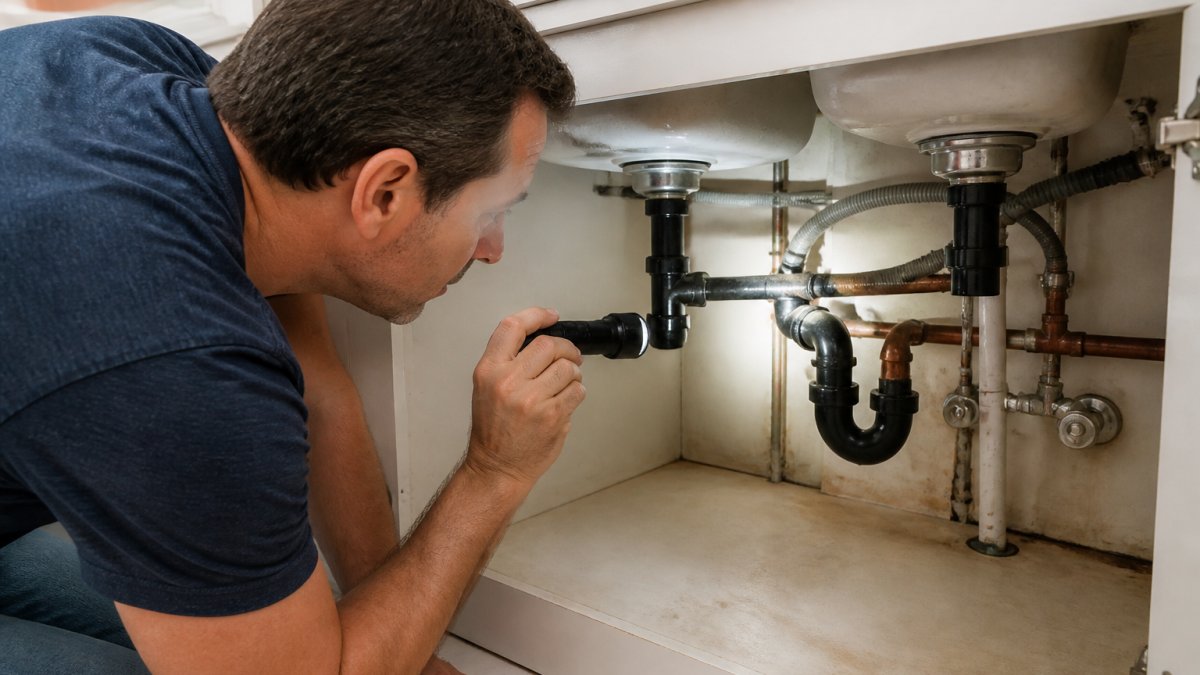
- Check under sinks for drips or water stains
- Listen for running water when all fixtures are off
- Inspect visible pipes for corrosion or mineral buildup
Seasonal tasks (spring and fall):
- Flush your water heater by draining a bucket from the bottom valve
- Check outdoor faucets for leaks
- Clear gutters and downspouts
- Inspect your sump pump by pouring water into the pit
- Insulate exposed pipes in unheated areas
Winter preparation:
- Shut off water to outdoor hoses and drain the lines
- Leave cabinet doors under sinks open for warm air circulation
- Drip water slowly from faucets in extreme cold
- Know where your main water shutoff valve is and ensure it works
Annual Professional Inspections
Schedule an annual professional inspection during regular business hours. It includes video drain inspection, water pressure testing (40-80 PSI), water heater inspection, pipe corrosion checks, and shut-off valve testing. This costs far less than emergency rates and reveals upcoming maintenance needs.
Questions to Ask Before Hiring a Plumber
The right contractor makes all the difference. Before you hire anyone, ask these questions to separate trustworthy professionals from those who’ll surprise you with hidden charges.
About their credentials:
- Are you licensed and insured in this province?
- How many years have you been in business?
About their pricing:
- Do you offer free written estimates?
- Do you charge a service call fee, and is it waived if hired?
- What’s your hourly rate and after-hours surcharge?
About their process:
- Will you explain findings before starting work?
- Do you guarantee your work, and for how long?
About emergencies:
- Are you available 24/7?
- What will a 2 AM call cost?
A professional answers clearly. If a contractor gets defensive about pricing, move on.
How to Evaluate Upfront Pricing and Avoid Hidden Fees
Transparent pricing is the foundation of avoiding surprise plumbing repair costs. Before any work begins, you should know exactly what you’re paying for.
Request a detailed written estimate that includes:
- Labor cost (hourly rate and estimated hours)
- All materials needed, listed by name and quantity
- Service call fee (if any)
- Any diagnostic or inspection fees
- The total estimated cost
- What happens if the actual cost exceeds the estimate
Red flags:
- Phone estimates without in-person inspection
- Vague line items like “miscellaneous”
- Refusal to provide written estimates
- Pressure to start work immediately
- Drastically lower quotes without explanation
Ask about trip charges, diagnostic fees, emergency surcharges, disposal fees, and permit costs. A good contractor breaks down costs clearly and explains why repairs are needed. If work takes longer than estimated, ask why before accepting additional charges.
DIY vs. Professional: Where to Draw the Line
Some plumbing tasks are DIY-friendly; others require licenses and specialized tools. The real cost of DIY mistakes is the cascade of expenses that follow.
Safe DIY tasks:
- Unclogging drains with a plunger or snake
- Replacing faucet aerators
- Fixing running toilets
- Tightening loose connections
- Replacing supply line hoses
These involve no structural changes, code compliance risk, or warranty implications.
Tasks requiring a professional:
- Repairing or replacing water heaters
- Fixing burst pipes or major leaks
- Replacing main water shutoff valves
- Installing new fixtures or major renovations
- Clearing main sewer lines
- Working with gas lines (always hire a licensed professional)
- Anything involving the main water line or foundation
A burst pipe repair costs $500-$1,500 if done correctly, but DIY mistakes can balloon costs to $3,000-$8,000 with water damage and mold treatment. Insurance may deny claims for damage caused by unlicensed repairs. Warranty voidance is another hidden cost: a $2,000 water heater replacement becomes fully out-of-pocket if you attempted repairs yourself. Unpermitted plumbing work can also prevent home sales or require expensive remediation.
The threshold rule:
If the task involves:
- Water supply lines (anything that brings water into your home)
- Drain lines connected to the main sewer
- Gas lines
- Structural access (walls, floors, foundations)
- Warranty-covered equipment
- Work that requires a permit
…hire a licensed professional. The cost of a service call ($150-$250) is negligible compared to the cost of a mistake.
If you’re unsure whether a task is in your wheelhouse, call a professional for advice. Many plumbers will spend 10 minutes on the phone helping you decide without charging a fee. That conversation is worth far more than the cost of a mistake.
Budget for Plumbing Emergencies Before They Happen
The smartest homeowners budget for plumbing emergencies before they occur.
Calculate your emergency fund based on home age:
Your home’s age is the strongest predictor of plumbing costs. Newer homes rarely need major repairs; older homes face them regularly.
- Homes 0-10 years old: Set aside $2,000-$3,000 annually. Most systems are under warranty. Your main risk is a single fixture failure or a minor leak.
- Homes 11-30 years old: Set aside $4,000-$6,000 annually. Water heaters, supply lines, and drain connections may start failing. You’re entering the replacement window for some components.
- Homes 31-50 years old: Set aside $6,000-$10,000 annually. Galvanized steel pipes may corrode. Main sewer lines may need attention. Water heaters are likely past their lifespan.
- Homes 50+ years old: Set aside $8,000-$15,000 annually. Expect major replacements: water heaters, main water lines, sewer lines, and foundation-related drainage issues.
These figures assume average home size (1,500-2,500 square feet). Larger homes or those with complex systems (multiple bathrooms, finished basements, radiant heating) may need higher reserves.
Understand what your homeowner’s insurance actually covers:
This is where most homeowners get blindsided. Standard homeowner’s insurance does NOT cover routine plumbing maintenance or gradual leaks. Here’s what is and isn’t covered:
Typically covered:
- Sudden burst pipes (if caused by freezing, not poor maintenance)
- Water damage from a sudden, accidental leak you didn’t cause
- Damage from a burst water heater (sudden failure, not age-related)
- Damage from a backed-up sewer line (if it’s a sudden event, not chronic)
Typically NOT covered:
- Gradual leaks (slow drips that go undetected for weeks or months)
- Damage from lack of maintenance (frozen pipes because you didn’t insulate them)
- Wear-and-tear failures (a water heater that fails after 15 years)
- Mold remediation if it results from a covered water event (mold is often excluded or limited to $5,000-$10,000)
- Sump pump failure or foundation drainage issues
- Plumbing repairs themselves (insurance covers water damage, not the pipe repair)
Call your insurance provider and ask specifically: “What water-related damage is covered under my policy, and what’s excluded?” Request a written summary. Many homeowners discover gaps only when filing a claim.
Know your manufacturer warranties:
Warranties protect you from surprise replacement costs, but only if you understand their terms.
- Water heaters: Most carry 6-12 year warranties on the tank and 1-3 years on parts. After the warranty expires, a replacement costs $1,500-$3,000 out of pocket.
- Faucets and fixtures: Typically 1-5 year warranties. After expiration, repair or replacement is your cost.
- Appliances with water connections (dishwashers, washing machines): Usually 1-2 year warranties. Water damage from a failed hose is often not covered.
- Pipes and valves: No manufacturer warranty. They’re covered by building code standards, not product warranties.
Keep warranty documentation in a file. Note the purchase date and warranty end date. Set a calendar reminder 6 months before expiration so you can plan for replacement costs.
Track your maintenance costs to refine your budget:
- Record every plumbing service call, inspection, and repair
- Note the date, cost, and what was done
- Over time, you’ll see patterns in your system’s needs
- This history helps you budget more accurately and identifies recurring problems
If you’re spending $1,500 annually on repairs to the same drain line, that’s a signal that a $3,000-$5,000 replacement is coming soon.
Plan for major replacements:
- Water heaters: Typically last 10-15 years. Budget for replacement in year 10.
- Main water supply lines: Copper lasts 50+ years; galvanized steel lasts 40-50 years. If your home is older and has galvanized lines, budget for replacement within 5 years.
- Sewer lines: Can last 50-100 years but may fail earlier if roots have infiltrated or the line has shifted. Have a video inspection done if your home is 40+ years old.
- Water softeners and filters: Typically last 10-15 years. Budget for replacement and ongoing salt or filter costs.
Know the age of your home’s systems. If you don’t have records, ask your home inspector or a licensed plumber to assess them during an inspection.
Create a tiered emergency fund:
- Tier 1 (immediate access): $1,500-$2,500 for minor repairs (faucet replacement, drain clearing, small leak repair)
- Tier 2 (short-term savings): $3,000-$5,000 for mid-range repairs (water heater replacement, main valve repair, sewer line cleaning)
- Tier 3 (long-term reserve): $5,000-$10,000+ for major replacements (main water line, sewer line replacement, foundation drainage work)
Keep Tier 1 in a high-interest savings account. Tier 2 and 3 can be in longer-term savings or investments, since major replacements give you some warning time.
Emergency plumbing costs are predictable if you plan ahead.
Frequently Asked Questions
How can I tell if a plumbing quote is fair?
A fair quote breaks down labor, parts, and service call fees separately. Ask the plumber to explain what each line item covers and why. Compare quotes from multiple licensed contractors, but don’t choose based on price alone, the lowest bid often means corners will be cut. Request references and verify their licensing and insurance. Transparent contractors like those with over a decade of experience will answer your questions without hesitation and provide written estimates before starting work.
What are the most common plumbing issues that lead to emergency repairs?
Burst pipes, frozen lines, major leaks from corroded fittings, and complete drain blockages are the costliest emergencies. These happen because homeowners miss early warning signs: slow drains, low water pressure, water stains, or damp spots. Regular plumbing maintenance catches problems at the faucet-leak stage, not the pipe-burst stage. Preventative care costs a fraction of emergency repairs and protects your home’s structural integrity.
How often should I schedule professional plumbing maintenance?
Most homeowners benefit from an annual professional inspection, especially before winter or after heavy use seasons. This includes checking water pressure, inspecting the water heater, testing the main water shutoff valve, and examining visible pipes for corrosion or leaks. Older homes (pre-1970s) may need inspections every 6 months. Between professional visits, perform your own monthly checks: look under sinks, listen for running toilets, and monitor water pressure. Preventative plumbing saves thousands in emergency costs.
What should I do if I find signs of a hidden leak?
Stop using that section of plumbing immediately and call a licensed plumber for a diagnostic inspection. Do not attempt to patch or ignore it, hidden leaks cause water damage, mold, and structural problems that cost far more than early repair. A plumbing diagnostics service identifies the leak’s location and severity without guesswork. Document any visible signs (water stains, soft drywall, musty smells) and share them with the plumber. Early detection prevents catastrophic damage and keeps costs predictable.
Comments are closed