

Table of Contents
- 1. Grease Trap Maintenance and Cleaning Systems
- 2. Commercial Kitchen Drain Cleaning Services and Hydro-Jetting
- 3. Backflow Prevention and Restaurant Plumbing Code Compliance
- 4. High-Capacity Commercial Sinks and Fixture Installation
- 5. Emergency Plumbing Repair and Preventative Maintenance Schedules
- 6. Water Filtration and Sustainable Plumbing Design
- 7. Choosing the Right Plumbing Solutions for Your Restaurant
- Frequently Asked Questions
Last Updated: October 2, 2026
1. Grease Trap Maintenance and Cleaning Systems
Grease trap maintenance is foundational to the best plumbing solutions for restaurants. Without regular cleaning and proper upkeep, these systems fail catastrophically, backing up kitchen operations and creating health code violations that can shut down service entirely.
A grease trap captures fats, oils, and greases before they enter the municipal sewer system. Food particles settle at the bottom, grease solidifies at the top, and water flows through to the drain. The problem: most restaurant operators ignore them until they overflow. By then, you’re looking at emergency service calls and operational downtime.
Here’s what matters for your operation: grease traps need cleaning every 1-3 months depending on kitchen volume and cooking style. High-volume kitchens with fryers and griddles need monthly service. Seasonal restaurants or lower-volume operations might stretch to quarterly. The cost of preventative maintenance is a fraction of what emergency repairs cost when the trap backs up into your kitchen.
When choosing a grease trap system, size matters. An undersized trap fills too quickly and loses effectiveness. An oversized one doesn’t generate enough flow velocity to separate solids properly. This is where professional assessment becomes critical. Indy Plumbing can evaluate your kitchen’s actual volume and recommend the right capacity, then establish a maintenance schedule.
Many restaurants don’t realize their grease trap is failing until the smell hits the dining room or the health inspector notices the backup. Monthly inspections catch problems before customers do.
2. Commercial Kitchen Drain Cleaning Services and Hydro-Jetting
Drain clogs in a restaurant kitchen aren’t minor inconveniences, they’re revenue killers. A blocked drain during service means you can’t use sinks, prep stations, or dishwashing areas. Hydro-jetting is the professional solution that actually works.
Hydro-jetting uses pressurized water (typically 3,000-4,000 PSI) to blast away grease buildup, food debris, and mineral deposits inside pipes. Unlike chemical cleaners that eat away at your pipes over time, or plungers that only clear surface clogs, hydro-jetting cleans the entire interior diameter of the line.
The process works like this: a technician inserts a specialized nozzle into your drain line and releases a controlled jet of water that scours the pipe walls completely clean. For restaurants with heavy grease buildup, this is often the only method that actually restores full flow capacity.
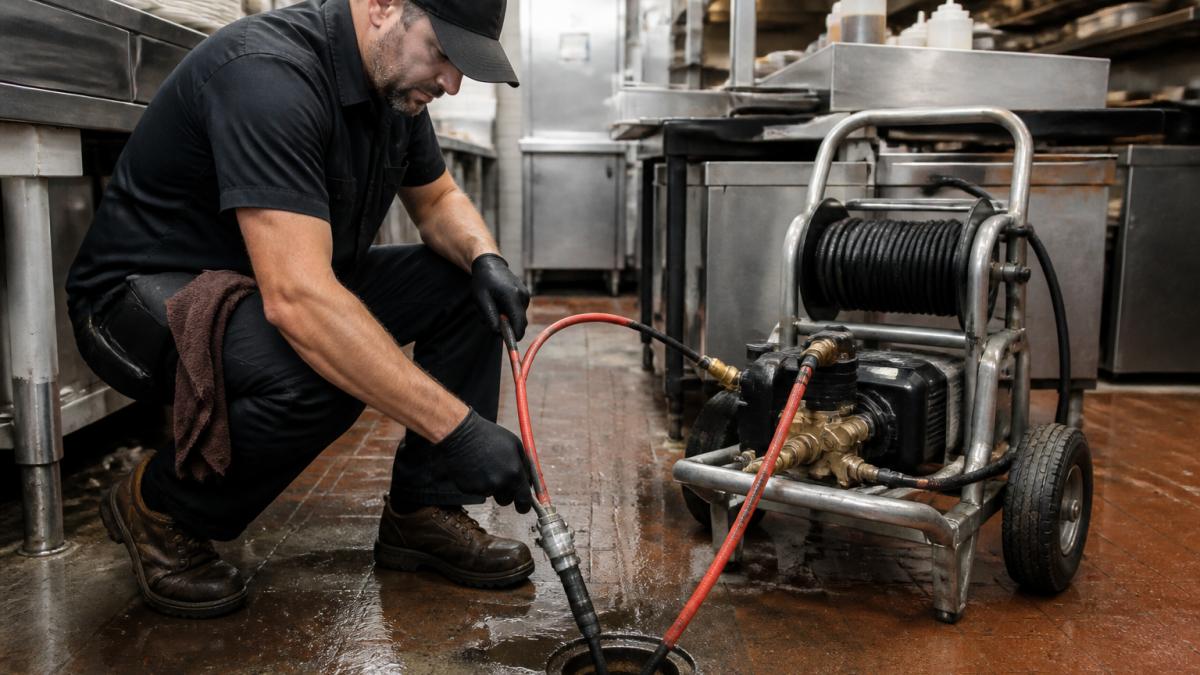
Frequency depends on your operation. Most restaurants benefit from hydro-jetting annually as preventative maintenance. High-volume operations or those with persistent grease issues might need it twice yearly. The cost of preventative hydro-jetting is far lower than emergency calls when your main drain backs up during dinner service.
Hydro-jetting is the most effective drain cleaning method for commercial kitchens because it removes buildup completely rather than just pushing it further down the line.
3. Backflow Prevention and Restaurant Plumbing Code Compliance
Backflow prevention isn’t optional, it’s a legal requirement in most jurisdictions, and for good reason (Preventing water backflow). Backflow occurs when contaminated water flows backward into the clean water supply, potentially spreading pathogens from your kitchen into the municipal system or neighboring properties.
Restaurants face specific backflow risks because of their water use patterns. High-volume demand can create pressure drops. Grease traps, floor drains, and food prep equipment all present contamination points. A backflow preventer is a one-way valve that allows water to flow out but prevents it from flowing back in. Most codes require them on water lines serving food preparation areas, dishwashing stations, and any equipment connected to the potable water supply.
Testing and certification matter. Many jurisdictions require annual backflow testing by a certified technician, with documentation filed to the local health authority. Non-compliance can result in fines, operational shutdowns, or liability if contamination is traced to your facility. This isn’t paperwork to ignore.
When planning your plumbing system, backflow prevention should be integrated into the design, not added as an afterthought. The right preventer depends on your specific setup: whether you have a single point of use or multiple potential contamination sources. Professional assessment ensures you meet code and protect your operation.
4. High-Capacity Commercial Sinks and Fixture Installation
Commercial sinks are engineered differently than residential fixtures. They handle higher volume, hotter water, and heavier use. Choosing the wrong sink creates constant maintenance headaches; choosing the right one sets your kitchen up for years of reliable service.
Stainless steel is standard because it resists corrosion, cleans easily, and withstands the thermal shock of switching between hot and cold water constantly. Size and configuration depend on your workflow. A three-compartment sink (wash, rinse, sanitize) is required for manual dishwashing in most food service operations. Prep sinks need different dimensions than handwashing stations.
Commercial-grade faucets include features residential ones don’t: higher flow rates (typically 2.2 GPM or higher), spray heads designed for cleaning large items, and durability rated for thousands of cycles. Pre-rinse spray valves are standard in most kitchens, but they consume significant water.
Installation isn’t just bolting things down. Proper slope on drain lines prevents standing water. Backflow prevention must be integrated into the water supply. Mounting height and clearance affect usability during service. These details separate professional installation from DIY approaches that create ongoing problems.
5. Emergency Plumbing Repair and Preventative Maintenance Schedules
Emergency repairs are expensive. Preventative maintenance prevents emergencies. The math is straightforward: a $200 inspection that catches a developing problem beats a $2,000 emergency call at 11 PM on a Friday.
Establish a maintenance schedule based on your equipment age and usage patterns. Water heaters typically need flushing annually to remove mineral buildup and extend their lifespan. Pressure regulators should be checked to ensure water pressure stays in the 40-60 PSI range, higher pressure damages fixtures and seals faster.
For restaurants specifically, grease trap inspection should happen monthly, with cleaning scheduled based on what you find. Drain lines should be inspected annually for buildup. Backflow prevention devices require annual testing and certification. These aren’t suggestions, they’re code requirements that protect your operation.
When problems do occur, response time matters. A burst water line or backed-up sewer doesn’t wait for business hours. Twenty-four-hour emergency service means you get help when you need it, minimizing operational downtime. Indy Plumbing’s 24/7 emergency support ensures that a plumbing failure doesn’t turn into a business failure.
Ignoring preventative maintenance until something breaks often results in cascading failures. A small leak ignored becomes water damage; a minor drain slowdown becomes a complete backup. Catch problems early.
6. Water Filtration and Sustainable Plumbing Design
Water quality affects your operation in ways you might not immediately recognize. Hard water (high mineral content) clogs fixtures, shortens equipment lifespan, and affects food quality. Chlorine and other chemicals impact taste and odor. Sediment creates buildup in lines and equipment.
Water filtration systems range from simple sediment filters (removing particles) to comprehensive systems addressing hardness, chlorine, and dissolved minerals. For restaurants, point-of-use filters on drinking water lines and ice machines are common. Some operations install whole-building systems to protect all fixtures and equipment.
Sustainable plumbing design reduces water consumption without sacrificing functionality. Low-flow pre-rinse spray valves cut water use by 30-50% compared to standard designs. Aerators on handwashing stations reduce flow while maintaining pressure. Proper drainage design prevents leaks that waste water silently. These changes lower utility bills and reduce environmental impact simultaneously.
Greywater recovery systems (capturing and reusing water from sinks and prep areas for non-potable purposes) are becoming more common in commercial kitchens, though regulations vary by jurisdiction. Some municipalities offer incentives for water conservation upgrades. Check local requirements before designing your system.
7. Choosing the Right Plumbing Solutions for Your Restaurant
Finding the best plumbing solutions for restaurants depends on three factors: your current operation’s specific needs, your facility’s age and existing infrastructure, and your budget for both immediate fixes and long-term maintenance.
Start with an assessment. A licensed plumber should evaluate your grease trap capacity, drain line condition, water pressure, backflow prevention status, and fixture age. This reveals what’s working, what needs attention, and what’s creating hidden problems.
Next, prioritize by risk. Emergency repairs (burst pipes, backed-up sewers) take immediate precedence. Code compliance (backflow prevention, grease trap maintenance) comes next because violations carry legal and financial consequences.
| Solution | Priority Level | Frequency | Compliance Impact |
|---|---|---|---|
| Grease trap cleaning | High | Monthly-quarterly | Health code requirement |
| Backflow testing | High | Annual | Legal requirement |
| Drain hydro-jetting | Medium | Annual-biennial | Prevents emergency failures |
| Fixture replacement | Medium | As needed | Improves efficiency |
| Water filtration | Low | Maintenance varies | Improves quality |
Professional installation and ongoing maintenance aren’t luxuries, they’re operational necessities. A plumber who understands commercial kitchen requirements (not just residential work) will design systems that handle your actual volume and usage patterns.
Restaurant plumbing failures don’t happen during slow periods, they happen during dinner service, on weekends, or holidays when finding emergency help is hardest. The best protection is preventative maintenance combined with immediate access to skilled professionals when problems occur.
Frequently Asked Questions
How often should restaurant grease traps be cleaned according to local bylaws?
Grease trap cleaning frequency depends on your restaurant’s volume and local municipal regulations. Most municipalities require inspection every 30 to 90 days, with cleaning scheduled based on the amount of grease accumulation. High-volume kitchens may need monthly service. Check with your local health department or municipal bylaws for specific requirements in your area, as standards vary. Regular maintenance prevents overflow, code violations, and costly emergency repairs.
What are the most common plumbing issues in commercial kitchens?
The most frequent problems include grease buildup in drain lines, clogged P-traps, water pressure fluctuations, and sewage backups. Garbage disposal failures and corroded pipes also cause operational downtime. These issues often result from inadequate grease trap maintenance, improper fixture installation, or aging infrastructure. Professional inspection identifies problems before they disrupt service.
What plumbing standards must restaurants meet for health inspections?
Restaurants must comply with provincial health codes and municipal plumbing bylaws, including backflow prevention devices on all water supply lines, properly sized and maintained grease traps, and approved commercial-grade fixtures. Drainage systems must prevent cross-contamination and sewage backup. Handwashing stations, three-compartment sinks, and equipment drainage require specific configurations. Health inspectors verify that all plumbing supports food safety and sanitation standards. Non-compliance results in fines, closure orders, or operational restrictions.
How can commercial plumbing upgrades reduce utility costs?
Efficient drainage design prevents backups and emergency repairs that interrupt service and increase labour costs. Proper pipe insulation reduces heat loss in hot water lines. Preventative maintenance eliminates costly emergency service calls and extends fixture lifespan, directly lowering operational expenses.
Comments are closed