

Table of Contents
- Why Commercial Plumbing Maintenance Matters
- Establish a Preventative Plumbing Maintenance Checklist
- Implement Commercial Drain Cleaning Services Regularly
- Recognize Signs of Commercial Plumbing Failure Early
- Manage Your Shutoff Valve and Emergency Response
- Plan for Water-Saving Upgrades and Fixture Longevity
- Document Compliance and Maintenance Records
- Frequently Asked Questions
Last Updated: September 23, 2026
Why Commercial Plumbing Maintenance Matters
A single burst pipe in a commercial building can flood multiple floors and shut down operations for weeks. The cost of emergency repairs, water damage restoration, and lost business revenue far exceeds what preventative maintenance would have cost upfront.
Commercial systems handle higher water volumes, serve more fixtures, and operate under greater pressure, so failures affect everyone in the building.
Buildings that establish a preventative maintenance schedule catch problems early and avoid emergency calls and massive repair bills.
Facility managers who stay ahead of plumbing issues report fewer disruptions, lower utility costs, and longer fixture lifespans.
The cost of preventative maintenance is always lower than emergency repairs. A structured maintenance plan protects your building’s operations, your budget, and your reputation.
Establish a Preventative Plumbing Maintenance Checklist
A preventative maintenance checklist creates accountability and ensures nothing gets overlooked.
Your checklist should be tiered: monthly, quarterly, and annual tasks. Document what you check, when, and what you find, this record is invaluable for compliance and problem-solving.
Monthly Inspections and Water Pressure Checks
Monthly: walk through your building checking under sinks for leaks, feeling pipes for unusual warmth, and listening for dripping sounds.
Most commercial buildings operate at 60-80 PSI. Check pressure with an inexpensive gauge attached to an outdoor faucet. If pressure drops unexpectedly, investigate immediately, it indicates a leak or blockage.
Quarterly Drain and Grease Trap Maintenance
Quarterly: professional drain cleaning removes hair, soap scum, food particles, and grease that accumulate inside pipes and cause backups.
For food service operations, grease trap maintenance is non-negotiable. Neglected traps overflow and create expensive, unsanitary sewage backups.
Quarterly maintenance includes professional drain cleaning, grease trap pumping and inspection, camera inspection of main drain lines, and documentation of all work.
Annual Water Heater and Backflow Prevention Testing
Annual water heater maintenance includes flushing sediment, checking the anode rod, and testing temperature and pressure relief valves to maintain efficiency and prevent failures.
Backflow prevention devices protect municipal water supplies and are required by building code. Annual testing ensures compliance.
Schedule your annual water heater and backflow prevention work during slower business periods. This minimizes disruption and gives technicians time to do thorough inspections.
Implement Commercial Drain Cleaning Services Regularly
Regular drain cleaning prevents catastrophic backups. Professional equipment removes buildup deep inside pipes where plungers can’t reach.
Hydro-Jetting for Heavy-Duty Buildup
Hydro-jetting uses high-pressure water to remove grease, mineral deposits, tree roots, and debris. It’s particularly effective for grease-clogged lines in food service, mineral-encrusted pipes, root intrusion damage, and preventative main line cleaning.
Grease Trap Cleaning in Food Service Operations
Grease trap maintenance is a legal requirement and operational necessity. Professional cleaning removes accumulated grease and solids, includes trap inspection, and provides documentation required for food service permits.
Recognize Signs of Commercial Plumbing Failure Early
Catching plumbing problems early prevents operational disasters. Modern facilities use technology-enabled monitoring to detect failures before they show physical symptoms.
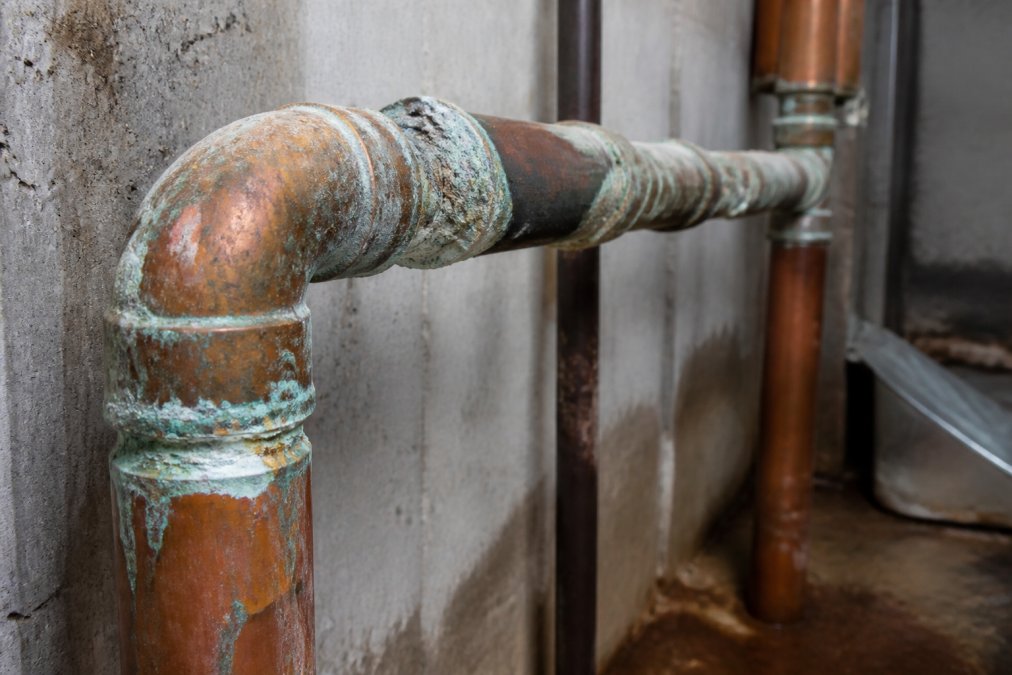
Visual Warning Signs: The Traditional Inspection Approach
Visible corrosion and pipe deterioration: Green oxidation on copper pipes, white crusty deposits on galvanized steel, and rough, pitted surfaces indicate failing pipes. Small corroded spots become pinhole leaks that cause hidden water damage.
Sewage backup and slow drainage: Multiple drains backing up simultaneously indicate a main line blockage. Watch for gurgling sounds, foul odors, and wet spots near the main drain cleanout.
Unusual water pressure and leaks: Sudden pressure drops, dripping pipes, and visible moisture indicate active leaks. Monitor water meter readings when no water is in use and check for unexplained utility bill increases.
Smart Monitoring and IoT Technology: Detecting Failures Before They’re Visible
Smart leak detection sensors: Wireless sensors detect moisture immediately and send real-time alerts. They’re particularly valuable in mechanical rooms, behind walls, multi-floor buildings, and food service areas where leaks may go unnoticed.
Water meter monitoring and consumption analytics: Smart meters track consumption and flag anomalies. A sudden 30% increase in usage indicates a leak or fixture malfunction, allowing staff to investigate before damage occurs.
Pressure monitoring systems: Smart pressure sensors installed on main water lines detect pressure drops that indicate leaks or blockages. Unlike manual pressure checks (which happen monthly or quarterly), continuous monitoring provides real-time visibility. When pressure drops below a set threshold, alerts notify facility staff immediately.
Pressure monitoring is especially valuable for:
- Early detection of pinhole leaks in copper pipes (which may not show visible corrosion for months)
- Identification of blockages in main drain lines before they cause backups
- Verification that shutoff valves and pressure regulators are functioning correctly
Integration with building management systems (BMS): Many commercial buildings now integrate plumbing sensors with their broader building management systems.
While smart monitoring systems provide early detection, they require initial investment in sensors, connectivity infrastructure, and software platforms. Smaller buildings or those with limited IT resources may find traditional quarterly inspections and monthly manual checks more practical. However, buildings with complex plumbing systems, high water consumption, or critical operations (hospitals, data centres, food service) typically see ROI on smart monitoring within 2-3 years through reduced emergency repairs and water waste.
Creating a Hybrid Inspection Strategy
The most effective approach combines visual inspections with technology-enabled monitoring. Monthly staff walks catch obvious problems and maintain familiarity with the building’s systems. Smart sensors provide continuous monitoring and early alerts. Quarterly professional inspections add expert assessment and documentation.
Manage Your Shutoff Valve and Emergency Response
Every commercial building needs a main water shutoff valve that’s clearly marked and easily accessible. Facility managers and emergency responders must know where it is.
Create an emergency response plan:
- Document the location of the main shutoff valve
- Post clear signage showing its location
- Train staff on how to operate it
- Include it in your building’s emergency procedures
- Test it regularly to ensure it functions
Plan for Water-Saving Upgrades and Fixture Longevity
Modern water-saving fixtures reduce utility costs while extending the life of your plumbing system. Lower water volumes mean less stress on pipes and connections. But more importantly, water efficiency upgrades have become a strategic business decision tied to corporate sustainability goals, regulatory compliance, and measurable cost recovery.
Building the Business Case for Fixture Upgrades
Utility cost reduction: Commercial buildings typically spend $0.50-$1.50 per 1,000 litres of water consumed, depending on local municipal rates and whether wastewater treatment is included. A mid-sized office building using 5 million litres annually can save $2,500-$7,500 per year by reducing consumption by 20-30% through fixture upgrades. Over a 10-year equipment lifecycle, that’s $25,000-$75,000 in direct savings.
Fixture Retrofit Options and Implementation Strategy
Water-saving upgrades should be prioritized based on usage patterns and current fixture age:
High-impact retrofits:
- Low-flow faucet aerators (1.5 GPM or lower, compared to standard 2.2 GPM) in restrooms and break rooms. These are the lowest-cost upgrade, typically $15-$40 per fixture installed, with payback periods under 18 months.
- Dual-flush or low-flow toilet valves (4.8 litres per flush or lower, compared to older 6-litre standards) in high-traffic restrooms. Toilets account for 30-40% of indoor water use in commercial buildings.
- Sensor-activated faucets and toilets eliminate waste from left-running water and reduce consumption by 25-35% in facilities with high turnover (offices, retail, hospitality).
- Greywater systems that recycle water from sinks, showers, or cooling systems for toilet flushing or landscape irrigation. These require higher upfront investment but can reduce overall consumption by 20-50% depending on building type.
Connecting Water Efficiency to Sustainability Reporting and LEED Certification
Many organizations now track water usage as part of ESG (Environmental, Social, Governance) reporting requirements. Water efficiency improvements provide quantifiable metrics that demonstrate corporate environmental commitment to stakeholders, investors, and regulators.
If your building is pursuing LEED certification or recertification, water-saving fixtures directly contribute to multiple credit categories:
- Water Efficiency credits reward fixture upgrades and system optimization
- Sustainable Sites credits recognize reduced potable water demand
- Operations & Maintenance credits document ongoing water management practices
Budget for capital expenditures (CapEx) on plumbing upgrades over a multi-year plan. Spreading costs across several years makes improvements more manageable and allows you to prioritize the highest-impact upgrades first. Calculate payback period for each retrofit option: (Installation Cost) ÷ (Annual Utility Savings) = Years to Recover Investment. Prioritize retrofits with payback periods under 5 years.
Document Compliance and Maintenance Records
Regulatory compliance documentation protects your building. It demonstrates that you’re maintaining systems properly and following building code requirements.
Keep detailed records of:
- Monthly inspection results and observations
- Quarterly drain cleaning and grease trap maintenance
- Annual water heater and backflow prevention testing
- Any repairs or emergency service calls
- Dates and names of technicians who performed work
- Materials used and parts replaced
Frequently Asked Questions
How often should a commercial building have its plumbing inspected?
Most commercial buildings benefit from plumbing inspections at least annually, with high-use facilities like restaurants or warehouses requiring quarterly checks. Monthly visual inspections by facility staff, combined with professional assessments annually, help catch pipe corrosion, leaks, and pressure issues before they cause system failure. The specific schedule depends on your building’s age, usage intensity, and local building code compliance requirements.
What should be included in a preventative plumbing maintenance checklist?
A comprehensive preventative plumbing maintenance checklist covers water pressure monitoring, drain cleaning, grease trap maintenance, water heater inspection, backflow prevention testing, shutoff valve accessibility checks, and pipe corrosion assessment. Include monthly visual inspections, quarterly drain service, and annual professional audits. Document all maintenance in writing to demonstrate compliance with building codes and protect against water damage liability.
What are the most common signs of commercial plumbing failure?
Watch for slow drainage, sewage backup, visible pipe corrosion, unusual water pressure fluctuations, and unexplained water damage. Grease buildup in food service areas, frozen pipes in winter, and leaking fixtures are also warning signs. Early detection through routine inspections prevents emergency repairs, operational downtime, and costly water damage mitigation.
Why is commercial drain cleaning services important for facility managers?
Regular commercial drain cleaning services prevent grease accumulation, sediment buildup, and pipe blockages that lead to sewage backup and system failure. Hydro-jetting removes heavy deposits that standard cleaning misses, extending fixture longevity and reducing emergency repair costs. For restaurants and warehouses, monthly drain maintenance is essential to avoid operational downtime and health code violations.
Comments are closed