

Table of Contents
- Common Plumbing Problems Affecting Homes and Businesses
- Slow or Clogged Drains: Causes and Solutions
- Frozen Pipes in House: Winter Prevention and Response
- Burst Pipe What to Do: Immediate Steps and Damage Control
- Signs of a Hidden Water Leak and Detection Methods
- Running Toilets, Leaking Faucets, and Low Water Pressure
- Water Heater Faults and Aging Plumbing in Older Homes
- Frequently Asked Questions
Last Updated: October 11, 2026
Common Plumbing Problems Affecting Homes and Businesses
Common plumbing problems are more than just inconveniences; they can escalate into costly water damage, health hazards, and operational disruptions if left unaddressed. At Indy Plumbing, we’ve spent over 13 years responding to everything from burst pipes at 2 AM to slow drains that homeowners ignored for months. The difference between a quick fix and a catastrophic failure often comes down to recognizing the warning signs early.
Our climate, with its freezing winters and the prevalence of hard water, creates unique plumbing challenges. Most common plumbing problems are preventable with routine maintenance and prompt attention.
Slow or Clogged Drains: Causes and Solutions
A slow-draining sink or shower is usually your first warning sign that something needs attention. Hair, soap buildup, food particles, and mineral deposits accumulate inside drain pipes over time. In older homes, corrosion or tree roots invading sewer lines can also restrict flow.
Why it happens: Hair, soap residue, grease, and hard water deposits accumulate in pipes. Tree roots can invade cracks in older sewer lines.
What to do: Remove visible hair, use a plunger, or pour boiling water down kitchen drains to dissolve grease. A drain snake can break up blockages. Avoid chemical cleaners, as they can corrode pipes.
Catch hair in a drain strainer before it enters the pipe. This single habit prevents 80% of bathroom drain clogs. Replace strainers every 6 months.
Prevention: Use drain screens, run hot water weekly, avoid pouring grease down drains, and have sewer lines inspected every 3-5 years if your home is over 40 years old.
Frozen Pipes in House: Winter Prevention and Response
Frozen pipes are a winter emergency. When water freezes, it expands and can burst the pipe, flooding your home within hours.
Signs your pipes are frozen: No water from faucets, visible frost on pipes, unusual drain odors, or gurgling sounds when turning on water.
What to do immediately: Open the affected faucet slightly to relieve pressure. Apply heat using a hair dryer, heat lamp, or heating pad; never use a blowtorch.
Prevention: Insulate pipes with foam sleeves or heat tape, seal air leaks, let faucets drip during extreme cold, open cabinet doors under sinks, keep garage and basement doors closed, and drain exterior hose bibs before November.
A burst pipe can flood your basement and cause thousands in damage within hours. Frozen pipes are not a “wait and see” problem; call a professional immediately if you suspect freezing.
Burst Pipe What to Do: Immediate Steps and Damage Control
A burst pipe is a plumbing emergency that demands immediate action.
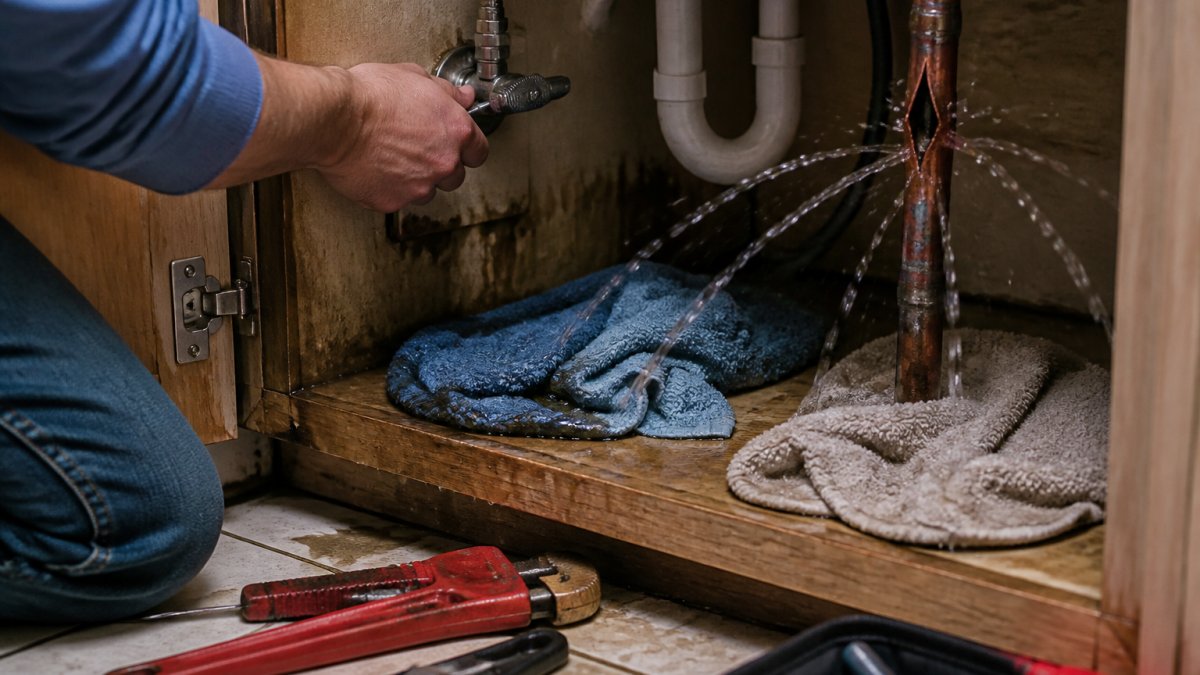
Immediate steps: Shut off the main water supply (usually in the basement or meter box). Turn off the heating system if water is near electrical components.
Damage control: Move furniture away, place buckets under drips, and dry wet areas with towels and fans to prevent mold.
Why it happens: Freezing (most common in winter), corrosion, high water pressure, or physical damage. Galvanized steel pipes are especially prone to corrosion and failure.
Prevention: Insulate vulnerable pipes, maintain water pressure below 80 psi, and have annual inspections if your home is over 50 years old.
The first 30 minutes after discovering a burst pipe determine the extent of water damage. Know where your water main is located before an emergency happens.
Signs of a Hidden Water Leak and Detection Methods
Hidden leaks cause damage for weeks or months before detection, weakening structures, promoting mold, and inflating water bills. Common locations include under-slab pipes, interior walls, and crawl spaces.
Warning signs:
- Water bill increases without explanation
- Soft spots or buckling in flooring
- Discoloration or staining on ceilings or walls
- Musty odors in basements or crawl spaces
- Visible mold or mildew
- Warm spots on floors (hot water line leak)
- Hissing or running water sounds when no fixtures are in use
Detection methods: Turn off all water-using appliances and check your meter; if it’s still running, you have a leak. Listen for hissing or trickling sounds. A licensed plumber can use acoustic detection or infrared cameras to pinpoint leaks without invasive inspection.
What to do: Call a professional plumber if you suspect a hidden leak. Early detection prevents catastrophic damage.
Prevention: Have annual inspections, monitor your water meter and bill, and install shut-off valves under sinks and toilets.
Running Toilets, Leaking Faucets, and Low Water Pressure
These three issues are among the most common. Each has distinct causes, repair costs, and urgency levels; understanding the difference helps you decide whether to tackle it yourself or call a professional.
Running Toilets: Diagnosis and Repair
A running toilet wastes 200 liters of water per day and inflates your bill by $10-$20 monthly if left unchecked.
How to diagnose: Listen for water trickling into the bowl. Add food coloring to the tank; if color appears in the bowl within 15 minutes, the flapper is leaking.
DIY repair: Flapper kits cost $8-$15 and take 10-15 minutes. Turn off the water supply, flush, and follow kit instructions.
Professional repair cost:
$120-$180 for a service call plus parts. If the fill valve also needs replacement, add $80-$120.
When to call a plumber:
If the toilet continues running after flapper replacement, the fill valve may be faulty.
Leaking Faucets: Identifying the Source
A single dripping faucet wastes 15-20 liters per day. Over a year, that’s 5,000-7,000 liters of wasted water and $30-$50 in extra charges. The source determines repair complexity and cost.
DIY repair:
Two-handle faucet washer replacement is beginner-friendly. Single-handle cartridge replacement requires more precision; if you’re uncomfortable, professional installation ($150-$250 including parts) is safer than risking water damage.
Professional repair cost:
$120-$200 for diagnosis and repair. Faucet replacement (if repair is not cost-effective) ranges from $200-$600 depending on style and finish.
Prevention:
Turn off faucets firmly but do not force them; over-tightening wears washers faster. Install aerators (screens at faucet tips) to catch sediment from hard water, which accelerates wear.
Low Water Pressure: Causes and Solutions
Low pressure throughout your home, or in a single fixture, has different root causes and urgency levels.
Pressure at a single faucet:
Start by cleaning the aerator. Unscrew the screen at the faucet tip, rinse it under running water, and soak it in white vinegar for 30 minutes to dissolve mineral deposits. Reinstall and test.
Low pressure throughout the home: Check your water meter for hidden leaks. If stable, the cause is likely mineral buildup (flush line or install a water softener), a failing pressure regulator, a municipal water main issue (contact your utility), or corroded galvanized pipes.
When to call immediately: If pressure drops suddenly after a water main break or if you notice discolored water, call a plumber the same day. Discolored water indicates corrosion or sediment mobilization.
Before paying for a pressure regulator replacement, confirm the problem is not a hidden leak. Turn off all water-using appliances, check your meter for 30 minutes, and note whether it advances. If it does, you have a leak; if it doesn’t, low pressure is likely a regulator or mineral buildup issue.
Do not attempt to adjust or replace a pressure regulator yourself unless you have plumbing experience. Improper adjustment can damage pipes or create unsafe pressure spikes that burst fittings.
Water Heater Faults and Aging Plumbing in Older Homes
Homes built before 1980 face two overlapping challenges: water heaters that fail faster due to hard water, and plumbing systems designed for lower water usage and vulnerable to corrosion. Understanding both helps you prioritize repairs and avoid costly failures.
Water Heater Lifespan and Failure Signs
Water heaters last 8-12 years; hard water shortens this to 6-8 years. A failing water heater shows clear warning signs:
- Rusty or discolored hot water: Indicates internal rust or sediment mobilization. This can stain laundry and damage appliances.
- Rumbling or popping noises: Sediment at the tank bottom heats and expands, creating noise. This is a sign the tank is nearing failure.
- Lukewarm or inconsistent hot water: The heating element or thermostat is failing, or sediment insulates the element from the water.
- Leaking from the tank base: The tank is corroding from inside. This is a failure emergency; water can flood your basement within hours.
- Age over 10 years: Even if the heater works, replacement is prudent to avoid sudden failure.
Professional inspection cost:
$100-$150. A plumber can assess sediment levels, element condition, and remaining lifespan.
Replacement options and costs:
- Standard tank water heater (approximately 190-280 liters): $800-$1,500 installed. Lifespan 8-12 years. Most common choice for existing homes.
- Tankless (on-demand) water heater: $1,500-$3,000 installed. Provides unlimited hot water, uses 30-40% less energy, takes up minimal space. Requires upgrades to gas or electrical supply; not suitable for all homes.
- Heat pump water heater: $2,000-$3,500 installed. Most energy-efficient option but requires professional installation and adequate space. Best for homes with room for the unit and stable indoor temperatures.
Hard water and maintenance: Flush your water heater annually to remove sediment. This simple maintenance extends heater life by 2-3 years and costs nothing.
Legacy Pipe Materials: Identification and Replacement Decisions
Older homes contain three common pipe materials, each with distinct failure modes and urgency levels:
Galvanized steel pipes (1920s-1970s) corrode from inside, reducing flow and water quality. Warning signs: Rusty water, reduced pressure, pinhole leaks. Replacement cost: $3,000-$8,000. Urgency: If water is discolored or pressure declining, replace within 1-2 years.
Cast iron sewer lines (1920s-1970s) crack and collapse; tree roots invade cracks. Warning signs: Recurring backups, slow drains, sewage odors, lush grass patches. Replacement cost: $4,000-$15,000; trenchless repair $3,000-$8,000. Urgency: Monthly backups require replacement within 6-12 months.
Copper pipes with pinhole leaks (1970s-1990s) result from aggressive water chemistry. Warning signs: Small leaks, water staining, reduced pressure. Replacement cost: $2,000-$6,000. Urgency: Repair within 3-6 months.
Inspection and Replacement Planning
If your home was built before 1980, have a professional inspection including visual examination of exposed pipes, water quality testing, pressure testing, and camera inspection of sewer lines if needed. Pricing for inspections is available on our website.
Immediate (6 months): Burst pipes, sewage backups, severely discolored water. Soon (1-2 years): Heavy rust, recurring backups, pinhole leaks. Plan ahead (3-5 years): Aging water heater, moderate corrosion, minor sewer line cracks.
Financing options: Many municipalities offer rebates or low-interest loans for water main or sewer line replacement. Contact your local municipal office or ask your plumber about financing plans.
If you’re buying an older home, request a plumbing inspection as part of the home inspection. Knowing the pipe materials and condition before purchase helps you budget for future repairs and negotiate the price.
Do not ignore discolored water or recurring backups. Both indicate plumbing failure in progress. Early intervention prevents water damage, mold, and health hazards.
Frequently Asked Questions
What are the most common plumbing problems in homes?
The most frequent issues include slow or clogged drains, running toilets, leaking faucets, low water pressure, frozen pipes during winter, hidden water leaks, and water heater failures. Older homes often experience pipe corrosion and drainage system backups. Many problems develop gradually, but some, like burst pipes or sewer line issues, demand urgent attention to prevent costly water damage and basement flooding.
How can I tell if a pipe is frozen?
Frozen pipes typically show no water flow from affected fixtures, even when the valve is fully open. You may notice frost or ice on exposed pipes in unheated areas like basements or crawl spaces. Listen for unusual sounds when attempting to use water. If you suspect a frozen pipe, do not apply direct heat without professional guidance. Contact a licensed plumber immediately to thaw the pipe safely and assess whether the freeze has caused damage or a pipe burst.
What should I do if a pipe bursts?
First, shut off the main water supply immediately to stop water flow and minimize damage. Turn off the water heater if the burst is on the hot-water line. Open all faucets to drain remaining water from the system. Move furniture and valuables away from the affected area, and use towels or buckets to contain water. Document the damage with photos for insurance purposes. Call a licensed plumber right away; burst pipes require professional repair to prevent structural damage, mold growth, and further water damage to your property.
Why does my drain keep clogging, and how do I prevent it?
Repeated clogs usually result from hair, soap buildup, grease, or tree roots in the sewer line. Older homes with aging plumbing are especially vulnerable to root intrusion and pipe corrosion. Prevent clogs by using drain screens, avoiding pouring grease down drains, and scheduling routine drain cleaning. If clogs return frequently despite prevention efforts, the underlying drainage system may need inspection or replacement. A professional plumber can identify whether the issue is a localized clog or a more serious structural problem in your sewer line.
Comments are closed