

Last Updated: November 1, 2026
Quick Summary
If you have a burst pipe, a sewer backup, or a leak near electrical equipment, call an emergency plumber Mississauga residents can reach around the clock right away. First shut off the main water valve, then move valuables away from the water and photograph the damage before cleanup begins.
- Call for emergency help right away if water is spraying, pooling, or leaking through ceilings.
- Shut off the main water valve before anything else, and turn it clockwise until it stops.
- Photograph the damage before cleaning up, since the photos support insurance claims.
- Ask for a written estimate and get approval before any chargeable work begins.
- Test your main shut-off valve once a year so it still turns when you need it.
Table of Contents
- What to Do in the First 10 Minutes Before the Plumber Arrives
- How to Find and Use Your Water Shut-Off Valve
- Burst Pipe Repair: What Happens During an Emergency Visit
- Plumbing Emergency Checklist for Homeowners
- Emergency Callout Fees and How to Vet a 24/7 Plumber
- Preventing Burst Pipes in Vacant Homes Before You Leave
- Booking Indy Plumbing for Your Next Emergency
- Frequently Asked Questions
When water is running across the basement floor at 2 AM, you need an emergency plumber Mississauga residents can call right away, not a list of options.
A plumbing emergency is any problem that is actively causing water damage, creating a safety risk, or leaving you without an essential service like heat or water.
Call for emergency help right away if you see:
- Water spraying or pouring from a pipe, fitting, or water heater
- Water pooling on floors, leaking through ceilings, or seeping into walls
- Sewage backing up into sinks, tubs, or floor drains
- A gas smell, or any leak near a gas line
- No water supply at all to the home
Repairs that can usually wait:
- A slow drain that still empties
- A small drip from a faucet
- A toilet that runs intermittently
- Cosmetic leaks on a fixture that is not spreading water
Water damage moves fast. Under flooring and inside drywall, a small leak can ruin materials within hours, and mould can follow within days.
What to Do in the First 10 Minutes Before the Plumber Arrives
The first 10 minutes matter more than most homeowners expect. Your goal is to stop the water, protect the people and property around the leak, and give the plumber a clear picture of the problem.
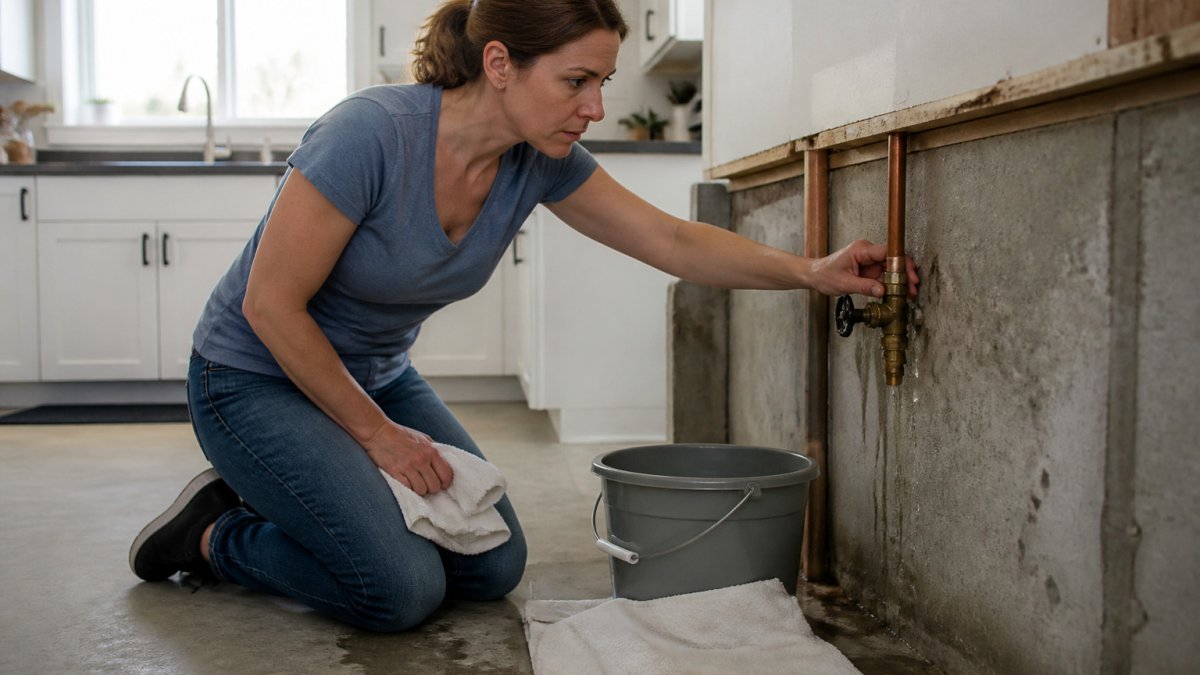
Start by shutting off the water at the main valve. Then move anything valuable out of the path of the water, and put towels or a bucket under active drips.
Document the damage with photos before you start cleaning up. This helps with insurance claims later.
Avoid trying major repairs yourself, especially on gas lines or pipes under pressure. A temporary patch can cause a bigger failure when the water is turned back on.
How to Find and Use Your Water Shut-Off Valve
Every home has a main shut-off valve, usually where the water line enters the house.
To turn it off, turn the handle or wheel clockwise until it stops. A gate valve, which has a round wheel, may need several turns.
Also locate the individual shut-off valves under sinks and behind toilets. Closing one of these stops water to a single fixture while the rest of the home keeps working. Label them now, while you are calm.
Burst Pipe Repair: What Happens During an Emergency Visit
Knowing what a 24/7 call actually involves removes much of the uncertainty, and it helps you prepare the information the plumber needs. Read our guide on temporary and permanent leak fixes for the same-topic background. The sequence below is a common pattern for a burst-pipe or major-leak callout; the specifics vary with the pipe material, the location of the leak, and how much water has escaped.
1. Triage on the phone
The dispatcher’s job is to work out how urgent the situation is and what to send. Expect questions about:
- Where the water is coming from and whether it is still flowing
- Whether you have shut off the main valve, and whether the shut-off worked
- Whether water is near electrical panels, outlets, or gas appliances
- The type of property (house, apartment, commercial unit) and access details
- Whether sewage is involved, which changes the safety precautions
Answer as precisely as you can. If water is near electrical equipment or you smell gas, say so immediately, those situations change the response.
2. Arrival and diagnosis
On arrival, the plumber will confirm the source before doing anything else. For a burst pipe inside a wall or ceiling, that can mean opening a small access point to see the failure. Expect the plumber to explain what was found and what the options are before chargeable repair work begins.
3. Temporary mitigation versus permanent repair
Not every emergency can be permanently fixed on the first visit, and a good plumber will say so. Common outcomes:
4. Approval before chargeable work
You should receive a written estimate covering the scope, parts, and price before the plumber proceeds beyond stabilization. Ask what is included, what is excluded, and what could change the price. Approve in writing where possible.
5. Cleanup and documentation
Keep the invoice, the parts list, and your photos together, they are what your insurer and any future plumber will ask for.
6. Follow-up
Ask whether any follow-up is recommended, and get any follow-up appointment in writing.
The most useful thing you can do during an emergency visit is to stay available for questions, keep the area clear, and ask for a written estimate before chargeable work starts.
Plumbing Emergency Checklist for Homeowners
Keep this list somewhere easy to find, such as on the fridge or in your phone:
- Location of the main water shut-off valve, confirmed and tested
- Location of the electrical panel and the breaker for the affected area
- Local emergency plumber phone number saved in your phone
- Towels, buckets, and a wet-vac stored in an accessible spot
- Flashlight and a way to reach the basement or crawl space in the dark
- Photos of key valves and the water heater, taken for reference
- Homeowner insurance policy number and claims phone line saved
- List of who in the house knows how to shut off the water
Emergency Callout Fees and How to Vet a 24/7 Plumber
After-hours plumbing carries real cost, and the biggest source of complaints is not the total bill but the surprise. Understanding how emergency pricing is built lets you ask better questions before anyone is dispatched, and a short verification checklist protects you from the minority of operators who trade on panic.
How emergency callout pricing is usually built
Emergency plumbing invoices often combine several components. Ask about each one separately, because a low headline number can hide the rest:
- Callout or dispatch fee, a charge for sending a plumber to your address, which may differ outside standard business hours.
- After-hours labor rate, an hourly rate that may differ for evenings, overnight, weekends, and holidays. Confirm whether the clock starts at dispatch or on arrival.
- Parts and materials, ask how parts are priced and whether they are stocked or sourced separately.
- Diagnostic or assessment charge, some companies bill a separate fee to locate the problem. Ask whether this is credited against the repair if you approve the work.
- Taxes, compare quotes on a tax-included basis.
Ask for a written estimate before chargeable work starts. If the final bill is likely to differ from the estimate, ask what would cause the change and get approval before the extra work begins.
Ask three questions before you authorize dispatch: What is the callout fee? What is the after-hours hourly rate? Will I receive a written estimate before work starts? A company that answers all three clearly is usually operating above board.
Questions to ask before you authorize work
- Is the callout fee separate from the repair, and is any part of it credited if I approve the job?
- Is there a minimum billing period (for example, the first hour)?
- Are parts billed at cost plus a markup, and can I see the parts list on the invoice?
- What is your warranty on labor and on parts, and how long does each last?
- Will you provide a written estimate and get my approval before exceeding it?
How to verify a plumber before hiring
Licensing and insurance are the two checks that matter most, and both are verifiable rather than taken on trust.
- Licensing, Ask for the company’s licence details and confirm them before work begins.
- Insurance, Ask for a certificate of insurance showing general liability coverage. If a repair goes wrong and damages your home, an uninsured operator leaves you exposed.
- Written estimate, Insist on a written scope and price before chargeable work starts, and keep it with your invoice.
- Warranty, Ask separately about the warranty on labor and on parts, and get it in writing.
- Reviews and references, Read recent reviews for patterns (punctuality, pricing accuracy, cleanup) rather than a single rating, and ask for references on comparable jobs if the scope is large.
- Local presence, A verifiable business address and a phone number that reaches a person, not only a call center, are good signs for an emergency service.
Be cautious of any company that refuses to explain fees before arriving, quotes a suspiciously low callout to get in the door, or pressures you to approve extensive work during the first visit without a written estimate. You are entitled to a second opinion, and a genuine emergency can usually be stabilized temporarily while you decide.
Keeping records
Save the written estimate, the final invoice, the parts list, and your before-and-after photos together. If you claim on home insurance, this package answers most of the adjuster’s questions and speeds up the process.
The questions below help you compare what an emergency callout can cost before anyone is dispatched.
| Cost component | What it covers | What to ask |
|---|---|---|
| Callout or dispatch fee | Sending a plumber to your address | Is it credited if you approve the repair? |
| After-hours labor rate | Hourly rate outside business hours | Does the clock start at dispatch or arrival? |
| Parts and materials | Fittings, pipe and components | Is the parts list shown on the invoice? |
| Diagnostic or assessment charge | Locating the problem | Is it credited against the repair? |
| Taxes | Sales tax on the invoice | Are quotes compared tax-included? |
Preventing Burst Pipes in Vacant Homes Before You Leave
Vacant homes are especially vulnerable to burst pipes. Without heat, water inside pipes can freeze and expand, which splits the pipe. Even a short absence in cold weather creates risk.
Before leaving a home unoccupied for an extended period in winter, keep the heat running at a safe minimum temperature.
Check on the property regularly, and ask a neighbour or property manager to look for signs of leaks. A small problem found early costs far less than a flooded basement discovered weeks later.
Booking Indy Plumbing for Your Next Emergency
When a pipe bursts or a major leak starts, you need a plumber who can respond quickly and explain what needs to happen.
If you have a leak in progress, call our emergency line for fast help or reach our team through the contact page to arrange service. For guidance on what to do before we arrive, see our 10-minute emergency steps.
Frequently Asked Questions
What counts as a plumbing emergency?
A plumbing emergency is any problem that causes or threatens water damage, loss of basic service, or a safety risk. Burst or leaking pipes, water pooling on floors, sewage backing up into a tub or floor drain, a gas smell near a gas appliance, and a water heater leaking from its base all qualify. A slow drain, a dripping tap, or a running toilet can usually wait for a scheduled appointment, unless the problem is getting worse by the hour. When in doubt, shut off the water at the main valve first and call for help, since the cost of waiting is usually higher than the cost of a call.
Can a burst pipe be repaired the same day?
In many cases, yes. Accessible pipes may be repairable the same visit, while repairs inside walls or ceilings can take longer because the surface must be opened first. Before the visit, shut off the water supply to the affected area and keep a record of what was damaged. Ask the plumber whether the repair is temporary or permanent so you know what follow-up work to expect.
What should I ask before hiring a 24/7 plumber?
Ask for the total emergency callout fee and whether after-hours dispatch carries an extra charge. Confirm that the company is licensed and insured, and ask for a written estimate before work starts. Ask what the response time target is for your area and whether the technician will call before arriving. Finally, ask whether the repair is guaranteed in writing. Indy Plumbing lists its pricing on its website, so you can check current rates before you call.

Comments are closed