

Table of Contents
- What Counts as a Plumbing Emergency (and What Can Wait)
- How to Shut Off Your Main Water Valve During a Burst Pipe
- DIY Temporary Fixes While You Wait for Emergency Plumbing Repair
- When to Call an Emergency Plumber (and When to Wait Until Morning)
- Preventing Burst Pipes in Vacant Homes and Rental Properties
- What to Expect During a 24/7 Emergency Plumbing Repair Call
- Conclusion
- Frequently Asked Questions
Last Updated: September 21, 2026
What Counts as a Plumbing Emergency (and What Can Wait)
A plumbing emergency is any failure that risks ongoing water damage, sewage exposure, loss of heat or hot water in winter, or a total loss of water to the property. At Indy Plumbing, our licensed team has handled urgent calls across Mississauga, Orangeville, and Milton for over 13 years, and the same rule holds: if water is escaping where it shouldn’t, treat it as an emergency plumbing repair situation until a professional confirms otherwise.
Signs You Need Urgent Repair
Call immediately if you see any of these:
- Water pooling or spraying from a burst pipe
- Sewage backing up into a tub, shower, or floor drain
- No water at all, or no hot water during a cold snap
- A water heater leaking from the tank or base
- A sump pump that has stopped running during heavy rain
A slow drip under a sink, a running toilet, or a single clogged drain can usually wait for a scheduled visit. Water where it shouldn’t be cannot.
How to Shut Off Your Main Water Valve During a Burst Pipe
Shutting off your main water valve is the single most important step during a burst pipe, and it takes under a minute once you know where the valve is. Find it before you need it: it’s typically in the basement near the front foundation wall, in a utility closet, or beside the water meter.
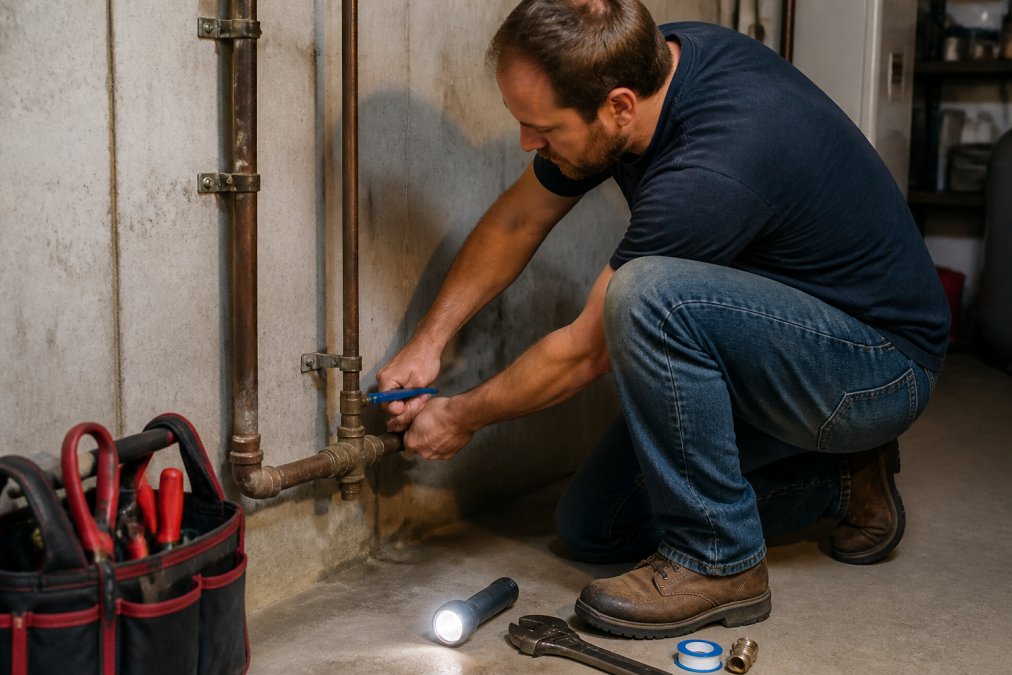
Step-by-Step: Shutting Off the Main Valve
- Turn the valve clockwise until it stops. A ball valve needs a quarter turn; a gate valve takes several full turns.
- Open the lowest faucet in the house, usually a basement tap, to drain the remaining water and relieve pressure.
- Shut off the water heater if the leak is near it.
- Call for emergency plumbing repair and keep the valve closed until a plumber arrives.
If the valve is seized or you can’t find it, call your water utility for an emergency shut-off at the curb. The Ontario Ministry of Municipal Affairs and Housing guidance on homeowner water responsibilities outlines what falls to you versus the municipality.
DIY Temporary Fixes While You Wait for Emergency Plumbing Repair
A temporary fix buys time, not a solution. The goal is to slow or stop water from spreading until a certified technician arrives, and to avoid doing anything that turns a contained leak into a flooded basement. Most practitioners find that the difference between a fix that holds for an hour and one that fails in five minutes comes down to matching the patch to the pipe material and the pressure behind it.
Match the Fix to the Pipe Material
- Copper or PEX supply lines: Silicone self-fusing tape wrapped under tension, then a hose clamp over the wrap. Silicone tape bonds to itself, not the pipe, so it holds moderate pressure better than rubber patches.
- ABS or PVC drain lines: These run at low pressure, so a rubber patch held by a hose clamp usually stops the drip. Clean and dry the surface first, tape will not bond to a wet joint.
- Galvanized steel: Often corroded at the threads. A pipe repair clamp (the sleeve-and-gasket type sold at hardware stores) is more reliable than tape because the failure is usually a pinhole, not a split.
- Flexible braided supply lines: Do not patch these. Shut the fixture isolation valve instead; a failed braided line is a replace-only item.
Step-by-Step for a Burst or Split Pipe
- Shut the main valve first (see the section above). A patch on a pressurized line will blow off.
- Open the lowest faucet to drain residual water and relieve pressure in the line.
- Dry the pipe surface with a rag. Tape and clamps need a dry, clean surface to grip.
- Wrap silicone tape starting two inches past the damage on each side, overlapping each pass by half, and pull it tight as you go.
- Seat a hose clamp or C-clamp over the wrap, centered on the damage. Tighten until the leak slows to a weep, over-tightening can crush PEX or deform copper.
- Place a bucket or towel underneath and check the patch every 15-20 minutes until the plumber arrives.
What to Do for the Other Common Emergencies
- Leaking supply line under a sink: Close the fixture isolation valve (the small oval handle on the supply tube). If there is no isolation valve, close the main. Open the faucet to drain the line, then place a bucket under the trap.
- Clogged drain backing up: Stop using all water on that line, including the dishwasher, washing machine, and any fixture upstream. A plunger can make a partial blockage worse if the clog is past a vent, so if two plunges don’t clear it, stop.
- Leaking water heater: Shut the cold inlet valve on top of the tank, then turn off the gas control or flip the breaker for an electric unit. Attach a garden hose to the bottom drain valve and run it to a floor drain, opening the valve briefly to drop the tank pressure. Do not drain the tank fully, a dry tank can crack the glass lining.
- Sewage backup: Do not run water, do not flush, and do not use chemical drain cleaners. They are a safety hazard for the technician and rarely clear a main-line blockage.
Never use electrical tape or duct tape alone on a pressurized pipe. Both fail under pressure within minutes and can turn a small leak into a flooded basement. Duct tape also leaves adhesive residue that makes the permanent repair slower.
Keep a small emergency kit on hand: silicone self-fusing tape, two hose clamps in common sizes, a pipe repair clamp, a bucket, and a headlamp. The whole kit costs less than a single after-hours call and covers most of what you’ll face before a plumber arrives.
A temporary fix is not a repair. Even if the patch holds, the pipe behind it is still compromised, and pressure cycling will find the weak point again. Book the permanent repair as soon as the immediate leak is contained.
When to Call an Emergency Plumber (and When to Wait Until Morning)
Call an emergency plumber when water is actively escaping, sewage is involved, or you have no water or heat during freezing temperatures. Wait until morning for slow drips, a single slow drain, or a toilet that runs intermittently.
Photograph the leak and shut-off valve before the plumber arrives. It speeds up diagnosis and gives you a record for your insurance claim if water damage occurs.
Preventing Burst Pipes in Vacant Homes and Rental Properties
Preventing burst pipes in vacant homes comes down to three things: keep the heat on, drain the lines, or monitor the property. A vacant unit with no heat during an Ontario cold snap is the most common source of winter burst pipes we see.
- Keep the thermostat at a minimum of 15°C in vacant units.
- Shut off the main valve and drain all lines if the property will sit empty for weeks.
- Install a smart leak detector or monitored alarm near the water heater and main valve.
- Have a property manager check the unit weekly during winter.
What to Expect During a 24/7 Emergency Plumbing Repair Call
A 24/7 emergency plumbing repair call follows a predictable sequence: dispatch, diagnosis, quote, repair, and cleanup. Knowing the sequence in advance helps you ask the right questions and avoid surprises on the invoice.
Here’s how a typical call runs:
| Stage | What Happens | Typical Duration |
|---|---|---|
| Dispatch | Call answered, address and issue logged | 2-5 minutes |
| Arrival | Technician on site, leak contained | Varies by distance |
| Diagnosis | Camera or pressure test identifies the cause | 20-45 minutes |
| Quote | Upfront price before any work begins | 5-10 minutes |
| Repair | Pipe, valve, or fixture replaced or cleared | 1-3 hours |
| Cleanup | Work area dried and tidied | 15-30 minutes |
How Emergency Pricing Actually Works
After-hours plumbing pricing is not a mystery, it follows a structure you can ask about before you book. Most emergency calls are billed as a combination of three components:
- A dispatch or call-out fee. This covers the truck roll and the first block of on-site time. It applies whether or not you approve the repair.
- A labour rate. This is usually higher outside standard business hours (evenings, weekends, statutory holidays). Ask whether the rate is flat or hourly, and whether it changes at midnight.
- Parts and materials. Marked up from cost, but a transparent shop will show the line item. Common parts, a shut-off valve, a section of PEX or copper, a wax ring, are inexpensive; specialty parts for older systems can be the largest line on the bill.
- What is the call-out fee, and does it include any diagnostic time?
- Is the after-hours rate different from the daytime rate, and when does it change?
- Will I get a written price before work starts, and does that price include parts?
- If the repair needs a part you don’t carry, what happens to the call-out fee?
What Drives the Final Cost Up or Down
- Time of day. A 2 AM call on a statutory holiday sits at the top of the rate range; a 7 AM weekday call sits near the bottom.
- Access. A failed section behind a finished wall or under a slab takes longer to reach than one in an open basement.
- Pipe material and age. Older galvanized or polybutylene systems often need adapters or a larger section replaced, which adds parts and time.
- Water damage. If the leak has been running, drying and restoration are a separate scope from the plumbing repair and are usually billed separately.
- Whether the repair is permanent or a same-night stabilization. Some calls end with the leak stopped and water off, with the permanent repair scheduled for daytime rates, often the cheaper path.
You are entitled to a clear price before work begins. If a technician cannot or will not give you one, that is a signal to pause. A written or verbal quote before the wrench comes out is standard practice for a reputable emergency plumber.
After the Repair
Ask the technician to show you the failed part and explain what caused the failure, a corroded section, a failed valve, a frozen line. That tells you whether the rest of the system is at risk. Keep the invoice and any photos; if water damage occurred, your insurer will want both. For current rates and what’s included, see the Indy Plumbing pricing page.
Conclusion
An emergency plumbing repair is stressful, but the steps are simple: shut off the water, contain the leak, and call a licensed plumber. Most homeowners find that a fast, honest response matters more than anything else at 2 AM.
Frequently Asked Questions
What counts as a plumbing emergency in a residential home?
A true plumbing emergency threatens property, health, or safety and cannot wait until morning. Burst pipes, uncontrollable leaks, sewage backups, no running water, and a failed water heater in winter all qualify. Slow drains or a dripping faucet are annoying but can typically wait for a scheduled visit. If water is actively flowing where it should not, shut off your main valve and call for emergency plumbing repair right away.
Are 24/7 emergency plumbers available on holidays?
Yes. A genuine 24/7 service operates around the clock, including weekends and statutory holidays. Indy Plumbing offers 24/7 emergency support with licensed and insured plumbers on call. When you call, ask two things: the expected arrival window and whether holiday rates apply. A reputable company confirms both before dispatching a technician, so you know what you are agreeing to before anyone arrives.
What should I do while waiting for an emergency plumber to arrive?
Shut off the main water valve first, then open the lowest faucet in the house to drain remaining water from the lines. Kill power to any flooded area at the breaker panel if it is safe to reach. Move furniture and electronics away from the water, and place towels or buckets to limit spread. Do not use electrical appliances in standing water. Take photos of the damage for your insurance claim before cleanup begins.
Is it safe to use chemical drain cleaners for emergency clogs?
Chemical drain cleaners can damage older pipes and are risky if a clog is fully blocking the drain, since the chemicals sit against the pipe wall. For a complete blockage, a plunger or drain snake is safer. If you have already poured chemicals and the drain is still blocked, tell the plumber before they arrive so they can take precautions. Hydro-jetting is the safer long-term fix for recurring clogs.
Comments are closed