

Table of Contents
- What Constitutes a Plumbing Emergency
- How to Shut Off Your Main Water Valve in an Emergency
- Immediate Steps to Take While Waiting for Help
- Understanding the Cost of Emergency Plumbing Repairs
- Preventing Frozen Pipes in Winter
- Why Licensed and Insured Plumbers Matter
- 24/7 Emergency Plumbing: Transparent Pricing and Rapid Response
- Frequently Asked Questions
Last Updated: October 2, 2026
What Constitutes a Plumbing Emergency
A plumbing emergency isn’t just any leak or slow drain. True emergencies demand immediate attention because they threaten your property, health, or safety. At Indy Plumbing, we define emergency plumbing services as urgent issues that require same-day or immediate response to prevent water damage, contamination, or system failure.
Burst pipes are the classic example. When a pipe ruptures, water floods your walls, floors, and foundation at rates that can cause tens of thousands of dollars in damage within hours. A burst pipe in winter is worse; the ice that caused it often means multiple fractures across your system. Sewage backups rank equally high on the emergency scale because they pose serious health risks and can render bathrooms and kitchens unusable.
Major leaks from water heaters, under-sink cabinets, or behind walls also qualify. These aren’t the slow drips you can catch with a bucket. They’re the leaks that soak drywall, rot framing, or flood basements. Gas line leaks are emergencies too, not plumbing in the traditional sense, but they fall under the same urgent response category because the danger is immediate and serious.
Clogged drains that back up sewage into your home, frozen pipes that cut off water supply entirely, and failed sump pumps during heavy rain all demand emergency plumbing services. The common thread: waiting until Monday morning isn’t an option. The longer you wait, the worse the damage becomes and the higher your repair bill climbs.
If you smell gas near your plumbing or heating system, leave your home immediately and call your gas provider or emergency services. Do not attempt to locate the source yourself.
How to Shut Off Your Main Water Valve in an Emergency
When a pipe bursts or a major leak starts, your first move should be to shut off the main water valve. This single action stops water from flowing through your entire system and prevents catastrophic damage while you wait for emergency plumbing services.
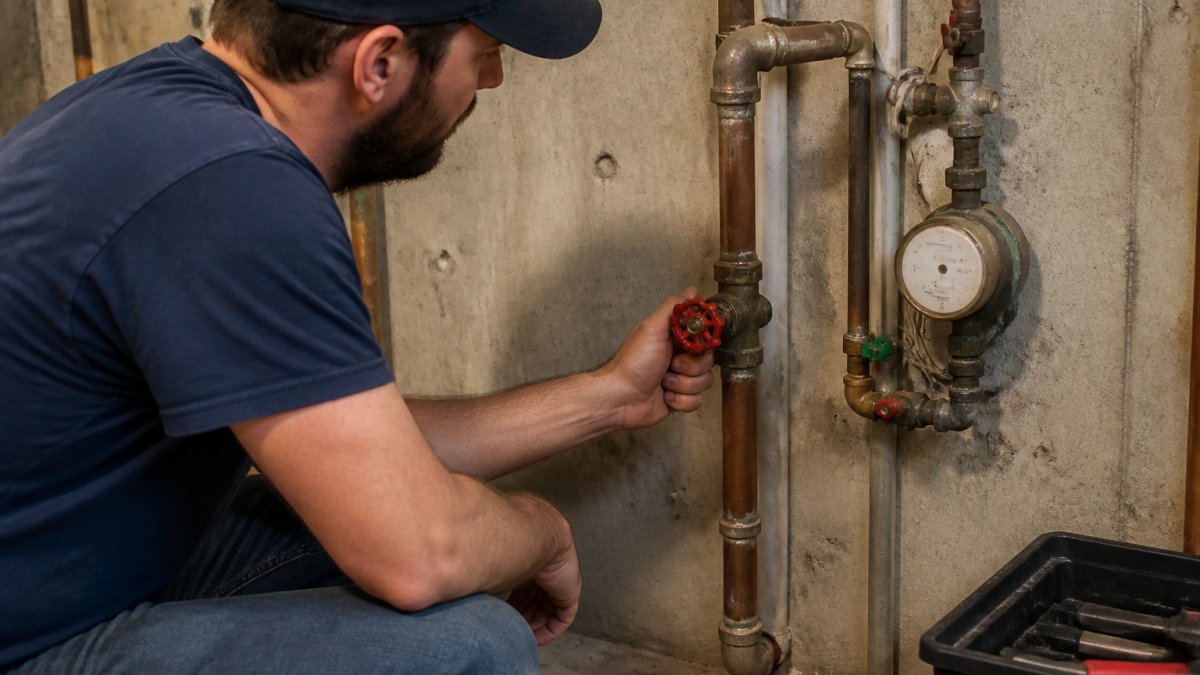
Most homes have two shut-off points. The main valve is typically located where the water line enters your home, usually in the basement, crawl space, or utility room near the water meter. In warmer climates or newer homes, it might be outside in a valve box at ground level. The valve itself looks like a wheel handle or a lever, depending on your home’s age and plumbing design.
To shut it off, turn the wheel handle clockwise until it stops. If you have a lever-style valve, turn it 90 degrees so it’s perpendicular to the pipe. You don’t need to force it; firm, steady pressure is enough. Once it’s closed, test by turning on a faucet. Water should stop flowing within seconds.
Here’s what most people miss: locate your main valve before an emergency happens. Walk through your basement or utility area now, find it, and make sure you can access it easily. If the valve is stuck or corroded from years of disuse, you won’t be able to turn it when you need it most. If it won’t budge, call a licensed plumber to service it.
Mark your main shut-off valve with bright tape or paint so everyone in your household can find it instantly in a crisis. Take a photo and send it to family members so they know where it is.
Immediate Steps to Take While Waiting for Help
After you’ve shut off the main water, you have a critical window to minimize damage. The next 15 to 30 minutes determine whether this becomes a contained emergency or a catastrophe.
Open all the faucets in your home, kitchen, bathrooms, outdoor hose bibs. This drains water still trapped in the pipes and relieves pressure that might force water out through cracks or weak points. It sounds counterintuitive, but it works. Open the lowest faucet in your home (usually a basement sink or outdoor faucet) and let it run until water stops flowing.
If the leak is localized, under a sink, from a water heater, or near a specific fixture, place buckets or towels underneath to catch water and protect your floors and belongings. Move items away from the affected area. Wet drywall and flooring deteriorate quickly, and mold can begin growing within 24 to 48 hours if moisture isn’t addressed.
For burst pipes or leaks inside walls, turn off the water heater as well. This prevents hot water from continuing to escape and causing additional damage. If you have a gas water heater, follow the manufacturer’s instructions for safe shutdown. For electric heaters, switch off the breaker.
Document everything with photos and video. Capture the leak, the damage, and any water pooling. This documentation helps your insurance claim and gives your emergency plumbing technician context about what happened before they arrived.
The first 30 minutes after discovering a major leak determine the scale of damage. Shut off water, drain remaining pressure, contain the leak, and document it. Then call for emergency plumbing services immediately.
Understanding the Cost of Emergency Plumbing Repairs
Emergency plumbing costs depend on several factors, and understanding them helps you set realistic expectations and avoid sticker shock.
The service call itself, having a licensed plumber respond to your emergency, carries a higher fee than routine appointments because it happens outside normal business hours. The exact cost varies based on when you call and how far the technician travels. For specific pricing on emergency response fees, visit Indy Plumbing’s pricing page.
The actual repair cost depends on what’s broken. A simple shut-off valve replacement costs far less than replacing a significant length of burst copper piping inside your walls. Drain clearing with a standard snake runs less than hydro-jetting a severely clogged main line. A water heater replacement is more expensive than fixing a leaking connection.
Material costs add up too. Top-grade copper or PEX piping, fittings, valves, and sealants aren’t cheap, but they’re worth it because they last decades. Cheaper materials fail sooner and lead to repeat emergencies.
Labor time is the biggest variable. A straightforward leak repair might take 1 to 2 hours. Tracing a hidden leak behind walls or under concrete, accessing pipes in tight spaces, or dealing with multiple failures takes longer and costs more. This is where experience matters; a skilled technician diagnoses the problem faster and avoids unnecessary exploratory work.
Many homeowners ask if they can patch a burst pipe temporarily to save money. Temporary patches often fail, and you may end up calling for emergency services again. The real cost-saver is fixing it right the first time.
Avoid plumbers who quote prices over the phone without seeing the damage. Honest emergency plumbing services require a site inspection. Any quote given without seeing the problem is a guess and often leads to surprise charges later.
Preventing Frozen Pipes in Winter
Frozen pipes are one of the most common emergency plumbing calls in winter, and they’re almost entirely preventable with basic preparation.
Pipes freeze when water inside them drops below 0°C. This happens fastest in unheated spaces, attics, crawl spaces, exterior walls, and basements where the thermostat doesn’t reach. Pipes exposed to cold air or buried in uninsulated areas are vulnerable even in moderately cold weather.
Start by insulating exposed pipes. Foam pipe sleeves cost just a few dollars and wrap around pipes in basements, crawl spaces, and attics. They’re simple to install and dramatically reduce freezing risk. Focus on pipes closest to exterior walls and in the coldest parts of your home.
Seal air leaks around pipes where they enter or exit your home. Caulk gaps in foundation walls, around rim joists, and near windows. Cold air flowing past pipes accelerates freezing.
Why Licensed and Insured Plumbers Matter
When a plumbing emergency hits, your instinct might be to call the cheapest option available. Resist that urge. Licensed and insured plumbers cost more upfront, but they protect you in ways that matter.
Licensed and insured plumbers cost more because they’re qualified, accountable, and covered by insurance. The difference is worth every dollar when something goes wrong.
24/7 Emergency Plumbing: Transparent Pricing and Rapid Response
True 24/7 emergency plumbing services mean someone answers your call at 2 AM, not a voicemail. It means a technician arrives ready to work, not hours later. It means transparent pricing so you know what you’re paying before work begins.
Frequently Asked Questions
What should I do immediately when I discover a burst pipe or major leak?
First, locate and shut off your main water valve to stop water flow. If you cannot find it or turn it off, turn off the water at the meter outside your home. Open cold water taps to release remaining pressure in the pipes. Move furniture and valuables away from the water. Use towels or a wet vacuum to remove standing water. Then call a licensed emergency plumbing service. Do not attempt repairs yourself if water is actively spraying or pooling near electrical outlets.
How can I prevent frozen pipes in winter?
Insulate exposed pipes in unheated areas like basements, crawlspaces, and attics using foam pipe sleeves or heat tape. Let cold water drip slowly from faucets during freezing temperatures to keep water moving. Open cabinet doors under sinks to allow warm air to reach pipes. Seal air leaks around windows and doors. For vacation homes, drain the plumbing system or have a professional winterize it. Maintain your home’s heating system to keep interior temperatures above freezing, even when away.
Are 24-hour emergency plumbing services significantly more expensive than regular plumbing calls?
The cost of emergency plumbing repairs depends on the type of repair, time of day, and complexity. Always request a quote before work begins so you understand the cost breakdown.
How do I know if a plumber is actually licensed and insured?
Ask for proof of licensing and insurance before hiring. Licensed plumbers carry credentials. Request their license number and verify it through your local authority if needed. Insured plumbers carry liability and workers’ compensation coverage to protect you if damage occurs during the repair. Reputable companies provide this information readily and without hesitation. Never hire an unlicensed plumber, as you may be liable for damages or code violations.
A burst pipe at midnight or a backed-up sewer on a holiday tests your composure and your wallet. But you don’t have to face it alone. Indy Plumbing’s 24/7 emergency plumbing services mean help arrives fast, work gets done right, and you understand the cost upfront. Licensed, insured, and experienced, that’s what emergency plumbing should be. When the crisis hits, call Indy Plumbing and get your home back to normal.
Comments are closed