

Table of Contents
- Why Hiring Plumbers for Old Houses Is Different
- Common Plumbing Issues in Century Homes
- Plumbing Inspection for Older Homes: What to Expect
- How to Find a Qualified Plumber for Heritage Properties
- Questions to Ask Before Hiring a Plumber
- Upgrading Galvanized Pipes in Old Houses
- DIY vs. Professional Plumbing Repairs in Older Homes
- Conclusion
- Frequently Asked Questions
Last Updated: September 25, 2026
Why Hiring Plumbers for Old Houses Is Different
Hiring plumbers for old houses requires a fundamentally different approach than calling someone for a modern property. The systems, materials, and building codes that governed construction in the 1950s, 1970s, or even the 1990s bear little resemblance to today’s standards. What works as a quick fix in a newer home can create cascading problems in a heritage property.
The core issue is material compatibility. Old homes often contain galvanized steel pipes, cast iron drains, or lead solder, components that modern plumbing codes have phased out entirely. A plumber trained exclusively on contemporary systems may not recognize these materials or understand how they interact with current fixtures and water chemistry. The difference between a plumber who understands old systems and one who doesn’t often comes down to whether your renovation becomes a nightmare or proceeds smoothly.
Beyond materials, the structural realities differ. Older homes have settled over decades. Pipes run through walls at angles that seem illogical by today’s standards. Access points are hidden or blocked. The plumbing may have been patched multiple times, creating a patchwork of solutions rather than a coherent system. A qualified plumber needs to read this history, not dismiss it.
Common Plumbing Issues in Century Homes
Century homes develop predictable plumbing problems, and knowing what to expect helps you ask the right questions when hiring. The most frequent issue is pipe corrosion. Galvanized steel pipes, standard in homes built before the 1980s, corrode from the inside out. You won’t see rust on the exterior, the damage happens internally, restricting water flow and eventually causing leaks. This process accelerates if your water is naturally acidic or if you have a water softener that wasn’t properly balanced.
Cast iron drains face a different challenge. These pipes were durable when new, but decades of use, temperature cycling, and shifting foundations cause them to crack or collapse. You might notice slow drains throughout the house, or sewage backups in lower-level fixtures. Video pipe inspection, a diagnostic tool that sends a small camera through your drains, reveals the true condition. Many homeowners discover their cast iron is failing only after a backup forces the issue.
Frozen pipes plague older homes in harsh winters, particularly those with poor insulation or exposed piping in unheated spaces like basements or crawl spaces. The walls in century homes are often thinner than modern construction, and insulation standards were far lower. A qualified plumber can identify vulnerable sections and recommend preventative measures before winter hits.
Lead solder, used to join copper pipes until the 1980s, poses health risks that modern plumbing codes address but older homes still carry. If your home was built before 1986, assume lead solder is present. A plumber experienced with old houses will flag this during inspection and discuss options for mitigation or replacement.
Water pressure issues are common in older homes, often stemming from corroded pipes that have narrowed over time or from outdated pressure regulators. Low pressure affects shower performance and appliance function. High pressure, conversely, stresses old pipes and accelerates failure.
Plumbing Inspection for Older Homes: What to Expect
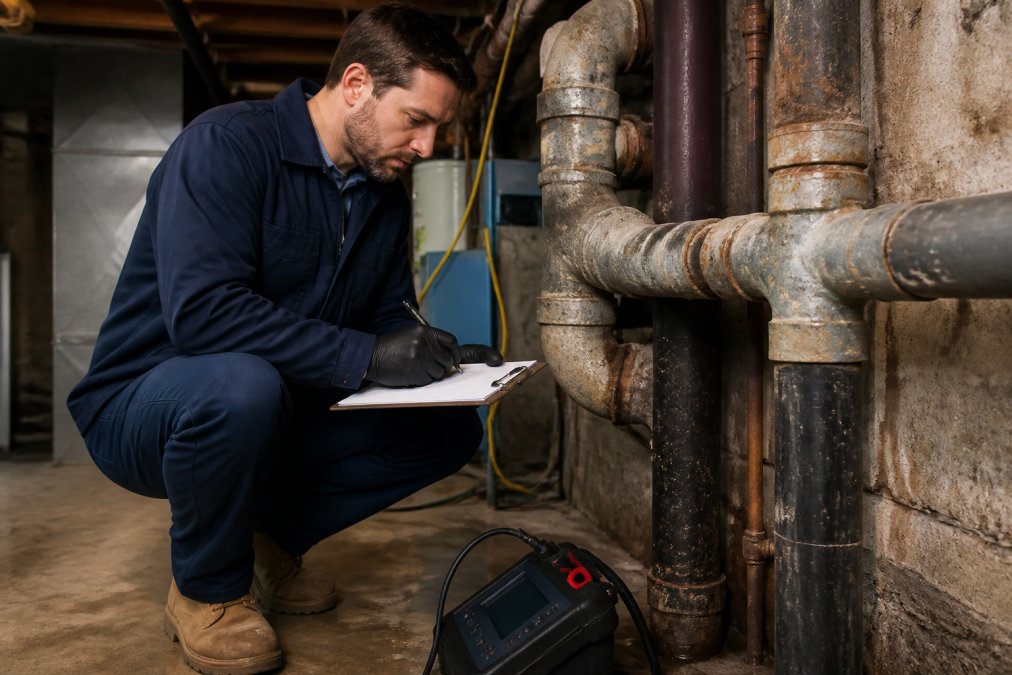
A thorough plumbing inspection for an older home goes beyond checking for current leaks. It’s a diagnostic assessment of your entire system’s condition and remaining lifespan. Expect the inspection to take a significant amount of time for a typical residential property.
The plumber will examine all visible piping, under sinks, in the basement, in crawl spaces, and behind accessible walls. They’ll check water pressure at multiple fixtures, test drainage speed, and look for signs of past repairs or amateur work. They’ll ask about water quality issues you’ve experienced: discoloration, strange odors, or reduced flow. These clues help identify specific problems.
Video pipe inspection is standard for older homes. A small camera on a flexible cable travels through your drains, showing the actual interior condition of cast iron or clay pipes. This reveals cracks, collapses, root intrusion, or buildup that you can’t see otherwise. It costs extra, but it’s invaluable for understanding what you’re dealing with.
The plumber should also identify potential code compliance issues. Modern plumbing code requires backwater valves in homes with basement fixtures, proper venting, adequate shut-off valves, and grounded water heater installations. An older home may lack these, creating safety or sewage backup risks. A qualified plumber will document what’s missing and explain the implications.
At the end, you should receive a written report detailing findings, prioritized by urgency. Immediate safety issues (gas leaks, sewage backups, contamination risks) rank highest. Next come failures that will worsen quickly (corroded pipes, failing drains). Finally, upgrades that improve function or code compliance but aren’t emergency-level.
How to Find a Qualified Plumber for Heritage Properties
Finding the right plumber starts with screening for experience with older homes. Ask directly: “How many century homes have you worked on? What materials do you commonly encounter?” A plumber who hesitates or gives vague answers probably hasn’t specialized in this work. You want someone who can discuss galvanized pipes, cast iron, and lead solder with confidence.
Verify licensing and insurance. In many areas, plumbers must hold a valid journeyman or apprentice license. Ask to see proof. Insurance protects you if something goes wrong, a plumber without it leaves you liable for injuries or property damage. A reputable plumber will provide this information without being asked.
Ask for references from previous clients with older homes. Call them. Ask not just “Were you satisfied?” but “Did the plumber identify problems you didn’t expect? Did they explain the options clearly? Did they stay on budget?” References reveal how someone handles the complexity that older homes introduce.
Personal recommendations from neighbors or real estate agents who work in your area carry weight. They’ve seen which plumbers deliver on their promises and which ones oversell unnecessary work. A plumber who comes recommended by multiple local sources has proven themselves.
Check online reviews, but read carefully. Generic praise (“Great service!”) is less useful than specific detail (“They found a hidden leak in the wall, explained three repair options with costs, and stuck to their estimate”). Be wary of reviews that seem planted or overly negative without context.
When you call, observe how they respond to your questions. A good plumber will ask about your home’s age, previous repairs, and current issues before quoting anything. They’ll explain why hiring plumbers for old houses is different and why experience matters. They won’t push you toward the most expensive solution immediately.
Questions to Ask Before Hiring a Plumber
Ask about their experience with your home’s age and construction type. “Have you worked on homes from the 1950s?” or “Are you familiar with cast iron drain systems?” Their answer tells you whether they understand the specific challenges ahead.
Inquire about their diagnostic process. How will they identify problems? Will they use video inspection? How do they determine what needs immediate attention versus what can wait? A methodical approach suggests competence.
Ask for a detailed estimate in writing. It should break down labor, materials, and any diagnostic fees separately. If they quote a range without specifics, ask what determines the final cost. Hidden charges destroy trust, transparency is a sign of professionalism.
Discuss their approach to code compliance. “Will this work meet current plumbing code?” or “What upgrades does code require?” A plumber who knows code won’t leave you with liability.
Ask about guarantees or warranties on their work. How long do they stand behind their repairs? What happens if something fails? This protects you and signals confidence in their workmanship.
Find out their availability for emergencies. Older homes sometimes fail unexpectedly, a burst pipe at 2 AM, a sewage backup on a weekend. Ask if they offer 24/7 emergency service and what the response time is. Indy Plumbing provides emergency support because old houses don’t fail on a convenient schedule.
Ask whether they’ll provide a written report of findings and recommendations.
Upgrading Galvanized Pipes in Old Houses
Galvanized pipes fail eventually, it’s not a question of if, but when. Once corrosion restricts water flow significantly or leaks appear, replacement becomes necessary. Upgrading galvanized pipes in old houses is a major project, but it’s one of the most important long-term investments you can make.
DIY vs. Professional Plumbing Repairs in Older Homes
The temptation to DIY plumbing work is understandable, you save labor costs and gain a sense of control. For minor tasks like replacing a faucet aerator or clearing a simple drain clog, DIY is reasonable. For anything involving structural piping, water supply lines, or drainage systems in an older home, professional work is essential.
Conclusion
Hiring plumbers for old houses demands more care than calling someone for routine maintenance in a newer home. Heritage properties have unique systems, materials, and failure patterns that require specialized knowledge. The difference between a plumber who understands galvanized pipes, cast iron drains, and code-compliant upgrades and one who doesn’t often determines whether your project succeeds or becomes costly and frustrating.
Frequently Asked Questions
How do I verify if a plumber is licensed in Ontario?
Check the Professional Engineers Ontario (PEO) registry or ask your plumber directly for their license number and trade certification. Licensed journeymen have completed apprenticeships and pass competency exams. Request proof of insurance as well, reputable plumbers carry liability coverage. When hiring plumbers for old houses, licensing is especially important because heritage plumbing systems require code compliance expertise.
What are the typical hourly rates for plumbers in Canada?
Plumbing rates vary by region and complexity. Rates depend on whether it’s emergency service, the plumber’s experience level, and the job scope. Rather than guessing at a price, contact Indy Plumbing directly for a transparent quote. We provide upfront pricing with no hidden fees, so you’ll know the exact cost before work begins.
What are the common plumbing challenges in older homes?
Century homes often have galvanized steel pipes that corrode over time, cast iron drains prone to collapse, and lead solder on copper joints. Water pressure issues, frozen pipes, and poor drainage are frequent problems. Plumbing code compliance can also be tricky in heritage properties, modern code may require upgrades that respect the home’s historic character. A professional plumbing inspection for older homes will identify these issues before they become emergencies.
Should I look for specialized experience when hiring for an older home?
Yes. Plumbers experienced with century homes understand material compatibility, historic building codes, and permitting for heritage renovations. They know how to diagnose pipe corrosion, handle repiping decisions, and recommend preventative maintenance tailored to old systems. Ask potential plumbers about their experience with homes built in your property’s era and request references from similar projects.
Comments are closed