

Table of Contents
- How Long Do Well Pumps Last
- Factors Affecting Well Pump Longevity
- Signs of a Failing Well Pump
- Well Pump Maintenance to Extend Service Life
- Well Pump Replacement Cost and Timeline
- Repair vs. Replacement: Making the Right Choice
- Frequently Asked Questions
Last Updated: October 15, 2026
How Long Do Well Pumps Last
Well pumps don’t last forever. Most homeowners don’t think about their well system until something breaks. By then, you’re facing an emergency repair or a full replacement. Understanding how long do well pumps last helps you plan ahead and avoid costly downtime.
The lifespan of a well pump depends on several factors. Type matters. Maintenance matters. Water quality matters. Most well pumps last between 8 to 15 years under normal conditions. Some fail sooner. Some keep running longer. The difference often comes down to how well you maintain the system and what’s actually flowing through it.
At Indy Plumbing, we see the same patterns repeatedly: homeowners who maintain their systems stay ahead of problems, while those who ignore warning signs end up with expensive emergency calls at the worst possible times.
Submersible vs. Jet Pump Lifespan
Submersible pumps sit underwater inside the well casing. They last 8 to 15 years on average. These pumps handle deeper wells effectively and run quietly. The sealed motor design protects electrical components from air exposure.
Jet pumps sit above ground and pull water up through a pipe. They typically last 7 to 12 years. Jet pumps work best for shallower wells. They’re easier to access for maintenance, but the exposed motor can wear faster if not properly protected from temperature swings.
The key difference isn’t just lifespan. Submersible pumps fail more slowly and give warning signs. Jet pumps often fail suddenly. If your jet pump stops working, you have no water immediately. A submersible pump might start cycling more frequently or lose pressure gradually, giving you time to call for help.
Water quality affects both types equally. Sediment buildup and corrosion accelerate failure regardless of pump style. The best pump in contaminated water won’t outlast a basic pump in clean water.
Factors Affecting Well Pump Longevity
Several factors determine whether your pump reaches 8 years or 15 years. Some you control. Some you don’t.
Pump cycling is the first factor. Every time your pump turns on, it ages slightly. Frequent cycling means more starts and stops, more electrical stress, more wear on the motor. The pressure tank helps reduce cycling by storing water.
System voltage matters more than most homeowners realize. Voltage fluctuations stress the motor. Low voltage forces the motor to work harder. High voltage burns out electrical components. If your pump keeps tripping the breaker or won’t start reliably, voltage problems are often the cause.
Depth and well yield also play a role. Deeper wells require more powerful pumps. Pumps working at maximum capacity every day wear out faster. Wells with low yield force the pump to run longer to fill the pressure tank. Extended runtime means more heat, more wear, and earlier failure.
Water Quality and Sediment Buildup
Sediment buildup is the silent killer of well pumps. Sand, silt, and fine particles enter the pump and damage the impeller. The impeller is the spinning part that moves water. Scratched or corroded impellers lose efficiency. The pump works harder to move the same amount of water.
Sediment also clogs the check valve. The check valve prevents water from flowing backward when the pump stops. A blocked check valve forces the pump to work against pressure, shortening its life significantly.
Hard water and corrosion go hand in hand. High mineral content creates scale buildup inside pipes and pump components. Corrosion eats through metal parts. A corroded impeller or motor shaft fails suddenly. Corrosion also damages the well casing, allowing more sediment to enter the system.
You can’t see what’s happening inside the well. That’s why testing your water matters. High TDS (total dissolved solids) or low pH indicates aggressive water. Aggressive water corrodes faster. If your water is corrosive, consider a water treatment system.
System Cycling and Pressure Tank Health
The pressure tank stores water under pressure. When you open a tap, water flows from the tank first. The pump doesn’t start immediately. This reduces pump cycling and extends pump life.
A failing pressure tank loses its air charge. The diaphragm inside ruptures or the air valve fails. Without proper air pressure, the tank can’t store water effectively. The pump starts every time you use water, even for small amounts. This constant cycling burns out the motor in 2 to 3 years instead of 10 to 15.
You can test your pressure tank yourself. Turn off power to the pump. Drain the system completely. Listen to the tank. If you hear water draining out slowly after the pump stops, the diaphragm is likely damaged. Call a professional to confirm and replace it.
Electrical Stress and Voltage Fluctuations
Electrical problems are the second-leading cause of pump failure after sediment damage.
Low voltage forces the motor to draw more current. This creates excess heat. Heat degrades insulation inside the motor. Eventually, the insulation fails and the motor shorts out. Signs of low voltage include slow pump startup, weak water pressure, or a humming sound when the pump tries to start.
High voltage burns out electrical components quickly. A voltage spike from lightning or a power surge can destroy a pump instantly. Loose electrical connections cause voltage drops at the pump even if the main panel shows normal voltage.
3-wire pumps have a separate pressure switch. 2-wire pumps have the switch built into the pump. The pressure switch tells the pump when to start and stop. A faulty switch causes the pump to run continuously or not start at all. Continuous running overheats the motor. No-start means no water and a quick call to a plumber.
Signs of a Failing Well Pump
Recognizing early warning signs prevents emergency calls and expensive repairs.
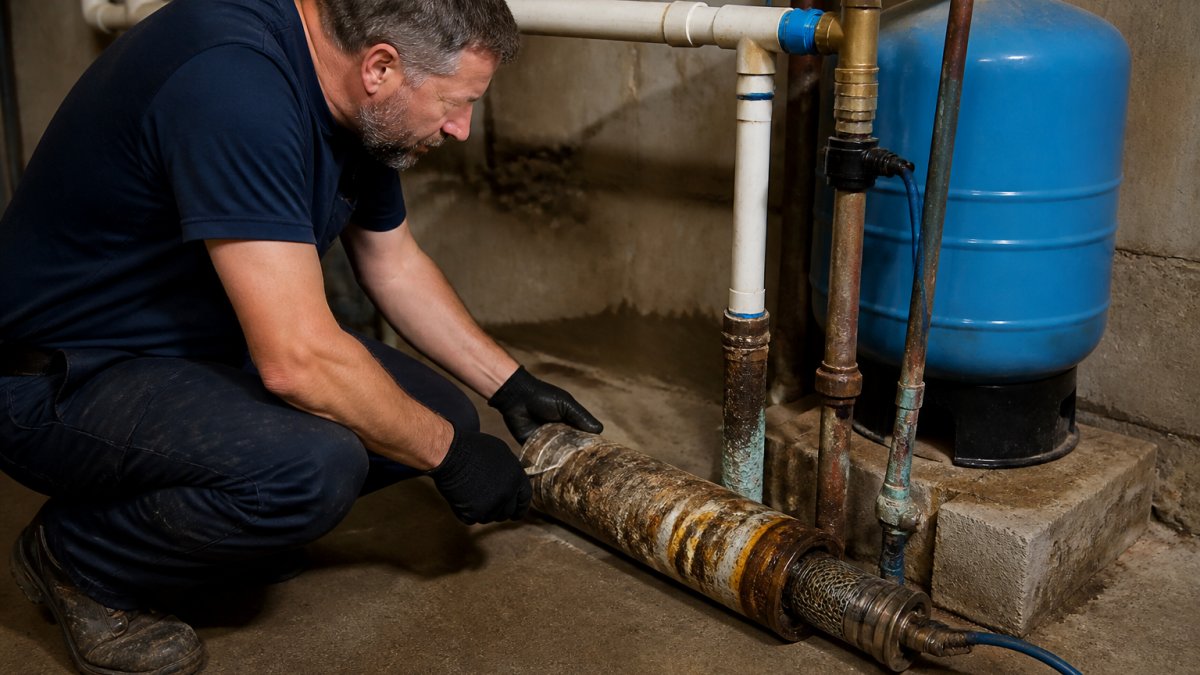
Pressure fluctuations are the first sign. Water pressure drops suddenly, then returns to normal. This indicates the pump is cycling too frequently or the pressure tank is failing.
Reduced water flow means the pump isn’t delivering enough water. This happens when sediment clogs the impeller or the pump is losing prime. If flow drops gradually over weeks, sediment buildup is likely.
Noise and vibration signal internal problems. A grinding sound means sediment is damaging the impeller. A squealing sound indicates bearing wear. Constant humming suggests the pump is struggling against high pressure or low voltage.
Thermal overload tripping means the pump’s safety switch is shutting it down because of overheating. This happens when the pump runs too long without proper cooling.
Air in the water lines means the pump is losing prime. You see sputtering at taps or cloudy water.
Well Pump Maintenance to Extend Service Life
Preventative maintenance is the cheapest insurance you can buy. A well-maintained pump lasts 12 to 15 years. A neglected pump fails at 7 to 8 years.
Annual inspections catch problems early. A professional checks water pressure, flow rate, and electrical connections. They listen for unusual sounds and look for corrosion. An inspection costs less than an emergency repair.
Water testing reveals sediment and chemical problems. Test for bacteria, pH, and mineral content annually. High sediment means your intake screen needs cleaning or replacement. Aggressive water means you need treatment.
Pressure tank maintenance keeps the system efficient. The tank air charge should be checked every few years. If it’s low, the tank needs servicing. A properly charged tank reduces pump cycling by 30 to 40 percent.
Check valve inspection prevents backflow problems. A failing check valve causes the pump to work against pressure. This burns out the motor quickly. If the pump cycles constantly even when no one is using water, the check valve is probably stuck.
Preventative Maintenance Checklist
Here’s what you should do to keep your pump running:
- Test water quality annually for sediment, pH, and mineral content
- Listen for unusual sounds or vibration from the pump monthly
- Check water pressure monthly with a simple pressure gauge
- Have the pressure tank air charge inspected every 2 years
- Inspect electrical connections for corrosion twice yearly
- Verify the thermal overload switch is working by testing it annually
- Have a professional inspection done every 12 months
- Clean or replace the well intake screen every 3 to 5 years if sediment is present
- Install a whole-house sediment filter if water quality is poor
- Keep the pump and tank area dry and protected from freezing temperatures
The math is simple.
Well Pump Replacement Cost and Timeline
Replacement costs depend on pump type, well depth, and accessibility. A basic submersible pump replacement runs higher than a jet pump replacement. Deep wells cost more than shallow ones. If the well casing is damaged, costs rise significantly.
You should budget for professional replacement rather than DIY attempts. Well systems involve electrical work, pressure management, and precise installation. Mistakes can damage the well or create safety hazards.
How Long Does It Take to Replace a Well Pump
A standard replacement takes 4 to 8 hours. The plumber shuts off power, drains the system, and removes the old pump. They inspect the well casing for damage. Then they install the new pump, reconnect electrical lines, and test the system.
If the well casing is damaged or the intake screen needs cleaning, the job takes longer. If the old pump is stuck or corroded, removal becomes difficult. Deep wells take longer than shallow ones simply because of the physical depth involved.
Emergency replacements during nights or weekends cost more. If your pump fails on a Sunday morning, you’re paying premium rates. That’s another reason preventative maintenance matters. You avoid the emergency premium and the stress of no water.
The timeline also depends on parts availability. Standard pumps are usually in stock. Specialized pumps for unusual well configurations might need to be ordered, adding days to the repair.
Repair vs. Replacement: Making the Right Choice
Sometimes a repair makes sense. Sometimes replacement is the only option.
Repair your pump if:
- The pump is less than 10 years old
- The problem is electrical (bad pressure switch, loose connections, voltage issues)
- The check valve or pressure tank is failing, not the pump itself
- The repair costs less than 50 percent of replacement cost
- The well system is otherwise healthy
Replace your pump if:
- The pump is older than 12 years
- The motor has burned out or won’t start
- The impeller is damaged or severely corroded
- Sediment damage is extensive
- Repair costs approach or exceed replacement costs
- The pump has failed multiple times in the last 2 years
A professional inspection helps you decide. The plumber can often tell whether repair or replacement makes financial sense. At Indy Plumbing, we always present both options clearly so you can make an informed decision without pressure.
Consider the age of your well system overall. If the well casing is deteriorating or the water quality is declining, replacement might be the better long-term investment. A new pump in a failing well system is money wasted.
Also consider future needs. If you’re planning to stay in your home for another 10 years, replacement makes sense even if repair is cheaper now. If you’re selling in 2 years, a repair that gets you through might be the practical choice.
Well pumps don’t last forever, but they last longer when you maintain them. We provide transparent pricing and honest recommendations so you get the right solution the first time. Schedule Service with our team today to protect your well system.
Frequently Asked Questions
How can I tell if my well pump is going bad?
Common signs include reduced water pressure, air sputtering from taps, loss of water pressure during heavy use, visible corrosion on electrical components, and the pump cycling on and off more frequently than normal. If you notice any of these, contact a professional for system diagnostics before the pump fails completely.
What factors affect how long a well pump lasts?
Water quality, sediment buildup, pressure tank condition, electrical voltage stability, pump cycling frequency, and well depth all impact longevity. High groundwater quality with low TDS reduces corrosion risk, while frequent dry run conditions and voltage fluctuations shorten service life significantly.
How long does it take to replace a well pump?
Most well pump replacements take 2-4 hours, depending on well depth, the type of pump (submersible or jet), and system complexity. Deeper wells and systems requiring pressure tank adjustments may take longer. A licensed professional can provide an accurate timeline after inspecting your setup.
Can regular maintenance extend a well pump’s lifespan?
Yes. Preventative maintenance including pressure tank checks, sediment filter inspection, electrical monitoring, and annual system diagnostics can add 2-5 years to pump life. Addressing minor issues early prevents motor burnout and impeller damage, reducing costly emergency replacements.
Comments are closed