

Last Updated: October 30, 2026
Quick Summary
To fix leaking pipe problems fast, first shut off the water supply, then dry the pipe and tighten any loose fittings. A temporary repair clamp or epoxy putty can hold the leak until a licensed plumber makes a permanent fix.
- Shut off the main water valve first if the local shutoff does not stop the flow.
- Use only potable-water-rated materials and a clamp matched to the pipe’s outside diameter.
- Turn the water back on slowly and watch the repair for at least 15 minutes.
- Call a licensed plumber if the leak returns, the pipe is corroded, or the leak is inside a wall.
- Get a written, itemized estimate with call-out, labour and materials listed separately.
Table of Contents
- How to Tell Whether a Leak Is an Emergency
- What to Do Before a Plumber Arrives
- Tools and Materials You Will Need
- How to Stop a Leaking Pipe Step by Step
- Temporary Pipe Leak Repair Options
- Permanent Fixes and When to Call a Licensed Plumber
- Plumber Cost per Hour in Ontario and How to Verify a Plumber
- Booking Emergency Repair with Indy Plumbing
- Frequently Asked Questions
How to Tell Whether a Leak Is an Emergency
Most homeowners freeze when they see water where it should not be. The fastest way through that moment is a short, ordered triage: decide whether this is a call-now emergency or a schedule-this-week fix for a leaking pipe, then act.
Step 1, Is water actively flowing or spraying? A steady stream, a spray, or water pooling faster than you can mop is an emergency. Shut off the supply first (see the next section) and call a licensed plumber.
Step 2, Is the water reaching anything electrical or structural? Water at outlets, a light fixture, a panel, a furnace or an appliance is an emergency regardless of flow rate.
Step 3, Is the leak coming from a gas line, a water heater, or the main service line? These are always call-now situations. For a gas smell, leave the area and contact your gas utility’s emergency line before calling a plumber.
Step 4, Can you isolate it with a local shutoff? If a fixture valve stops the flow and the leak is contained to one sink, toilet or appliance, you can usually schedule a repair during business hours.
Step 5, Is it a slow drip or weep that stays contained? A slow drip under a sink, a faint damp patch, or a small weep at a fitting can typically wait for a scheduled visit, but not indefinitely.
Do not judge severity by drip rate alone. Hidden leaks inside walls or under a slab often first show up as a rising water bill, a soft spot in the floor, a musty smell, or a stain that keeps returning after you paint over it. Those signs warrant a professional inspection even when you cannot see water.
Quick decision rule: Active spray, water near electrical, gas or water-heater involvement, or a leak you cannot isolate = call now. Contained drip with a working local shutoff = schedule a repair. Hidden or recurring dampness = book an inspection.
When in doubt, shut the water off first and decide second. A few minutes without water is far cheaper than a ceiling collapse or a mould remediation bill.
What to Do Before a Plumber Arrives
Before a plumber arrives, your priority is to stop the water and limit the damage. Start by locating the main water shutoff valve, usually in the basement, utility room or near the front wall where the service line enters the home. Turn it clockwise until it stops. If the leak is limited to one fixture, close that fixture’s local shutoff valve instead.
Once the water is off, open the affected faucets briefly to drain remaining pressure from the lines. Then take these steps:
- Move valuables, rugs and furniture away from the wet area.
- Place buckets or towels under active drips.
- Turn off power to any electrical outlets or appliances near standing water.
- Photograph the damage for your insurance claim.
- Clear the path to the leak so the technician can reach it.
Many homeowners skip the photos, then struggle to document the loss later. Take a few minutes to record it before cleanup starts.
Tools and Materials You Will Need
For a minor temporary repair, most homeowners need a short list of basic tools and supplies. Having these on hand before you start a fix leaking pipe job saves time and prevents a small leak from getting worse while you search for them.
- Adjustable wrench or pipe wrench
- Pipe cutter or hacksaw
- Adjustable pliers
- Rubber pipe repair clamp sized to the pipe diameter
- Epoxy putty or waterproof pipe repair tape
- Plumber’s tape (PTFE thread seal tape)
- Bucket, towels and a shallow tray
- Flashlight for inspecting hidden connections
Use only materials that are rated for potable water in your pipe repair. Pick a clamp that matches the pipe’s exact outside diameter.
How to Stop a Leaking Pipe Step by Step
Follow these steps in order. They work for most exposed supply lines under sinks, behind toilets and along basement walls.
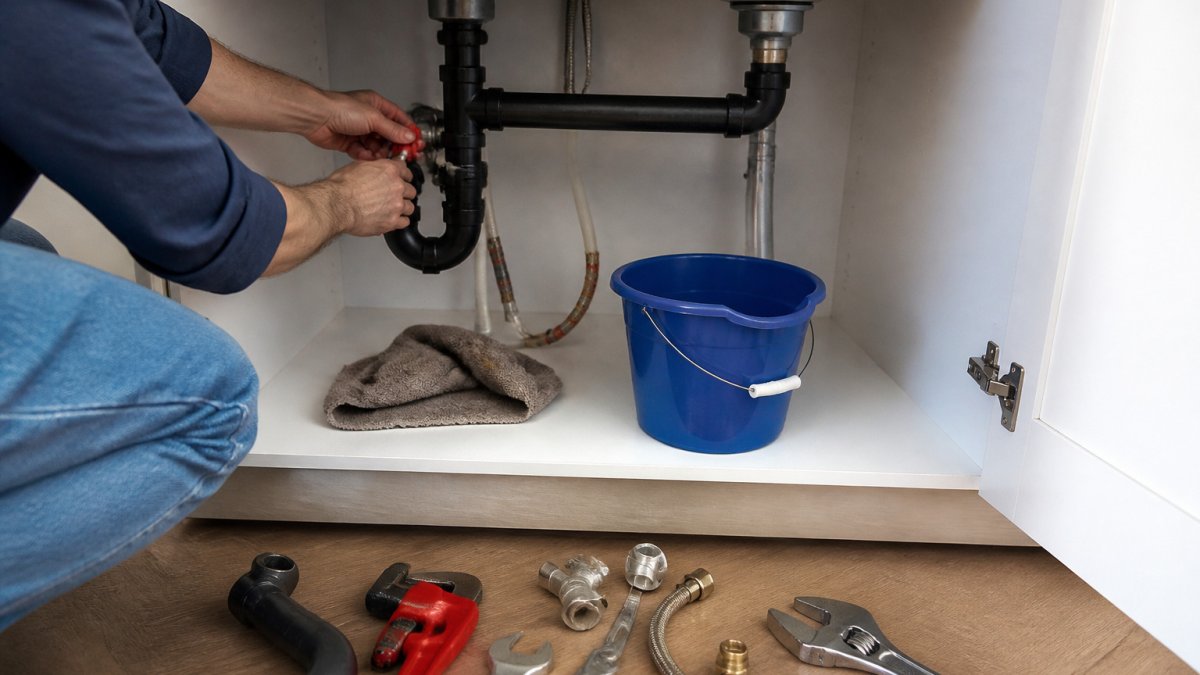
- Shut off the water supply. Close the nearest valve, then the main valve if the local one does not stop the flow.
- Dry the pipe completely. Wipe the area with a towel. Epoxy and tape will not bond to a wet surface.
- Identify the leak point. Look for the exact spot where water beads or drips. Hairline cracks and loose compression fittings are common sources.
- Tighten loose fittings first. If the leak is at a threaded or compression connection, snug it gently with a wrench. Do not overtighten, because that can crack the fitting.
- Apply the temporary repair. Use a repair clamp or epoxy putty as described in the next section.
- Turn the water back on slowly. Open the valve gradually and watch the repair for at least 15 minutes.
- Check again the next day. Inspect the repair area for moisture and recheck the pressure.
Expected result: The leak stops, and the repair holds under normal water pressure without weeping.
Temporary Pipe Leak Repair Options
A temporary repair buys you time until a licensed plumber can make a permanent fix. Choose the option that fits the pipe material and the size of the damage.
- Repair clamp: A rubber sleeve tightened with metal bands over the leak. It works well on straight sections of copper, PVC and steel pipe. It is quick to install and easy to remove later.
- Epoxy putty: A two-part putty that hardens around a pinhole or small crack. It suits small leaks on dry, clean pipe but is less reliable under high pressure.
- Waterproof repair tape: A self-fusing tape that bonds when stretched and wrapped. It is good for emergencies, but it usually needs replacing within days.
Do not use duct tape or electrical tape. Neither is designed for water pressure, and both will fail quickly.
Watch out: A temporary repair is not a long-term solution. Leaks often return at the same spot because the pipe wall is already weakened by corrosion or freezing damage.
The article compares the main temporary repair methods for a leaking pipe, so here is a quick summary to help you choose.
| Option | Best for | Key difference |
|---|---|---|
| Repair clamp | Straight sections of copper, PVC and steel pipe | Quick to install and easy to remove later |
| Epoxy putty | Small leaks on dry, clean pipe | Less reliable under high pressure |
| Waterproof repair tape | Emergencies | Usually needs replacing within days |
Permanent Fixes and When to Call a Licensed Plumber
A permanent fix usually means cutting out the damaged section and replacing it with new pipe and proper fittings. Corroded galvanized steel, cracked PEX fittings and burst sections from freezing often need this approach. Repairs that involve gas lines, the main service line or work inside walls should always be handled by a licensed plumber.
Call a licensed plumber when:
- The leak returns after a temporary repair.
- The pipe is corroded, brittle or split along its length.
- The leak is inside a wall, ceiling or concrete slab.
- You see signs of water damage, such as warped flooring or stains on drywall.
- You are unsure which valve controls the leaking line.
At Indy Plumbing, our licensed and insured team handles permanent pipe replacement with durable, top-grade materials. We recommend a professional inspection for any leak that is hidden or recurring.
Plumber Cost per Hour in Ontario and How to Verify a Plumber
Plumbing pricing is where homeowners feel most exposed, especially during an emergency. Rates vary by company, job complexity, time of day, and materials, so the most reliable step is to check Indy Plumbing’s website for current prices or request a quote before work begins.
How emergency plumbing charges are typically structured:
- Call-out or dispatch fee: Ask any plumber whether a dispatch fee applies and whether it is waived if you approve the repair.
- Hourly labour rate: Ask how labour is billed, including any difference for emergency or after-hours work.
- Materials and parts: Ask for the parts cost to be itemized.
- Diagnostic or inspection fee: Ask whether a fee to locate a hidden leak is credited toward the repair.
Ask for the call-out fee, the hourly rate, the after-hours premium, and the diagnostic fee as four separate numbers before anyone is dispatched. A reputable company will give them to you plainly. Get a written estimate and confirm you will be asked to approve any work beyond it before it proceeds.
How to verify a plumber before hiring:
- Licence: Ask for the technician’s licence number and confirm it is current. In Ontario, plumbing is a licensed trade; a legitimate operator will not hesitate to provide it.
- Liability insurance and WSIB coverage: Ask for proof. If a worker is injured or damages your home, uninsured work becomes your problem.
- Written, itemized estimate: Insist on labour, materials, call-out fees and any premiums listed separately, and confirm the approval-before-extra-work policy in writing.
- Warranty: Ask what is covered on labour and on parts, and for how long.
- Reviews and references: Check recent reviews and ask for references from comparable local jobs.
- Payment terms: Be cautious of large cash deposits or full payment demanded before work begins.
A quote that is dramatically lower than the others without a clear explanation is a red flag. Unexpected extra charges frequently appear after work starts. The cheapest call-out is rarely the cheapest repair.
You are not shopping for the lowest hourly rate, you are shopping for a clear, written price you approve before work begins, from a licensed and insured plumber who will stand behind the repair.
Booking Emergency Repair with Indy Plumbing
If you have an active leak or water damage, Indy Plumbing offers 24/7 emergency support in Mississauga, Orangeville and Milton. You can review our service options on our website or contact us directly to schedule a visit.
Once the emergency is under control, a professional inspection can help catch related problems early. Preventing a second leak is usually far cheaper than repairing the damage a second time.
Frequently Asked Questions
Can you fix a leaking pipe without replacing it?
In many cases, yes. Small pinhole leaks or loose fittings can often be sealed or tightened without replacing the whole section of pipe. A temporary repair, such as a rubber repair clamp or waterproof tape, can hold the leak until a permanent fix is made. Corroded or split pipes usually need the damaged section cut out and replaced. If the pipe is old or leaking at several points, a licensed plumber can assess whether repair or replacement makes more sense for the long term.
How do you find the source of a pipe leak?
Start by shutting off water to the suspect line and watching for drips at joints, valves and visible bends. Check for damp spots on walls, ceilings and floors, as water often travels along a pipe before it shows. Look for staining, bubbling paint or a musty smell. Reading the water meter with all fixtures off can confirm a leak if the dial still moves. If the source remains unclear, a plumber can use leak detection equipment to pinpoint it without unnecessary opening of walls.
What should you do first when a pipe starts leaking?
Shut off the water supply to the affected pipe or, if you cannot isolate it, shut off the main water valve. Turn off electricity to any nearby appliances if water is near outlets. Place a bucket or towels to limit water damage and open a drain or tap to relieve pressure. Once the water is stopped, assess whether the leak is minor enough to manage yourself or whether it needs a licensed plumber right away.
When should you call a plumber for a leaking pipe?
Call a plumber when the leak is inside a wall or ceiling, when water is spreading faster than you can contain it, when the main line is involved, or when you cannot locate or shut off the supply. Gas lines, hot water pipes that are spraying, or any leak near electrical equipment also warrant immediate professional help. Indy Plumbing offers 24/7 emergency support for these situations, so you can get a response without waiting for business hours.

Comments are closed