

Last Updated: October 29, 2026
Quick Summary
Moving kitchen sink plumbing is worth it when the current sink location causes a daily workflow problem, not just for resale. The plumbing invoice is only part of the cost, so include cabinet, flooring, drywall and countertop work when you compare the total.
- Drain lines must slope about 2.1 cm per foot, so distance from the existing stack drives labour.
- Cabinet removal, subfloor patching and countertop rework often rival or exceed the plumbing cost on cross-room moves.
- Moving a sink usually requires a permit, since it changes drain and vent routing.
- Keep the new sink on the same wall as the existing stack to lower labour hours and cost.
- Ask for the plumbing scope and the make-good scope as separate quotes to compare bids fairly.
Table of Contents
- What Moving Kitchen Sink Plumbing Actually Involves
- Cost to Move Kitchen Sink Plumbing: Realistic Budget Factors
- Moving a Kitchen Sink to an Island
- Why Relocating Kitchen Plumbing Is Difficult
- Kitchen Sink Relocation Alternatives Worth Considering
- Is It Worth It for Your Home Value and Workflow?
- Booking a Site Assessment Before You Commit
- Frequently Asked Questions
What Moving Kitchen Sink Plumbing Actually Involves
Moving a kitchen sink through moving kitchen sink plumbing means relocating the supply lines, the drain, and the vent that keeps the whole system working.
The drain is the hard part. Waste water must flow downhill, which usually means a consistent slope of about 2.1 cm per foot.
Supply lines are simpler. Hot and cold lines can usually be extended with new piping and shut-off valves.
Cost to Move Kitchen Sink Plumbing: Realistic Budget Factors
Pricing depends on how far the sink moves, how the home is built, and whether the work needs a permit. Because every project is different, the most useful step is a site visit rather than a generic estimate.
Several factors push costs up or down:
- Distance from the existing drain stack
- Whether the floor is slab, crawl space, or basement-supported
- Access to the wall or floor cavity
A short move along the same wall costs far less than a move across the room. Homes built before modern codes often need additional upgrades before new connections are allowed.
The Total Project Budget, Not Just the Plumbing Line
The plumbing invoice is rarely the whole bill. A realistic budget has to account for what has to be opened, patched, and put back. On a cross-room move, the non-plumbing line items can rival or exceed the plumbing cost:
- Cabinet removal and reinstallation. Base cabinets in the path of the new drain and supply runs usually have to come out. If the cabinet box is damaged during removal, replacement adds to the budget.
- Subfloor and floor patching. Cutting into the subfloor to route a drain leaves a patch that must be leveled and finished. Matching new flooring to an existing run is often the single hardest cost to control, because dye lots and wear differ.
- Drywall and wall cavity repair. Supply extensions that open a wall need patching, priming, and painting on both sides in some cases.
A useful way to frame the budget is to separate it into three buckets: plumbing labour and materials, permit and inspection fees, and finish restoration. Ask for each bucket as a separate line so you can see where the money is going and decide what you can defer.
Materials: Copper Versus PEX and Plastic
Material choice affects both cost and installation time. Copper has long been the traditional choice for supply lines. It is durable and handles heat well, but it takes more time to solder and costs more in raw materials. PEX, a cross-linked polyethylene, is a flexible option that is often used for supply lines. Compare PEX and copper pros, cons and cost factors to see how the two materials stack up for your home.
Permits, Plumbing Code and Inspections
Moving a kitchen sink usually requires a permit because it changes drain and vent routing. Permit requirements are set by provincial and municipal building departments, so confirm the rules with your local authority before work begins. The National Plumbing Code of Canada provides the overarching framework for plumbing installations.
Skipping permits can cause problems when you sell the home or make an insurance claim. The small cost of a permit is usually worth the peace of mind.
Ask your plumber to quote the plumbing scope and the make-good scope separately. That split lets you compare bids fairly and shows which contractor is pricing the full job versus the pipework only.
What Moves the Number Most
If you want to control cost, focus on three levers: keep the new sink on the same wall as the existing stack, keep the drain run as short and straight as the slope allows, and avoid moving the sink onto a slab or island unless the layout gain is worth the trenching or raised-floor solution. Each of those decisions changes the labour hours more than the material choice does.
The plumbing invoice is only part of the bill, and the costs that sit outside it can be significant.
| Cost item |
|---|
| — |
| Cabinet removal and reinstallation |
| Subfloor and floor patching |
| Drywall and wall cavity repair |
| Countertop work |
| Make-good and cleanup |
Moving a Kitchen Sink to an Island
An island sink is one of the most common relocation projects, and one of the most involved.
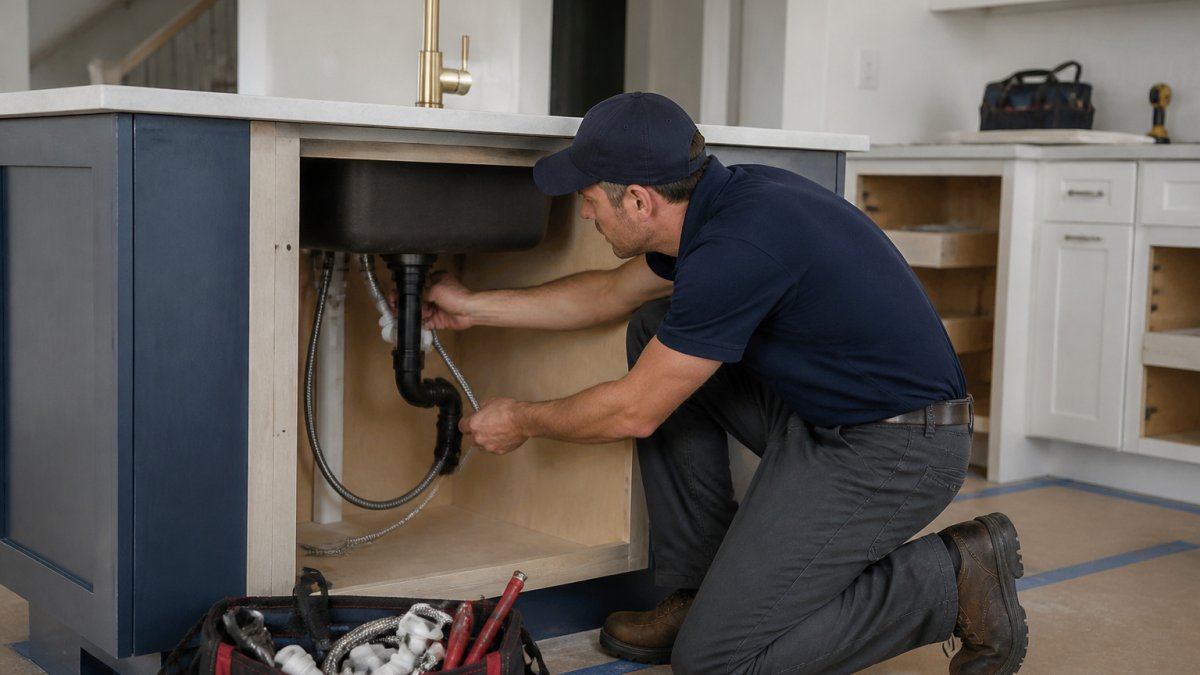
Crawl space access and slab construction change the approach. A crawl space allows the crew to run drain lines below the floor.
Supply lines can run up through the floor or along a cabinet base. Plan for a shut-off valve near the island so future repairs do not require shutting off the whole house.
Why Relocating Kitchen Plumbing Is Difficult
Relocation is difficult because every connection depends on the others. Moving the sink changes the drain slope, the vent location, and the supply pressure at the new point.
Hidden conditions add complexity. Old galvanized pipe, undersized drains, and framing that blocks the route all appear once walls and floors are opened.
Experienced plumbers plan for these surprises. A thorough assessment reduces the chance of costly changes halfway through the job.
Kitchen Sink Relocation Alternatives Worth Considering
Moving the sink is not the only option. Some homeowners get the result they want by keeping the sink in place and changing the surrounding layout instead.
Other homeowners choose a second prep sink or a bar sink on a new run, which may be cheaper than relocating the main sink. A plumber can compare these options against the cost of a full move.
Is It Worth It for Your Home Value and Workflow?
A relocated sink is worth it when it fixes a real problem. A sink placed in the wrong spot can make cooking, cleaning, and entertaining harder every day. Better workflow is often the strongest reason to move the plumbing.
The Work Triangle Is the Real Reason to Move a Sink
Most cost articles treat a sink move as a plumbing question. In practice it is a layout question, and the plumbing is the price of fixing the layout. The classic kitchen work triangle connects the sink, the cooking surface, and the refrigerator.
A few practical tests help you decide whether the move is worth it:
- Step count. Walk your normal prep-to-sink-to-stove route and count the steps. If the sink is more than a few paces from the main prep area, the layout is working against you.
- Landing space. A sink with no counter on one side forces you to pivot and drip across the floor. Moving it to gain landing space on both sides is a workflow fix, not a cosmetic one.
- Sightlines. A sink facing a wall or a blank cabinet is harder to use while supervising children or guests than one with a view into the room.
When the move solves one of those problems, the value case is stronger than a pure resale calculation suggests, because you capture the benefit every day you live in the home.
Home Value: What Plumbing Alone Does and Does Not Do
Home value gains depend on the local market and the quality of the finished kitchen. Plumbing work itself rarely adds value on its own. It works best as part of a full renovation that improves layout and finishes.
A useful way to think about it: buyers pay for a kitchen that works, not for the pipe behind the wall. If the move is part of a broader update that improves the layout, the finishes, and the storage, the plumbing cost is absorbed into a project with a clearer resale story.
Hidden Costs That Decide the Verdict
Cabinetry and flooring often add hidden costs. Removing and reinstalling base cabinets, patching subfloor, and matching new flooring can exceed the plumbing budget. Plan for these costs from the start. A move that looks marginal on the plumbing quote alone can become clearly not worth it once make-good is included, and the reverse is also true when the move unlocks a layout you would otherwise have to achieve with a full remodel.
DIY Versus Professional: What You Can Realistically Do
DIY work can save money on demolition or painting, but drain and gas connections should be left to licensed professionals. Improper venting can create health and safety risks that are not easy to detect later.
A realistic split looks like this:
- Homeowner-feasible: clearing cabinets, removing the old sink and faucet, demolition of drywall and flooring in the work zone, patching and painting after inspection, and cleanup.
- Licensed-plumber work: cutting and extending drain and vent lines, setting the correct slope, connecting supply lines and shut-off valves, pressure testing, and coordinating the permit and inspection.
- Do-not-DIY: any gas line relocation, vent termination changes, and anything that requires closing a wall before inspection.
The savings from doing the demolition and make-good yourself are real, but they come from labour you can safely control, not from the drain and vent work that determines whether the system functions.
Judge the move on two questions: does it fix a workflow problem you feel every day, and does the total project budget, plumbing plus make-good, still make sense once you see both numbers? If both answers are yes, the move is usually worth it. If only the plumbing quote looks attractive, get the make-good number before you commit.
Booking a Site Assessment Before You Commit
The most reliable way to know whether moving your kitchen sink is worth it is a site assessment. A plumber can check the drain slope, the vent route, the floor structure, and the supply lines in person.
Indy Plumbing provides plumbing services for homeowners and businesses, and our licensed and insured team can assess your layout and explain your options. Book a kitchen sink installation assessment to get a clear plan for your project, or learn more about kitchen plumbing services before you decide.
Frequently Asked Questions
How much does it cost to move kitchen sink plumbing?
Costs depend on how far the drain and supply lines must travel, whether the subfloor or joists need modification, the pipe material and whether a permit is required. Because pricing varies with each home’s layout, the most reliable number comes from an on-site assessment. Indy Plumbing provides transparent, upfront pricing, and current rates and quote requests are available on the Indy Plumbing website. Ask any contractor for a written quote that itemizes labour, materials and permit fees so you can compare the scope accurately.
When is moving a kitchen sink worth the cost?
Moving a sink is usually worth considering when the current location blocks workflow, the layout wastes counter space, or a renovation is already opening walls and floors, since much of the labour overlaps with the rest of the work. It is less likely to pay off when the only goal is a small cosmetic change. Weigh the expense against how often you cook and how much the new layout would improve daily use, and factor in any effect on resale appeal.
Can existing kitchen plumbing be reused after moving a sink?
Sometimes. Existing drain and supply lines can be reused if they are in good condition and the new route still allows proper slope and venting. Older galvanized or heavily corroded piping often needs replacement, and a plumber should confirm the vent arrangement meets plumbing code requirements before reusing any section.
Is it cheaper to move a kitchen sink to another wall or to an island?
Moving to an adjacent wall is generally less complex than running lines to a kitchen island, because an island often requires a drain extension through the floor, added structural work and more fittings. Get separate quotes for each option, since the actual difference depends on your floor structure and existing drain location.

Comments are closed