

Table of Contents
- What Plumbing Fixture Installation Services Cover in 2026
- Plumbing Fixture Installation Cost Ontario: What Drives the Price
- Plumbing Fixture Installation Timeline: From Quote to Final Test
- How to Choose High-Efficiency Plumbing Fixtures for Your Home
- Smart Fixtures and 2026 Bathroom and Kitchen Trends
- DIY vs Professional Installation: What’s Actually at Risk
- Maintenance Habits That Extend Fixture Longevity
- Frequently Asked Questions
Last Updated: September 14, 2026
What Plumbing Fixture Installation Services Cover in 2026
Plumbing fixture installation services involve the removal of old fixtures and the professional fitting of new faucets, toilets, showerheads, sinks, and smart devices, including all water line connections, sealing, and code-compliant testing. At Indy Plumbing, we’ve handled these jobs across the region for over 13 years, and the scope has expanded significantly.
A standard service call covers far more than swapping hardware. It includes shutting off water at the shut-off valves, inspecting pipe connections for corrosion, replacing worn gaskets, and pressure-testing the new fixture before the water goes back on.
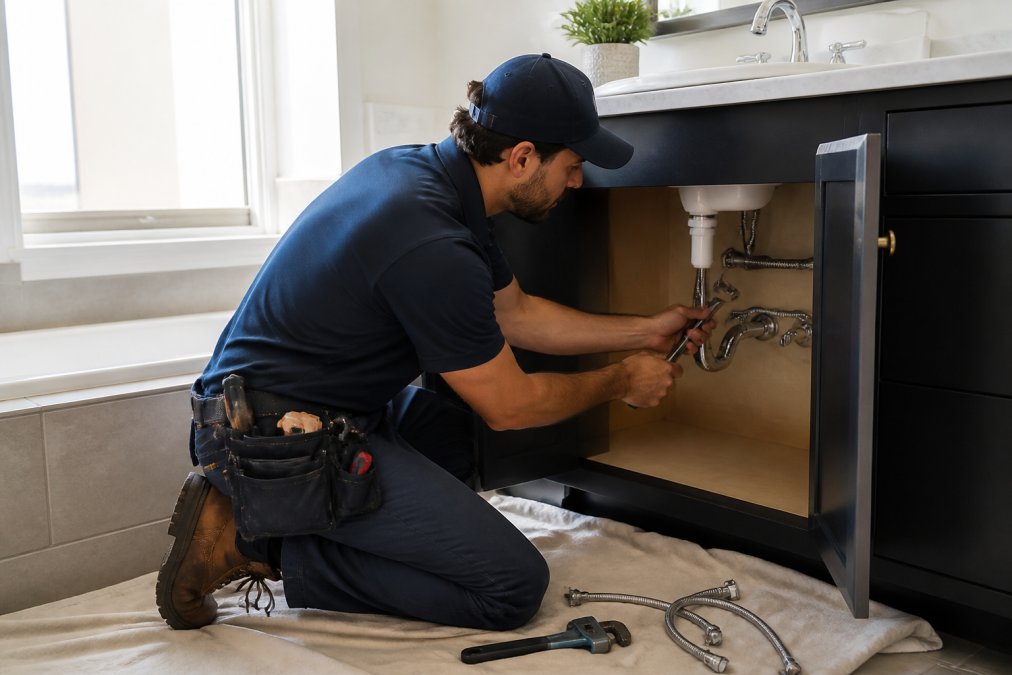
Residential and Commercial Fixture Installation
Residential plumbing work typically involves bathroom fixture installation, kitchen sink installation, toilet replacement, and vanity plumbing. The priorities are home comfort, leak prevention, and matching fixtures to existing water lines without unnecessary demolition.
Commercial plumbing installation adds complexity. Restaurant and warehouse operators need industrial-grade fixtures that handle constant use without downtime. Drainage systems must meet Ontario Building Code requirements, and any work on a commercial property requires pulling the correct permits before a single pipe is cut (Ontario Building Code, Ontario Regulation 332/12).
Emergency and Same-Day Fixture Installation
Emergency plumbing installation covers burst supply lines, failed shut-off valves, and fixtures that won’t stop running. A common mistake is ignoring a slow drip under a vanity, which can rot a cabinet floor within weeks.
For urgent calls, the right provider offers 24/7 emergency support and arrives with common fixtures on hand. If you manage a property and a toilet fails during business hours, same-day service prevents a single repair from shutting down an entire washroom.
Plumbing Fixture Installation Cost Ontario: What Drives the Price
Plumbing fixture installation cost in Ontario depends on fixture type, accessibility, and whether existing plumbing hardware needs modification. There is no single flat rate because no two jobs are identical, but the components that make up a quote are predictable, and understanding them is the fastest way to tell a fair estimate from an inflated one.
The Four Cost Components in Every Quote
A written estimate should break down into these buckets:
- Labor time: Billed hourly or as a flat job rate. A simple faucet swap is typically quoted as a flat rate; rough-in work behind a wall is usually hourly because the scope is unknown until the wall opens.
- Parts and materials: Supply lines, shut-off valves, escutcheons, plumber’s tape, silicone, wax rings for toilets, and any adapters needed to mate new fixtures to old pipe sizes.
- Permits and inspection: Work that alters drainage, venting, or water distribution lines generally requires a municipal plumbing permit (Watermain Design Criteria for Future Alterations Authorized Under a Drinking Water Works Permit). Permit fees vary by municipality and are usually passed through at cost.
- Disposal and access: Hauling away the old fixture, and any drywall or tile repair needed to reach the connection.
What Actually Moves the Number
- Accessibility: A faucet on an exposed vanity takes far less time than one behind a tiled wall that has to be opened and patched.
- Pipe condition: Older homes often need corroded galvanized or polybutylene connections updated before a new fixture can be fitted. This is the single most common source of estimate overruns.
- Fixture grade: Standard chrome faucets cost less than specialty finishes or smart models with integrated electronics and a required power source.
- Shut-off valve condition: If the existing valve won’t fully close, it has to be replaced before work starts, a small line item that surprises homeowners who assumed it was included.
How to Read an Estimate
A trustworthy estimate itemizes labor, parts, permit fees, and any contingency for concealed conditions. It also states what happens if the scope changes mid-job, for example, if opening the wall reveals a failed drain fitting.
Never accept a verbal quote with no written breakdown. A provider who won’t itemize parts and labor is the same provider who adds “surprise” charges once the vanity is already open. Ask specifically whether permit fees and old-fixture disposal are included or billed separately.
Questions to Ask Before You Approve
- Is the price a flat rate or an hourly estimate, and what is the hourly rate if it changes?
- Are permit fees included, and who pulls the permit?
- What is the change-order process if concealed pipe damage is found?
- Is old-fixture disposal included?
- Does the quote include a post-installation leak test and cleanup?
Because pricing varies this much, a provider that publishes transparent, upfront pricing on its website, rather than quoting blind over the phone, lets you compare the service estimate against your own priorities before any work begins.
Plumbing Fixture Installation Timeline: From Quote to Final Test
A straightforward fixture swap takes one to two hours. A full bathroom fixture installation with rough-in work can take a full day or more, depending on how much of the wall needs to be opened.
Here’s how a typical job moves from start to finish:
| Stage | What Happens | Typical Duration |
|---|---|---|
| Service estimate | On-site or virtual assessment, written quote | 1-2 days |
| Water shut-off and prep | Isolate supply, lay drop cloths, remove old fixture | 15-30 minutes |
| Installation | Fit new fixture, connect water lines, seal connections | 30-90 minutes |
| Testing and cleanup | Water pressure testing, leak check, site cleanup | 15-20 minutes |
For heritage properties, add time for plumbing diagnostics. Old galvanized or lead lines often need replacement before a new fixture can be safely connected.
Ask the plumber to photograph the pipe condition behind the wall before closing it up. If a connection fails later, you have a record of what was there, which matters for heritage property documentation.
How to Choose High-Efficiency Plumbing Fixtures for Your Home
Water-efficient fixtures cut both your utility bill and your environmental footprint, but “efficient” is a marketing word until you check the numbers on the box. Here is how to evaluate a fixture before you buy it.
Read the Flow Rate, Not the Label
Every fixture sold in Canada carries a flow rate, and that number, not the packaging, determines your water use:
- Showerheads: Modern efficient models are rated at or below 7.6 liters per minute. Older units can run 9.5 L/min or more.
- Bathroom faucets: Efficient models run at or below 5.7 L/min.
- Kitchen faucets: Typically rated at or below 8.3 L/min, often with a higher-flow spray setting for filling pots.
- Toilets: Look for models rated at 4.8 liters per flush or lower. Dual-flush models use even less on the light setting.
The WaterSense label, administered in Canada by recognized certification bodies, identifies fixtures independently verified to meet these efficiency thresholds without sacrificing performance (Details of the R-2000 Standard). A fixture can claim “low-flow” without carrying the label; the label is the verification.
Match the Fixture to Your Water Pressure
A low-flow showerhead on a home with weak pressure will feel like a drizzle. Before buying, check your static water pressure. If it is on the low side, choose a fixture with a wider spray pattern or a pressure-compensating aerator rather than the lowest-flow model on the shelf. This is the single most common reason homeowners are disappointed with an efficient fixture.
Build Quality and Compatibility
- Aerators: A high-quality aerator mixes air into the stream, maintaining strong pressure while using less water. Cheap aerators clog and corrode within a year.
- Cartridges and seals: Ceramic cartridges outlast rubber washers. Modern silicone and EPDM gaskets hold up far longer than older rubber components.
- Connection size: Confirm the fixture’s supply connection matches your existing shut-off valve outlet. Adapters exist, but every adapter is a potential leak point.
- Rough-in compatibility: For toilets, measure the rough-in distance from the wall to the drain center before ordering.
Rebates and Water-Saving Programs to Check
Photograph the flow-rate label and the WaterSense mark on the packaging before installation. It takes ten seconds and gives you the documentation a rebate application will ask for.
Smart Fixtures and 2026 Bathroom and Kitchen Trends
The single highest-value smart upgrade for most homes isn’t a fancy faucet. It’s an automatic leak-detection shut-off valve, because it protects the entire plumbing system, not just one fixture.
DIY vs Professional Installation: What’s Actually at Risk
The real risks of DIY installation on complex fixtures:
Maintenance Habits That Extend Fixture Longevity
Frequently Asked Questions
How long does it take to install plumbing fixtures?
A single fixture swap like a faucet or showerhead usually takes one to two hours. A toilet replacement runs about two to three hours. A full bathroom rough-in with a vanity, basin, and shower can take one to three days depending on whether walls or floors need opening. Your plumber should give you a written timeline before work starts, and any delay caused by hidden pipe damage should be explained and re-quoted before continuing.
Do I need a licensed plumber for bathroom fixture upgrades?
For simple swaps like an aerator or showerhead, you can usually do it yourself. Anything tied into water lines, shut-off valves, or drainage systems should be handled by a licensed plumber. Ontario building code requires permits for many fixture changes, and insurance claims after a leak can be denied if unlicensed work caused the damage. Ask for proof of licensing and insurance before anyone starts.
What are the most popular plumbing fixture trends for 2026?
Touchless faucets, thermostatic shower valves, and smart leak sensors that shut off water automatically are the biggest movers. Homeowners are also asking for low-flow toilets with dual flush and kitchen faucets with pull-down sprayers and built-in filtration. Heritage property owners in Ontario often pair modern internals with period-style exteriors so the fixture looks original but performs like new.
How do I prepare my home for a plumbing fixture installation?
Clear the cabinet under the sink, remove toiletries and fragile items from the work area, and move any rugs or mats. Know where your main shut-off valve is and confirm it turns freely. If you have pets, keep them in another room. Take a photo of the old fixture and the pipe connections before work begins, which helps if you need to match finishes or explain a problem later.
Comments are closed