

Last Updated: November 2, 2026
Quick Summary
Plumbing for 1950s heritage homes usually involves galvanized steel supply lines, cast-iron drains, and sometimes lead service lines, which fail differently and need different fixes. A systematic inspection, including checking water pressure and running each drain, helps decide what needs attention first, and a camera inspection can reveal concealed sewer damage.
- Galvanized steel supply lines corrode from the inside, narrowing the pipe and reducing water pressure.
- Cast-iron drains are durable but can crack, suffer root intrusion, and develop internal scaling.
- Lead service lines may affect drinking water quality and should be identified and assessed promptly.
- Do not assume a pipe is copper because it looks shiny; confirm the material before repairing.
- Protect original plaster, tile, and hardwood floors during plumbing work using coverings and discreet access openings.
Table of Contents
Plumbing for 1950s heritage homes is a different job from modern plumbing. Homes built in the 1950s were usually plumbed with galvanized steel, cast iron, and early copper, and many of those systems are still in place. Knowing what is behind the walls is the first step to fixing them well.
Houses from this period were built quickly, with little attention paid to how pipes would age over the following seven decades. Water supply lines often ran through crawl spaces or under concrete slabs, and drain lines were laid with cast iron that was expected to last. Many homeowners today discover these pipes only when something fails.
Understanding that history helps explain why the same problems keep appearing in older homes across Ontario.
Types of Pipes in Older Houses
Most 1950s homes contain two or three generations of pipe materials, often because repairs were made piecemeal over the decades. Identifying each material matters because each one fails differently and calls for a different fix.
Galvanized Steel Supply Lines and Restricted Flow
Galvanized steel was the standard for household water supply in the 1950s. The zinc coating protects the steel for a time, but once it wears away, the pipe corrodes from the inside. Rust builds up, narrowing the bore and reducing water pressure throughout the house. A common symptom is a shower that runs weak while the kitchen tap still flows reasonably well.
Cast-Iron Drains and Lead Service Lines
Cast-iron drain and sewer lines are heavy and durable but prone to cracking, root intrusion, and internal scaling over time. Older homes may also have lead service lines running from the municipal main to the house. Lead is a recognized drinking-water contaminant, so if a home’s service line is suspected to be lead, it should be identified and assessed promptly. Health Canada’s guidance on lead in drinking water is a good place to start (Lead in Drinking Water).
Common Plumbing Problems in 1950s Homes
Several issues show up repeatedly in houses from this era:
- Corroded galvanized supply pipes that restrict water flow
- Cracked or root-damaged cast-iron sewer lines
- Slow drains caused by internal scaling and buildup
- Hidden leaks inside walls and under floors
- Lead service lines that may affect drinking water quality
- Undersized fixtures and drain connections that no longer suit modern use
Many of these problems develop slowly, which is why they often go unnoticed until a leak or backup occurs.
Plumbing Inspection for Older Homes: A Step-by-Step Approach
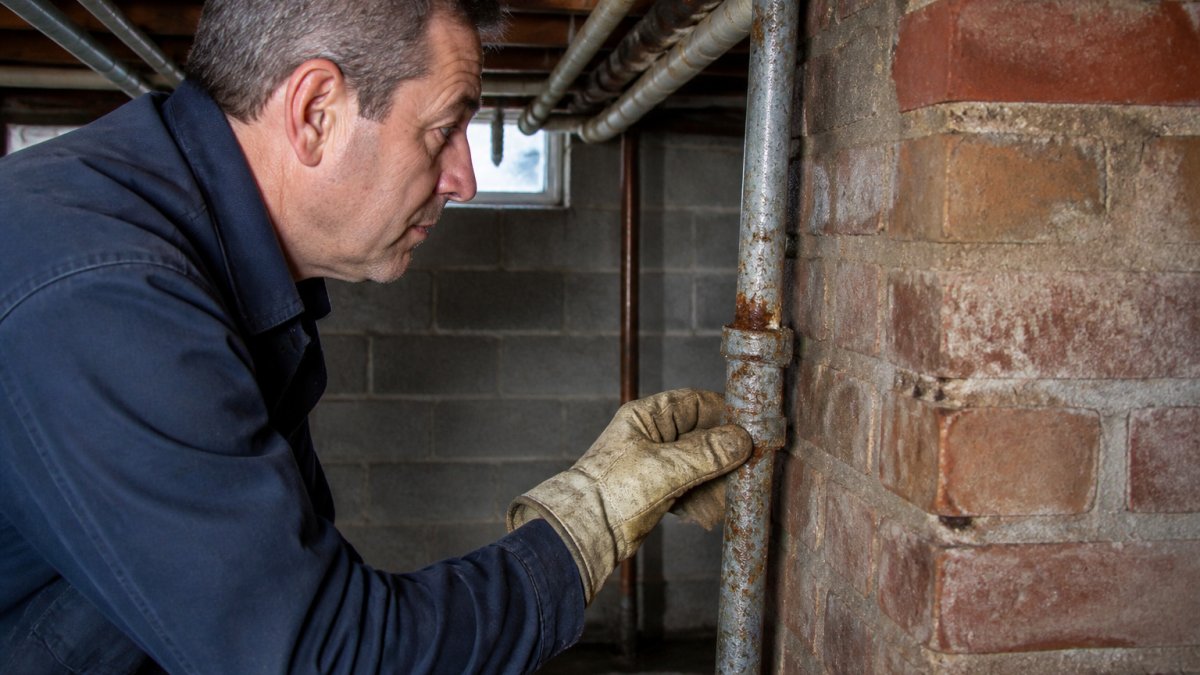
A systematic inspection makes it easier to decide what needs attention first. Start by checking water pressure at several fixtures, noting any sharp drop. Look at exposed pipes in the basement or crawl space for rust, flaking, or green staining at joints. Run each drain and watch for slow draining or gurgling. A professional inspection can confirm pipe materials and locate concealed damage with a camera.
Watch out: do not assume that a pipe is copper because it looks shiny. Scratch the surface lightly or have a professional confirm the material before deciding on a repair.
Replacing Galvanized Pipes: Repair Versus Replacement
When galvanized lines are badly corroded, homeowners face a choice between patching sections and replacing the run entirely. Patching can buy time and lower the upfront cost, but it rarely solves a system where the rest of the pipe is in the same condition. Replacement with newer materials such as PEX is a common alternative to patching, and it is worth discussing the options with a plumber. The right choice depends on how much of the system is affected, how long the owner plans to stay, and whether the work can be done without disturbing heritage finishes. Pricing for any approach depends on the scope of the work, so visit the Indy Plumbing website for current pricing or a quote tailored to your home. For a deeper look at options for water line replacement in older homes, see Expert Water Line Replacement for Older Homes in Mississauga.
Old House Drain and Sewer Line Problems
Cast-iron sewer lines in older homes can fail through cracking, collapsed sections, or tree-root infiltration. Symptoms include recurring backups, sewage odours, and wet spots in the yard. A camera inspection is the most reliable way to see the condition of the line before deciding whether to repair or replace it. For a broader overview of what these services involve, see Sewer and Drain Services: A Complete Guide.
Protecting Heritage Finishes During Plumbing Work
Original plaster walls, tile, and hardwood floors can be damaged during plumbing repairs. Good practice includes protecting floors and surfaces with coverings, cutting access openings in discreet locations, and matching materials where walls are reopened.
Booking a Plumbing Assessment for Your Heritage Home
A plumbing assessment gives you a clear picture of pipe materials, condition, and priorities before any work begins. If you are concerned about lead pipes, start with How to Identify Lead Pipes in Old Homes, and for the common issues in older Ontario homes, see Common Plumbing Problems in Ontario: Prevention and Repair. For heritage-specific repair and replacement planning, read Plumbing Repairs for Heritage Homes: 2026 Guide.
Indy Plumbing offers licensed and insured professionals, transparent pricing, and 24/7 emergency support. Schedule Service with Indy Plumbing to get an assessment that covers your home’s pipes, drains, and next steps.
Frequently Asked Questions
What kind of pipes do old houses have?
Homes built in the 1950s commonly have galvanized steel supply lines, cast-iron drain and waste pipes, and sometimes lead service lines running from the street. Galvanized steel corrodes from the inside over decades, narrowing the pipe and reducing water pressure. Cast iron can crack and flake inside, which slows drainage. Identifying the material on your property is the first step before planning any repairs or upgrades, and a licensed plumber can confirm it with a visual inspection and a few simple tests.
How can I tell what type of pipes are in my older home?
Check exposed pipes in the basement, crawlspace, or utility room. Galvanized steel is grey and often has a dull zinc finish, while copper is reddish-brown and lead is dull grey and soft enough to scratch with a key. Cast iron is heavy and black. Magnets stick to steel and cast iron but not copper. Do not scrape or cut pipes to test them. If you cannot identify the material safely, book a plumbing inspection rather than guessing, since lead pipes carry health risks.
When should plumbing in a 1950s home be replaced?
Consider replacement when galvanized supply lines show heavy internal corrosion, when water pressure drops noticeably at multiple fixtures, when you see rust-coloured water, or when repeated leaks occur in the same section. Replacing the main supply line and any lead service line is usually a priority. Repair may still make sense for isolated problems in otherwise sound pipework. Pricing depends on the home’s layout, access and the extent of work, so request a written quote from Indy Plumbing for an accurate estimate.
Can old plumbing be repaired without replacing all the pipes?
Yes, in many cases. Spot repairs can fix a single failed section, a cracked cast-iron drain can be sectioned and replaced, and a partial repipe can convert the most problematic runs to PEX or copper while leaving sound pipework in place. The trade-off is that a patchwork of materials can create future failure points at the joints, and repeated repairs can cost more over time than a planned replacement. A plumber can compare repair and replacement options against your budget and expected years in the home.
What should I check before renovating a bathroom in an older home?
Before renovating, confirm the condition of the supply lines, drain lines, and vent stack, since walls and floors will be opened anyway. Check the sub-floor for water damage and confirm whether the drain has adequate slope. Ask whether the existing fixtures can be reused or whether the rough-in needs to change. Plan for access to shutoff valves. Confirm that any electrical or gas work near the plumbing is done by a licensed trade. Getting these items assessed first avoids delays and surprise costs mid-project.
How do you protect heritage features during plumbing work?
Document original fixtures, tile, trim and hardware with photographs before work begins. Cover floors, stairs and finished surfaces with protective sheeting, and avoid cutting into original plaster or wood trim unless necessary. Where a vintage fixture must be removed, label and store its components carefully. Choose access points that minimize disruption, such as basement or crawlspace routes. Discuss preservation priorities with your plumber at the estimate stage so these constraints are built into the plan.
Should I hire a plumber to inspect plumbing in an older home?
Yes. A licensed plumber can identify pipe materials, locate leaks and corrosion, test water pressure and flow, and check drain slope and venting. Inspection often reveals problems that are invisible from the surface, such as hidden galvanized runs or cracked sewer lines. Indy Plumbing is licensed and insured, and can help you decide on repairs, staged upgrades or full replacement with complete information. Visit the Indy Plumbing website to book an assessment.
What are the signs of a failing sewer line in an old house?
Watch for slow drains across several fixtures, gurgling toilets, sewage odours in the basement, wet patches on the lawn, and recurring backups. Tree roots commonly infiltrate clay and cast-iron sewer lines in older neighbourhoods. A camera inspection can confirm the condition of the line and locate the problem area. Early diagnosis often allows targeted repair rather than excavation of the entire run, which reduces both disruption and cost.

Comments are closed