

Table of Contents
- Heritage Home Plumbing Problems: What Makes Them Different
- Plumbing Inspection for Older Homes: A Step-by-Step Schedule
- Urgent vs. Non-Urgent: A Triage Guide for Heritage Home Plumbing
- Old House Pipe Replacement: Repair or Repipe?
- Lead Pipes, Drinking Water Safety, and Testing
- Water Damage Prevention in Older Homes
- Permits, Heritage Designation, and Approval Processes
- Planning Your Heritage Plumbing Repairs: Costs and Next Steps
- Frequently Asked Questions
Last Updated: October 17, 2026
Heritage Home Plumbing Problems: What Makes Them Different
Plumbing repairs for heritage homes start with one hard truth: the pipes behind your walls were installed for a different era of water use, and every plumbing repairs for heritage homes decision has to account for both the material and the house around it. At Indy Plumbing, we’ve spent over 13 years working on older properties. Heritage home plumbing problems rarely announce themselves.
Aging Pipe Materials You’ll Find Behind the Walls
Galvanized steel is the most common find in homes built before the mid-1950s. It corrodes from the inside out, so the pipe looks fine from the outside while the bore narrows to a fraction of its original diameter. Lead pipes show up in service lines on the oldest properties. Cast-iron drains dominate the waste side. Each material fails differently, and each demands a different repair approach.
Low Water Pressure, Frequent Leaks, and Hidden Corrosion
Low water pressure and restricted water flow are usually the first symptoms homeowners notice. A common mistake is assuming the problem is the fixture when the real cause is scale buildup twenty feet upstream. Frequent leaks at joints, pinhole corrosion on copper, and rust-colored water all point to pipe deterioration that has been progressing for years.
Never assume a slow leak under a heritage home is harmless. Water tracking through original brick footings and timber joists causes structural damage that costs far more to fix than the pipe itself.
Plumbing Inspection for Older Homes: A Step-by-Step Schedule
A plumbing inspection for older homes should follow a fixed schedule rather than wait for a failure. We recommend this sequence for any property over 50 years old:
- Annual visual walk-through of the basement, crawlspace, and visible supply runs
- Water pressure test at multiple fixtures to establish a baseline
- Drain flow assessment on every stack and floor drain
- Camera inspection of main drain lines every two to three years
- Water quality and lead testing on any home with original service lines
- Fixture and shut-off valve check before winter each year
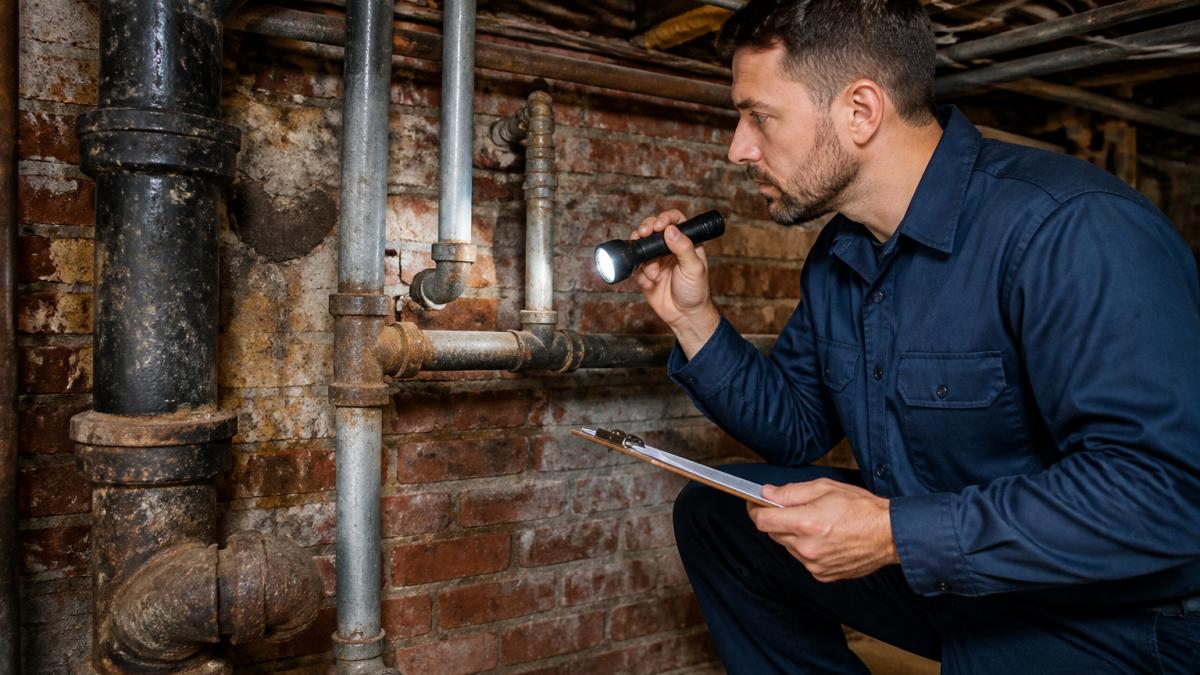
Pipe identification during that first walk-through matters most. Knowing what you have tells you how long the service life realistically runs.
Urgent vs. Non-Urgent: A Triage Guide for Heritage Home Plumbing
Triage is the difference between a repair and a restoration bill. Call for emergency plumbing service immediately and shut off the main valve if you can reach it safely.
These can wait for a scheduled visit: a single slow drip, one fixture with weak flow, a running toilet, or a drain that empties slowly but does not back up. Document the symptom with a photo and book a diagnostic appointment.
Find your main shut-off valve before you need it. In heritage homes it is often buried behind a finished panel or under the stairs, and locating it during an emergency costs minutes you don’t have.
Old House Pipe Replacement: Repair or Repipe?
Old house pipe replacement is the decision most heritage owners put off longest, and that delay is usually the expensive choice. The right answer depends on three variables: the pipe material and its remaining service life, the extent of failure (isolated vs. system-wide), and the access route, because in a heritage home, opening a wall or floor to reach a pipe can cost more to restore than the plumbing work itself.
When Spot Repair Is the Right Call
Spot repair makes sense when the failure is isolated, the pipe material still has serviceable life, and access won’t destroy original finishes. Examples include a single leaking joint on copper or PEX, a cracked fixture supply tube, or a failed shut-off valve. The trade-off is that spot repair treats the symptom, not the system: if the same material is failing elsewhere, you may be back in the same wall within a year.
When Partial or Full Repiping Is the Honest Answer
Repiping becomes the better investment when you see repeated failures across the same system, pressure is poor throughout the house, or the supply lines are galvanized steel or lead. Galvanized steel corrodes from the inside out, so no repair reverses the internal narrowing, replacement is the only durable fix. Lead service lines are a drinking-water safety issue and should be replaced rather than repaired.
Less-Invasive Methods and Their Limits
For drains, lining and trenchless repair can rehabilitate a failing cast-iron line with minimal excavation, which matters when the drain runs under original flooring or a finished basement. The trade-offs: lining reduces the internal diameter slightly, requires the line to be structurally sound enough to accept the liner, and is not suitable for collapsed or heavily root-intruded sections. For supply lines, some practitioners use epoxy coating or pipe lining on accessible runs, but these methods have limitations in heritage settings and are not a substitute for replacement when the pipe is at the end of its life.
| Situation | Recommended Approach | Why | Heritage Consideration |
|---|---|---|---|
| One isolated joint leak, copper or PEX | Targeted repair | Contained failure, material still serviceable | Minimal opening; patch finishes carefully |
| Galvanized supply lines throughout | Full repipe | Interior corrosion cannot be reversed | Plan routes to avoid original plaster and trim |
| Repeated pinhole leaks on copper | Partial to full repipe | Pattern indicates system-wide deterioration | Phased approach spreads cost and disruption |
| Slow cast-iron drain, no collapse | Drain repair or lining | Preserves structure and finishes | Lining avoids excavation under original floors |
| Collapsed drain line or root intrusion | Sewer repair or replacement | Flow restriction will recur without replacement | Trenchless options may protect landscaping and hardscape |
Before committing to any repipe, ask for a written access plan that identifies which finishes will be opened, how they will be protected, and who is responsible for restoration. In heritage homes, the restoration scope often drives the budget more than the pipe itself.
Lead Pipes, Drinking Water Safety, and Testing
Lead pipes are a drinking-water safety issue, not just a plumbing inconvenience. Homes with original lead service lines should be tested through a certified laboratory, and anyone in that situation should run cold water before use and never draw drinking water from the hot tap.
Health Canada guidance on lead in drinking water
Replacing a lead service line is often coordinated with the municipality. Ask your local water authority whether a partial replacement program or subsidy applies before booking the work.
Water Damage Prevention in Older Homes
Water damage prevention in older homes comes down to three habits: know where your shut-offs are, watch for the small signs, and fix slow leaks before they travel. Heritage properties hide water well. It runs along joists, soaks into plaster, and surfaces far from the actual leak.
- Test every shut-off valve twice a year
- Check under sinks and around the water heater monthly
- Insulate exposed supply pipes before the first freeze
- Photograph and document any leak for insurance purposes
Documentation is your insurance use. Time-stamped photos of the leak, the affected area, and the repair protect you if a claim is disputed later.
Permits, Heritage Designation, and Approval Processes
Permit requirements depend on the scope of work and your property’s designation. Like-for-like fixture replacement is usually straightforward. Moving supply or drain lines, adding fixtures, or altering anything visible from the street on a designated heritage property typically requires a building permit and, in many cases, heritage approval before work begins.
Ontario Building Code and plumbing permit guidance
Skipping the approval process on a designated property is a costly shortcut. Unpermitted work can be ordered removed, and it complicates any future sale.
Planning Your Heritage Plumbing Repairs: Costs and Next Steps
Cost planning for heritage plumbing repairs depends on scope, access, and material, so any honest estimate starts with an inspection rather than a number. That said, homeowners can prepare by understanding the cost drivers and the typical scope assumptions behind each type of quote. The ranges below are planning figures only, actual pricing varies by region, access difficulty, and the extent of finish restoration required.
Cost Drivers in Heritage Homes
Four factors move the number more than anything else: the pipe material (galvanized and lead carry higher disposal and safety costs), the access route (opening a finished wall or original plaster costs more to restore than an exposed basement run), the extent of the work (spot repair vs. partial vs. full system), and permit or heritage approval fees where applicable.
Typical Scope Assumptions by Repair Type
- Single fixture or joint repair: isolated access, one visit, minimal restoration.
- Partial repipe (one zone or floor): limited wall openings, new supply lines in that zone, patching and paint.
- Full supply repipe: whole-house supply replacement, multiple access points, finish restoration.
- Drain lining or trenchless repair: camera inspection, liner installation, minimal excavation.
These are planning bands, not quotes. A camera inspection and pressure test are what convert a band into a fixed price.
What to Ask Before You Approve Work
Ask for the diagnosis in writing, the access plan, the restoration scope, and whether permits or heritage approvals are included. Confirm whether the quote is fixed or time-and-materials, and whether disposal of old materials (especially lead or galvanized) is included.
Canada Mortgage and Housing Corporation guidance on home repairs and renovations
The next step is simple: book a plumbing inspection and get a diagnosis in writing before you commit to repair or replacement.
Frequently Asked Questions
What are the most common plumbing problems in heritage homes?
Heritage home plumbing problems usually trace back to the pipe materials themselves. Galvanized steel pipes corrode from the inside out, narrowing the bore and dropping water pressure. Cast-iron drains crack and collect tree roots. Lead service lines may still feed the house. Original fixtures often leak at worn washers and seals. Add decades of patch repairs behind finished walls and floors, and you get a system where failures cluster rather than appear one at a time.
How can I tell if the pipes in an older home need replacing?
Watch for rusty or brown water at the tap, pressure that drops when two fixtures run at once, pinhole leaks that keep returning, and visible corrosion or flaking on exposed pipe. A plumbing inspection for older homes can confirm it: a camera scope of the drains and a pressure test of the supply lines show how much wall thickness is left. If repairs are recurring every few months, old house pipe replacement usually costs less than repeated patching.
Can old plumbing be repaired without damaging heritage features?
Often, yes. Plumbers who work on heritage properties plan access routes before cutting anything, use non-invasive repair methods where the pipe allows, and route new lines through service chases, closets, or basements rather than through original plaster and trim. Where a wall must be opened, the cut is kept small and patched to match. The key is deciding the repair method with the building’s construction history in mind, not defaulting to the fastest cut.
Do plumbing repairs in a heritage home require special permits or approvals?
Plumbing work generally requires a permit under the local plumbing code, and a heritage designation can add a second layer of approval for anything affecting character-defining elements. Before work starts, confirm with the local building department whether the property carries a heritage designation and what the permit requirements are. Getting that answer early avoids stop-work orders and protects you at resale. A licensed plumber should be able to tell you what permits the job needs.
How can I prevent leaks and water damage in an older home?
Water damage prevention in older homes comes down to routine checks and fast shutoff. Know where the main shutoff valve is and test it twice a year. Inspect under sinks and around the water heater for dampness or corrosion monthly. Watch for pressure spikes, which stress aging joints, and address small leaks before they reach finished ceilings. A scheduled plumbing inspection for older homes catches corrosion and joint wear before they turn into a burst pipe.
Heritage plumbing doesn’t fail on a convenient schedule, and the repairs that protect an older home are rarely the cheapest ones on the quote. Indy Plumbing brings over 13 years of experience with aging pipes and heritage properties, transparent upfront pricing with no hidden fees, and 24/7 emergency support when a pipe lets go. Schedule service with Indy Plumbing and get a clear diagnosis before you commit to the work.
Comments are closed