

Table of Contents
- What Is Poly-B Pipe and Why Homeowners Need an Alternative
- Signs of Failing Residential Plumbing You Shouldn’t Ignore
- Poly-B Pipe Replacement Cost: What Drives the Price
- PEX vs Copper Plumbing Pros and Cons
- Trenchless Alternatives: CIPP Lining and Pipe Bursting
- Insurance and Resale: The Financial Impact of Poly-B
- Conclusion
- Frequently Asked Questions
Last Updated: September 23, 2026
What Is Poly-B Pipe and Why Homeowners Need an Alternative
Poly-B pipe, short for polybutylene, is a gray or blue plastic water supply piping used in many homes built between the late 1970s and mid-1990s. Marketed as a cheap, flexible alternative to copper, it degrades from the inside out when exposed to chlorine and other oxidants in municipal water, leading to micro-fractures, sudden burst pipes, and costly water damage.
This guide from Indy Plumbing breaks down what a poly-b pipe replacement involves, what drives the price, and how the modern alternatives compare.
The core problem: polybutylene was discontinued for a reason. It doesn’t fail on a predictable schedule, so a pipe that looks fine today can split behind a finished wall next winter, a genuine liability, not just an old material.
Signs of Failing Residential Plumbing You Shouldn’t Ignore
The clearest signs of failing residential plumbing are discolored water, visible corrosion at fittings, dropping water pressure, and damp patches on walls or ceilings. With polybutylene, failure often starts at the crimp connections and manifold rather than mid-run.
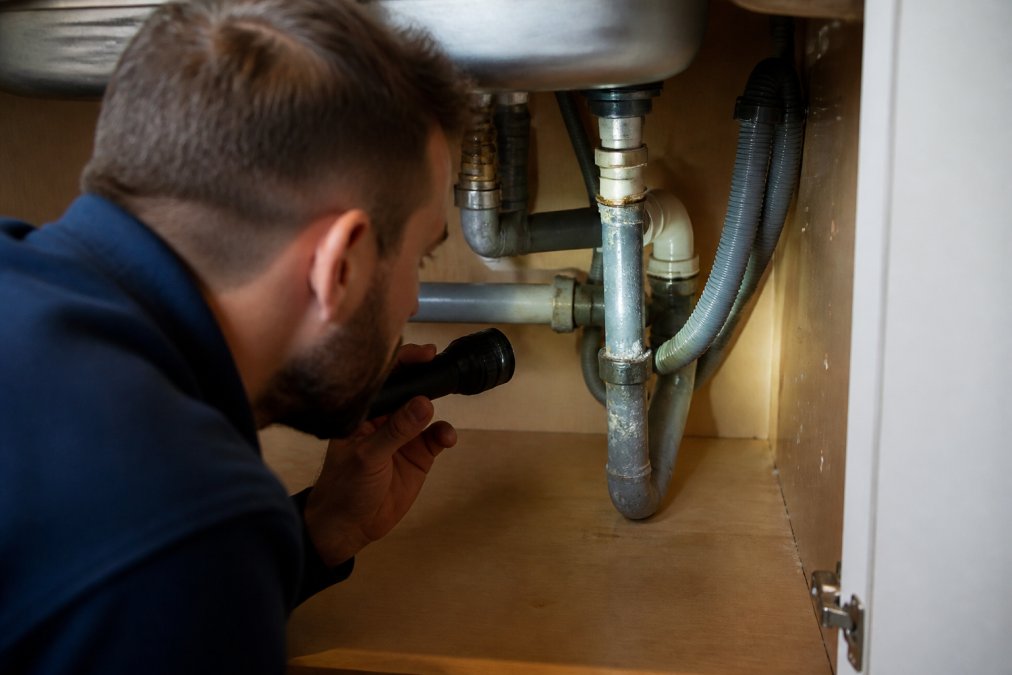
Watch for these warning signs:
- Discolored or metallic-tasting water when you first turn on a tap
- Reduced water pressure that worsens over weeks, not days
- Visible pitting or white crust at fittings and joints
- Damp drywall, peeling paint, or a musty smell near pipe runs
- A water meter that ticks up when nothing in the house is running
A common mistake is treating a single leak as an isolated repair. With polybutylene, one failure usually means the rest of the system is on the same clock, so a flagged inspection is a system-level issue, not a patch job.
Poly-B Pipe Replacement Cost: What Drives the Price
Poly-b pipe replacement cost depends on four things: the size of your home, how accessible the pipe runs are, whether you choose PEX, copper, or a trenchless method, and whether any drywall or flooring needs to be opened and restored.
Indy Plumbing offers transparent, upfront pricing so you can understand the costs before work begins, rather than getting a surprise invoice after the work starts.
The biggest cost driver is access, not the pipe itself. A single-story home with an unfinished basement is straightforward; a finished multi-level home with pipes behind tile and cabinetry takes longer and costs more, because restoration becomes part of the project.
| Cost Driver | Why It Matters | Typical Impact |
|---|---|---|
| Home size | More fixtures and longer runs | Higher |
| Pipe accessibility | Finished walls and ceilings slow the work | Higher |
| Material choice | PEX, copper, or HDPE | Varies |
| Restoration | Drywall, tile, and paint repairs | Higher |
| Trenchless vs. open | Excavation vs. lining | Varies |
Partial vs. full repiping: the decision most homeowners get wrong
A full repipe replaces every polybutylene run in the home. A partial repipe replaces only the runs that are accessible, already leaking, or feeding the fixtures you use most. The two are not interchangeable, and the choice is not purely financial.
The case for partial repiping is real. If the polybutylene is exposed in an unfinished basement, a partial repipe removes most of the risk for a fraction of the cost, since the expensive part is opening and restoring finished surfaces.
What a written scope should contain
Whatever scope you choose, the quote should state it explicitly. A scope that survives comparison should name:
- The exact runs being replaced, by fixture and by floor, not “the plumbing.”
- The material and the fitting system, since PEX crimp, PEX expansion, and copper each carry different labor and warranty terms.
- The restoration included, and whether drywall, tile, and paint are in the price or billed separately.
- The permit, and who pulls it. Unpermitted plumbing work becomes the next owner’s problem and yours at sale.
- The warranty, in years, and whether it covers labor or materials only.
Don’t accept a quote that only covers the visible leak. If a contractor replaces one section of polybutylene and leaves the rest, you’ve paid for a repair that doesn’t remove the underlying risk. Ask for a written scope that states exactly how much pipe is being replaced.
If you cannot afford a full repipe today, ask for a staged scope in writing: accessible runs first, finished-wall runs planned for the next renovation. What you should not do is pay for a partial repipe that leaves buried polybutylene in place and call the problem solved.
PEX vs Copper Plumbing Pros and Cons
PEX is the better choice for most whole-home replacements: it costs less to install, resists freezing better, and needs fewer fittings. Copper remains more durable where budget allows, with a service life often exceeding 50 years. The right pick depends on your home and priorities.
If you’re repiping a heritage property, a hybrid approach often works best. Run PEX through the accessible runs and keep copper where it’s visible or where the home’s character matters. You get modern reliability without stripping the house of its original character.
Trenchless Alternatives: CIPP Lining and Pipe Bursting
Trenchless methods rehabilitate or replace buried lines without digging up a driveway or mature garden. Cured-in-place pipe lining (CIPP) creates a new pipe inside the old one; pipe bursting pulls a new high-density polyethylene line through the old pipe while breaking it apart.
| Method | Best For | Main Limitation |
|---|---|---|
| CIPP lining | Cracked or root-invaded sewer lines | Not for collapsed pipes |
| Pipe bursting | Full replacement, upsizing | Needs access pits |
| Open excavation | Severely damaged runs | Most disruptive |
Insurance and Resale: The Financial Impact of Poly-B
Polybutylene’s real cost often shows up at the negotiating table, not the plumbing invoice. Most insurers treat it as a known water-damage risk and respond in one of three ways: surcharge the policy, exclude polybutylene water damage, or decline the risk entirely. Which you get depends on the insurer, the province, and how the home is otherwise rated, so two identical houses can end up with very different premiums.
How to actually change your insurance outcome
You do not negotiate a lower premium by calling and asking. You change the risk the insurer is pricing. The sequence that works:
- Get the assessment in writing. Ask a licensed plumber for a report that identifies the polybutylene, states its condition, and gives a replacement scope. Insurers respond to documentation, not to verbal assurances.
- Get the replacement quote before you call the insurer. A quote with a defined scope and timeline is what turns “scheduled for replacement” into an underwriting decision rather than a promise.
- Ask for the replacement to be re-rated, not just noted. Once the work is complete, request that the policy be re-rated on the new material. Keep the invoice, the permit record, and any manufacturer warranty in one file.
- Shop the file, not the phone call. A completed repipe with documentation is a different risk class. That is the moment to compare quotes, because you are now a standard-risk homeowner rather than a polybutylene homeowner.
If your current insurer will not re-rate the policy after a documented repipe, that is information. A completed repipe is a marketable risk, and most homeowners find at least one insurer willing to price it as one.
The resale math homeowners underestimate
On the resale side, a documented poly-b pipe replacement removes an objection before it becomes a price negotiation. Buyers’ inspectors flag polybutylene routinely, and once flagged, the buyer has a lever: the seller discounts, credits, or pays for the replacement under pressure, usually at the worst possible time and without the ability to compare contractors.
The cheapest time to replace polybutylene is before it fails. A planned repipe costs less than an emergency burst-pipe repair plus water damage restoration, and it protects your insurance coverage and resale value at the same time.
Conclusion
The hard part of a poly-b pipe replacement isn’t the pipe; it’s deciding to act before a fitting gives out behind a finished wall. If your home was built in the polybutylene era, get it assessed and replaced on your schedule, not on the schedule of a burst pipe at 2 AM.
Frequently Asked Questions
What are plumbers using instead of copper pipe?
PEX (cross-linked polyethylene) is now the most common alternative to copper for residential water supply lines. It is flexible, resists scale and chlorine corrosion, and handles freezing temperatures better than rigid pipes. Copper remains a durable option with a service life exceeding 50 years, but it costs more upfront. Both materials meet plumbing code requirements when installed by a licensed plumber.
What is the downside to PEX plumbing?
PEX requires specialized crimping tools for installation, so it is not a DIY-friendly material for most homeowners. It can also degrade if exposed to prolonged UV light, meaning it should not be left in direct sunlight. Some insurance providers may ask about the installation method. However, when professionally installed, PEX is reliable and widely approved across Canadian plumbing codes.
How do I know if my home needs a full pipe replacement?
Warning signs include discolored water, frequent leaks, low water pressure, and visible corrosion on pipes. If your home has Poly-B piping, which was used from the late 1970s to mid-1990s, a home inspection can reveal its condition. A licensed plumber can assess whether spot repairs or a full repipe is the better path for your plumbing infrastructure.
Are there insurance implications for keeping old plumbing pipes?
Yes. Many Canadian insurers now ask about the type of plumbing in a home. Poly-B piping, in particular, has been linked to an increased risk of burst pipes and water damage. Some insurers may charge higher premiums or require replacement before offering coverage. Upgrading to PEX or copper can lower your insurance liability and protect your home equity.
What is the expected lifespan of modern plumbing pipe materials?
Copper typically lasts 50 years or more. PEX has a projected lifespan of 40 to 50 years under normal conditions. CPVC can last 50 to 75 years. HDPE used in trenchless pipe bursting is designed for 50-plus years. Proper installation, water pressure management, and regular maintenance all influence how long any material lasts.
Comments are closed