

Last Updated: October 23, 2026
Quick Summary
Sewer and drain systems are networks of pipes and fixtures that remove wastewater and stormwater from your property. Residential systems include a main sewer line running to the municipal treatment plant, while commercial systems are more complex with grease traps and multiple drainage points.
- Root intrusion, grease buildup, pipe corrosion, and settling are the most common sewer and drain problems.
- Multiple fixtures draining slowly simultaneously indicates a main sewer line backup, not a local clog.
- Hydro-jetting uses 4,000+ pounds per square inch water pressure to clean entire pipe interiors and remove grease completely.
- Sewer camera inspection reveals the exact problem location and severity without excavation.
- Restaurants should have grease traps pumped monthly to prevent drain backups.
Table of Contents
- Understanding Sewer and Drain Systems
- Common Sewer and Drain Problems
- Recognizing Sewer Backup Warning Signs
- Drain Cleaning Methods and Solutions
- Sewer Camera Inspection Technology
- Emergency Sewer and Drain Repairs
- Maintenance Schedules to Prevent Problems
- When to Call a Professional Plumber
- Frequently Asked Questions
Understanding Sewer and Drain Systems
A sewer and drain system is the network of pipes and fixtures that removes wastewater and stormwater from your property. For residential homes, this typically includes the main sewer line running from your house to the municipal treatment plant. For commercial properties, the system is more complex, often involving grease traps, catch basins, and multiple drainage points.
The distinction matters. Residential sewer and drain systems handle household wastewater. Commercial drainage systems manage higher volumes and different waste types, grease from restaurants, sediment from loading areas, or chemical discharge from industrial operations. Understanding which system you have helps you identify problems faster and choose the right solution.
At Indy Plumbing, we work with both residential and commercial properties across Mississauga, Orangeville, and Milton. Over our 13 years in business, we’ve learned that most sewer and drain issues don’t appear overnight. They develop gradually, and early recognition saves thousands in repair costs.
Common Sewer and Drain Problems
The most frequent issues we encounter fall into predictable categories. Root intrusion happens when tree roots penetrate pipe joints seeking water and nutrients.
Pipe corrosion affects metal pipes over decades. Cast iron pipes commonly corrode from the inside out, creating rough surfaces where debris catches and clogs form. Settling and misalignment occur when ground shifts beneath pipes, creating low spots where solids collect instead of flowing downstream.
Frozen pipes are seasonal but predictable. Water in exposed drain lines freezes during cold snaps, blocking flow entirely. This is less common in main sewer lines (which run below frost depth) but happens frequently in above-ground drainage in unheated basements or exterior areas.
Catch basin overflow indicates that stormwater drainage isn’t keeping pace with volume. Sediment accumulation in catch basins reduces their capacity and forces water to back up into parking lots or yards.
Recognizing Sewer Backup Warning Signs
Sewer backup happens when the main line can’t accept wastewater from your property. The water has nowhere to go, so it backs up into the lowest fixtures in your home or business.
The first sign is usually slow drainage in multiple fixtures simultaneously.
Gurgling sounds from drains or toilets indicate air trapped in the line. As water tries to move past a blockage, it forces air backward, creating that distinctive gurgling.
Patches of unusually green grass or soft ground in your yard can indicate a sewer line leak. As wastewater seeps into soil, it fertilizes plants and saturates the ground.
Sewage backing up into fixtures is the most obvious sign. If you see wastewater in your bathtub or floor drain, the main sewer line is completely blocked. This requires emergency attention.
Drain Cleaning Methods and Solutions
Modern drain cleaning has moved beyond the plunger and snake. Professional drain cleaning uses multiple methods depending on the blockage type, pipe material, and severity.
Drain snaking remains effective for localized clogs. A motorized cable with a cutting head or hook on the end feeds through the pipe, breaking apart the blockage. For residential drains, snaking handles most common clogs, hair, soap buildup, and minor grease accumulation.
Hydro-jetting uses high-pressure water to scour pipe interiors clean. Water jets at 4,000+ pounds per square inch blast away grease, mineral deposits, root fragments, and debris.
Hydro-jetting for drains is particularly effective for grease-laden commercial kitchens. The high-pressure water dissolves and flushes grease that snaking leaves behind. Many restaurants need hydro-jetting annually to prevent backup.
Chemical drain cleaners are tempting but problematic. They work by dissolving organic matter, but they damage pipes over time, especially older cast iron or plastic. They’re also hazardous to handle and environmentally damaging. Professional plumbers avoid them.
Mechanical removal involves physically extracting the blockage. If a toy, cloth, or other solid object is lodged in a pipe, a plumber may need to access the pipe and remove it directly. This sometimes requires opening the pipe, which is more invasive but guarantees removal.
Hydro Jetting for Drains
Hydro-jetting for drains is the most thorough drain cleaning method available for residential and commercial properties. It doesn’t just clear a path through the blockage, it cleans the entire pipe interior, removing buildup that will clog again in weeks or months.
The process is straightforward. A technician inserts a small nozzle into the drain line, connected to a high-pressure pump. Water pressure increases gradually to avoid damaging the pipe.
For commercial drain cleaning services, hydro-jetting is standard practice. Restaurants, laundries, and food processing facilities generate grease that hardens inside pipes. Snaking removes the blockage temporarily, but grease remains on the pipe walls. Weeks later, it accumulates again.
The main limitation is that hydro-jetting requires access to the drain line. If the blockage is deep in the main sewer line, a technician may need to locate a cleanout or use a sewer camera first to identify the problem location.
Commercial Drain Cleaning Services
Commercial drainage systems are fundamentally different from residential ones. They handle higher volumes, more diverse waste types, and often have complex layouts with multiple collection points.
Restaurants need commercial drain cleaning services regularly. Grease from cooking accumulates in drain lines, and municipal codes often require grease trap cleaning every 30 days.
Office buildings, retail spaces, and warehouses have different challenges. Parking lot drains collect sediment and debris. Roof drains can become clogged with leaves and dirt. Restroom drains in high-traffic facilities accumulate more hair and soap than residential systems.
Professional commercial drain cleaning typically combines multiple methods. A sewer camera inspection identifies the blockage type and location. Hydro-jetting clears the line. Follow-up snaking removes any remaining debris. This multi-step approach ensures the line stays clear longer.
[What to expect when you hire a professional drain cleaning service(page:2)]
Professional drain cleaning uses different methods depending on the blockage type, pipe material, and severity.
| Method | Best For | Key Difference |
|---|---|---|
| Drain snaking | Localized clogs | Breaks apart blockage, faster and less invasive |
| Hydro-jetting | Heavy grease, mineral deposits, roots | Cleans entire pipe diameter, not just a hole |
| Mechanical removal | Solid objects lodged in pipe | Physically extracts blockage, requires pipe access |
| Chemical cleaners | Not recommended | Damages pipes over time, environmentally harmful |
Sewer Camera Inspection Technology
A sewer camera inspection uses a waterproof camera on a flexible cable to see inside pipes without excavation. The camera feeds live video to a monitor, showing the pipe interior in detail.
The camera reveals the actual problem. Is it root intrusion, grease buildup, pipe corrosion, or a crack? A technician can see the exact location and severity. This information determines the repair method.
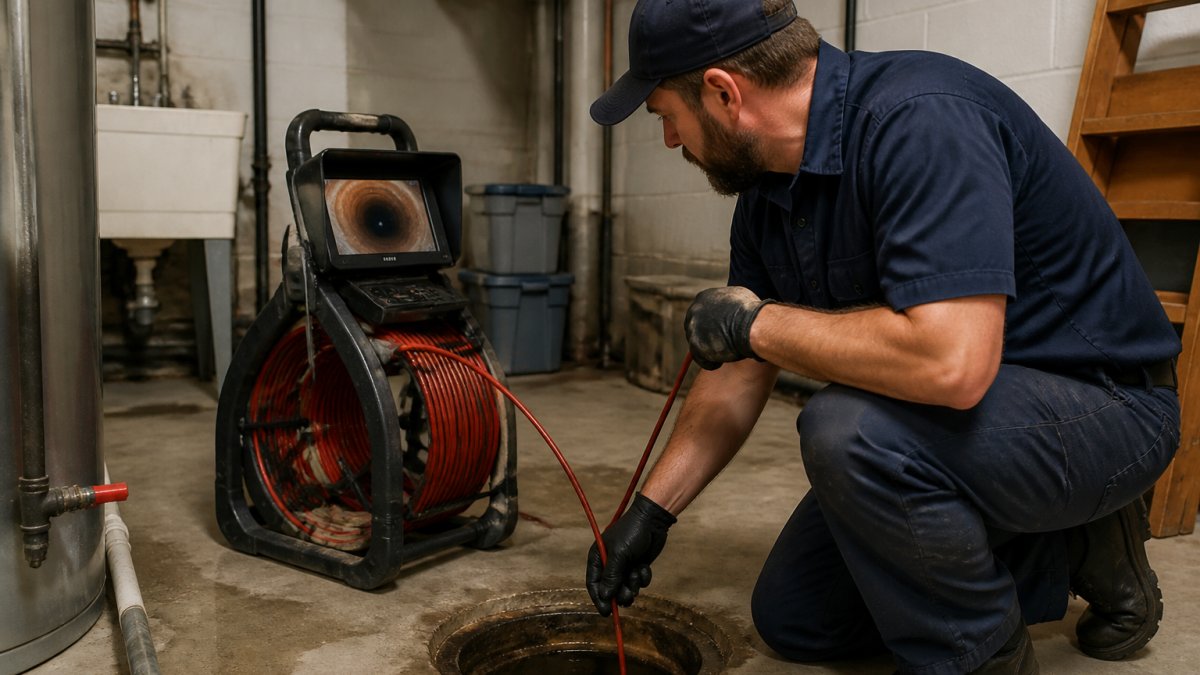
The camera also documents the pipe’s condition over time. If you have the same line inspected annually, you can track whether problems are worsening. This data supports decisions about whether to repair now or plan for replacement later.
For sewer and drain systems in heritage properties or older homes, camera inspection is invaluable. Many older homes have clay tile pipes that are collapsing slowly.
[Drain and waterline services including inspections(page:4)]
Emergency Sewer and Drain Repairs
Sewer backup is an emergency. Wastewater backing up into your home or business is a health hazard and requires immediate attention. Many emergency sewer and drain repairs can’t wait for a scheduled appointment.
The first step is stopping the backup. A plumber may need to clear the main line immediately, using snaking or other methods to restore flow. Once the backup stops, you can breathe. The second step is determining the cause.
Temporary blockages, grease, roots, or debris, are cleared and the line functions normally. Structural problems, collapsed pipes, severe corrosion, or misalignment, require more extensive repair.
[Professional drain cleaning cost guide for transparent pricing(page:3)]
Pipe relining is a trenchless repair method that seals the inside of a damaged pipe without excavation. A flexible tube coated with epoxy resin is inserted into the pipe and inflated.
Pipe replacement is necessary when the pipe is severely damaged or collapsed. Excavation exposes the damaged section, the old pipe is removed, and a new one is installed.
Ignoring sewer backup warning signs leads to raw sewage in your basement or yard. This creates contamination, health risks, and property damage. Emergency repairs cost more than preventive maintenance. Act on the first warning signs.
Maintenance Schedules to Prevent Problems
The cheapest repair is the one you prevent. Maintenance schedules for sewer and drain systems vary by property type and age, but the principle is consistent: catch small problems before they become emergencies.
For residential properties, annual drain inspection is reasonable if you have an older home or trees near the sewer line.
Grease management is critical in any kitchen. Don’t pour grease down the drain. Let it solidify and throw it in the trash. Wipe pans with paper towels before washing.
For commercial properties, maintenance is more rigorous. Restaurants should have grease traps pumped monthly. Drain lines should be inspected annually and cleaned as needed. Parking lot drains should be cleaned seasonally to prevent sediment accumulation.
[Commercial plumbing maintenance tips(page:5)]
Catch basin maintenance is often overlooked but critical. Catch basins collect sediment, leaves, and debris. When they fill up, they can’t drain stormwater, leading to flooding. Seasonal cleaning, spring and fall, keeps them functional.
When to Call a Professional Plumber
Some drain problems you can handle. A slow kitchen sink clogged with hair and soap might clear with a plunger or a drain snake you buy at a hardware store.
Call a professional immediately if you see sewage backing up into fixtures, smell raw sewage in your basement or yard, or notice multiple fixtures draining slowly at the same time.
Call a professional if DIY methods don’t work.
Call a professional if you suspect root intrusion, pipe corrosion, or structural damage. These problems require camera inspection and specialized repair methods. A plunger won’t fix them.
Call a professional if you own a commercial property. Commercial drainage is too complex and too important to your operations to risk DIY attempts.
At Indy Plumbing, we’re available 24/7 for emergency sewer and drain repairs. We use camera inspection to diagnose problems accurately, then recommend the most cost-effective solution. Our transparent pricing means no surprise charges after the work is done. We’ve handled everything from simple clogs to complete sewer line replacements, and we’ve helped heritage homes and modern properties alike keep their plumbing systems functioning reliably.
Sewer and drain problems are expensive when they become emergencies and preventable when caught early. The warning signs are clear, slow drainage, odors, and backups.
Frequently Asked Questions
What is the difference between a sewer line and a drain line?
Drain lines carry wastewater from individual fixtures (sinks, toilets, showers) within your property to the main sewer line. The sewer line is the main pipeline that transports all wastewater from your home or building to the municipal treatment facility. Understanding this distinction is important because problems in either system require different repair approaches and expertise.
What are the main warning signs of a sewer backup?
Common sewer backup warning signs include slow drains throughout your home, gurgling sounds from toilets or drains, raw sewage odors, water pooling in your yard or basement, and visible sewage backing up into fixtures. If you notice multiple drains draining slowly at the same time, this typically indicates a main line issue rather than a single clogged drain. Act quickly to prevent water damage and contamination.
How does sewer camera inspection help identify problems?
Sewer camera inspection uses a waterproof camera on a flexible cable to visually examine the interior of your pipes. This technology reveals cracks, root intrusion, blockages, corrosion, and misaligned joints without excavation. The footage helps plumbers diagnose the exact problem and determine whether you need cleaning, repairs, or replacement, saving you money by avoiding unnecessary work.
How often should commercial drains be cleaned to prevent backups?
Commercial drain cleaning frequency depends on usage. Restaurants and food service operations typically need cleaning every 1-3 months, while office buildings may require quarterly or semi-annual maintenance. Regular commercial drain cleaning prevents costly emergency shutdowns, maintains code compliance, and extends the life of your drainage system. A licensed plumber can recommend a maintenance schedule based on your specific business operations.

Comments are closed