

Table of Contents
- Signs of Failing Water Heater: What to Watch For
- Water Heater Leaking from Bottom: Diagnosis and Next Steps
- Water Heater Life Expectancy: How Old Is Too Old?
- How to Choose the Right Water Heater Size for Your Home
- DIY Diagnostic Checklist vs. When to Call a Professional
- Preventing Water Heater Failure: Maintenance Steps
- Frequently Asked Questions
Last Updated: October 1, 2026
Signs of Failing Water Heater: What to Watch For
Your water heater works quietly in the background until something goes wrong. By then, you’re facing either a costly repair or an emergency replacement. The good news: signs of failing water heater often appear weeks or months before total failure. Catching them early saves money and prevents water damage to your home.
This guide covers the most common indicators that your unit is failing, how to diagnose the problem yourself, and when to call a professional.
Strange Noises Coming from the Tank
Popping, cracking, or rumbling sounds from your water heater aren’t normal. These noises mean sediment has built up inside the tank. When sediment accumulates at the bottom, water gets trapped underneath it. Heat causes that trapped water to turn to steam, creating the popping sound you hear.
Over time, sediment buildup reduces your tank’s efficiency. The heating element works harder. Your energy bills climb. The tank itself becomes more vulnerable to corrosion.
Listen for these specific sounds:
- Popping or crackling (like Rice Krispies)
- Deep rumbling or growling
- Banging when the burner kicks on
If you hear any of these, your tank likely needs flushing.
Discolored or Rusty Water
Turn on your hot water tap. If rusty, orange, or brown water comes out, your water heater is corroding from the inside. This happens when the protective anode rod has failed or corroded completely.
Rust-colored water indicates:
- The anode rod needs replacement
- The tank interior is corroding
- Replacement may be necessary soon
Temperature Fluctuations and Low Pressure
Inconsistent hot water temperature is a red flag. You adjust the shower, it’s scalding, then it turns cold. This happens when sediment or corrosion damages the thermocouple or heating element.
Water Heater Leaking from Bottom: Diagnosis and Next Steps
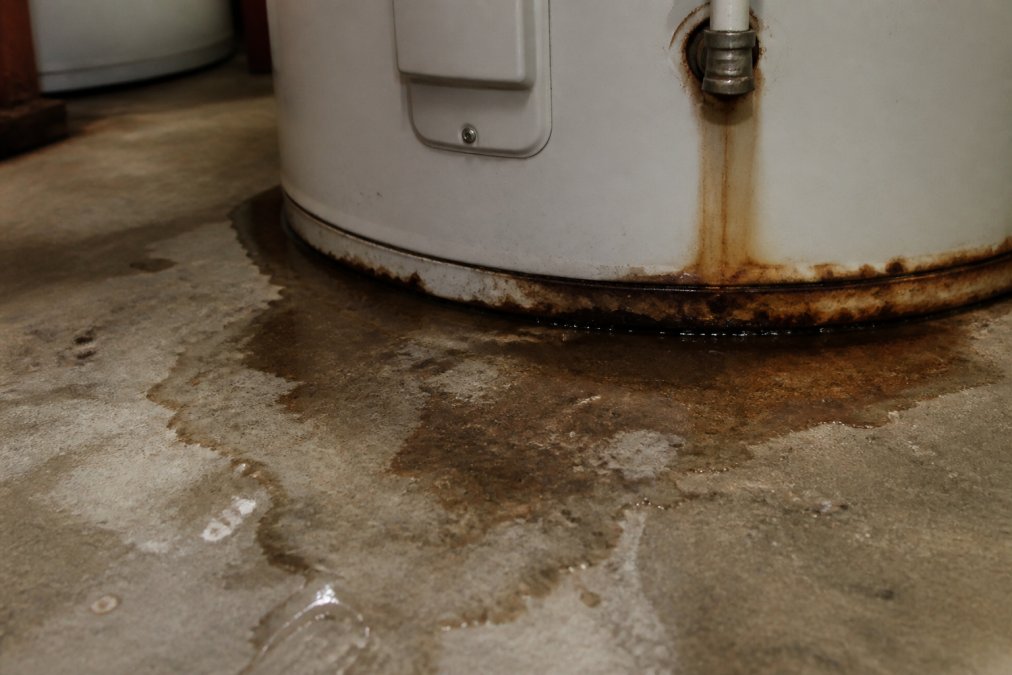
A puddle under your water heater demands immediate attention. Small leaks can escalate into major water damage within hours. The question isn’t whether to act, but how quickly.
Identifying the Source of the Leak
Not every drip means your tank is failing. The leak could come from a fitting, valve, or pipe connection instead.
Common leak sources:
- Pressure relief valve: Located on the side of the tank. If it’s weeping, the valve may be stuck or the tank pressure is too high.
- Drain valve: At the bottom of the tank. A slow drip here often means the valve wasn’t closed fully after flushing.
- Inlet or outlet connections: Where pipes connect to the tank. Corrosion or loose fittings cause these leaks.
- Tank itself: If water pools directly under the bottom, the tank wall has corroded through. This requires replacement.
When Repair Is Possible vs. Replacement Required
A leaking valve or connection can be repaired. A plumber tightens the fitting or replaces the valve. Cost is minimal compared to replacement.
Water Heater Life Expectancy: How Old Is Too Old?
Most tank-style water heaters last 8-12 years. Tankless units often reach 15-20 years (Save More with ENERGY STAR Gas Tankless Water Heaters). Age alone doesn’t mean failure, but it increases the risk.
How to Choose the Right Water Heater Size for Your Home
When replacement time comes, sizing matters. An undersized unit leaves you with cold showers. An oversized unit wastes energy and money.
Quick sizing guide:
- 1-2 people: 113-151 litre tank
- 2-3 people: 151-189 litre tank
- 3-4 people: 189-227 litre tank
- 5+ people: 227+ litre tank
DIY Diagnostic Checklist vs. When to Call a Professional
Some water heater issues you can investigate yourself. Others require professional expertise, specialized diagnostic tools, and licensing. The key is knowing which category each symptom falls into, and understanding the safety risks of DIY intervention.
What You Can Safely Check Yourself
These checks require no tools, no tank access, and carry minimal risk:
- Listen for strange noises: Popping, rumbling, or cracking from inside the tank. Record what you hear and when (during heating cycles, continuously, etc.). This costs nothing and is purely observational.
- Check water color and clarity: Run hot water into a clear glass for 10 seconds. Note any discoloration, cloudiness, or particles. Rusty water suggests internal corrosion; particles may indicate sediment.
- Feel the tank surface: With the unit off, carefully touch the tank exterior (not pipes). Unusually hot spots or cold zones can indicate internal problems or uneven heating.
- Inspect visible connections: Look at where pipes enter and exit the tank, and where the gas line connects (if applicable). Note any visible corrosion, white mineral buildup, or active dripping.
- Check the pressure relief valve: Locate the valve on the side of the tank (usually a lever or button near the top). Look for water staining or active weeping below it. Do NOT pull the lever unless you’re prepared for hot water discharge.
- Review your energy bills: Compare heating costs month-to-month over the past year. A sudden 15-25% increase often signals declining efficiency.
- Determine the unit’s age: Find the manufacturer label on the tank. The serial number typically encodes the year (first one or two digits). A unit over 10 years old is in its decline phase.
- Test hot water consistency: Run the shower for 2 minutes. Note whether temperature stays steady or fluctuates. Erratic swings suggest thermostat or heating element issues.
Why You Should NOT Attempt These Diagnostics Yourself
Pressure and temperature testing: A licensed plumber uses calibrated gauges to measure tank pressure and water temperature at multiple points. Incorrect readings lead to wrong diagnoses. Overpressurization can rupture the tank.
Red Flags That Require Immediate Professional Help
Call a licensed plumber or technician without delay if you observe:
- Active pooling or dripping water under the tank or from connections
- Visible rust or corrosion on the tank exterior, especially near the bottom
- Gas smell near the unit (for gas models), evacuate and call emergency services
- Pilot light won’t ignite or stays lit for only seconds (gas models)
- No hot water despite thermostat set to normal temperature and unit powered on
- Water heater is over 12 years old and showing any of the warning signs above
- Pressure relief valve actively discharging water onto the floor
- Unusual vibration or movement of the tank
- Discolored water persists after running the tap for 30 seconds (suggests internal corrosion, not just sediment in pipes)
Decision Matrix: Repair vs. Replace
Once a professional diagnoses the issue, use this framework to decide next steps:
| Problem | Typical Cost | Unit Age | Recommendation |
|---|---|---|---|
| Leaking drain or relief valve | $150-$400 | Any | Repair |
| Anode rod replacement | $300-$600 | Under 8 years | Repair |
| Sediment flush | $200-$400 | Under 10 years | Repair |
| Thermocouple replacement (gas) | $200-$500 | Under 10 years | Repair |
| Heating element replacement (electric) | $400-$800 | Under 10 years | Repair |
| Leaking tank (corroded through) | N/A | Any | Replace |
| Multiple repairs needed in 12 months | Varies | Over 10 years | Replace |
| Significant rust on exterior | N/A | Over 12 years | Replace |
| No hot water + unit over 12 years | Varies | Over 12 years | Replace |
Tank vs. Tankless: Different Failure Modes Require Different Diagnostics
Tank water heaters fail predictably: sediment accumulates, the anode rod corrodes, the tank rusts from inside out. These are slow, observable processes. A tank showing warning signs typically has weeks or months before catastrophic failure.
- Sudden loss of hot water (scale blockage)
- Inconsistent temperature (scale restricts flow)
- Error codes on the display (sensor malfunction or ignition failure)
- Reduced flow rate (mineral buildup in the exchanger)
Preventing Water Heater Failure: Maintenance Steps
Regular maintenance extends your water heater’s life and prevents emergency failures.
Annual maintenance tasks:
- Flush the tank: Drain 38-76 litres from the drain valve annually. This removes sediment buildup that reduces efficiency.
- Test the relief valve: Lift the lever on the pressure relief valve to ensure it opens and closes. This prevents pressure buildup.
- Inspect the anode rod: For tank models, the anode rod should be inspected every 3-5 years. Replace it if it’s severely corroded.
- Check for leaks: Visually inspect the tank, pipes, and connections monthly.
- Adjust temperature: Keep the thermostat set to 49°C (120°F). Higher temperatures waste energy and increase corrosion risk.
- Insulate the tank: A blanket around the tank reduces heat loss and improves efficiency.
Frequently Asked Questions
How do I tell if my water heater needs to be replaced?
Your water heater likely needs replacement if it’s over 10-12 years old, leaking from the tank itself, producing rust-colored water, making loud popping noises, or no longer heating water adequately. If the anode rod is severely corroded or the tank shows signs of sediment buildup, replacement is typically more cost-effective than repair. A professional plumber can assess the tank integrity and confirm whether repair or replacement makes sense for your situation.
What is the typical life expectancy of a water heater?
Most tank-style water heaters last 8-12 years with proper maintenance, though some can reach 15 years if the anode rod is replaced periodically. Tankless units often last 15-20 years. Life expectancy depends on water quality, how frequently you flush sediment, and whether you maintain the pressure relief valve. Hard water and high mineral content shorten lifespan significantly. Regular preventative maintenance extends your water heater life expectancy considerably.
Can a water heater leaking from the bottom be repaired?
Leaks from the bottom of the tank itself cannot be repaired, the tank has corroded through and must be replaced. However, leaks from the drain valve, temperature and pressure relief valve, or inlet/outlet connections may be fixable. A licensed plumber can identify where the water is coming from and determine whether tightening a connection, replacing a valve, or full replacement is needed. Acting quickly prevents water damage to your home.
Should I replace my water heater before it fails?
Proactive replacement makes sense if your unit is 10+ years old, especially if you’ve noticed minor issues like temperature fluctuations or reduced hot water recovery rate. Replacing before failure avoids emergency downtime and potential water damage. Consider the environmental impact and energy efficiency gains of a newer model. A professional inspection can help you decide whether replacement now or continued operation with monitoring is the better choice.
Comments are closed