

Quick Summary
Your kitchen sink gurgles when the dishwasher runs because the two share a drain line, and a restriction forces air to bubble back up through the sink. A sink gurgle dishwasher problem is usually caused by a partial clog, a blocked plumbing vent, a failing air admittance valve, or a poorly routed dishwasher hose.
- When the dishwasher pumps water out, it pushes air ahead of it, and that air escapes through the sink if the drain can’t release it.
- Check the dishwasher drain hose for kinks and sags, and re-route it into a high loop under the counter.
- Clean the disposal inlet and the P-trap, scrubbing out grease and food with hot water and a brush.
- Avoid pouring chemical drain cleaners into a gurgling sink, as they can sit in the trap and damage pipes.
- If several fixtures gurgle at once, suspect a blocked vent stack and call a licensed plumber.
Table of Contents
- Why Your Sink Gurgles When the Dishwasher Drains
- Common Causes of Gurgling Drains
- How the Plumbing Vent and Air Admittance Valve Affect Drainage
- Signs Your Dishwasher Is Clogged and Where the Blockage Sits
- Step-by-Step: Troubleshooting the Dishwasher Drain and P-Trap
- Plumbing Vent Stack Blockage Symptoms to Check
- When to Call a Professional and What Drain Cleaning Involves
- Booking Your Drain Inspection With Indy Plumbing
- Frequently Asked Questions
Why Your Sink Gurgles When the Dishwasher Drains
Last Updated: November 3, 2026
Your kitchen sink gurgles when the dishwasher runs because the two share a drain line, and something in that line is restricting airflow or flow. A sink gurgle dishwasher problem like this is common and usually traceable to a single restriction. The gurgle is air being pushed through water, and it usually points to a partial clog, a venting problem, or a dishwasher drain that is not clearing properly.
Here is the short version. When the dishwasher pumps water out, it pushes air ahead of it. If the drain can’t release that air, it bubbles back up through the nearest open route, which is often the sink.
Most gurgling falls into a few common patterns:
- Partial clog in the shared drain or dishwasher hose
- Blocked or missing plumbing vent, so air cannot enter the system
- Failing air admittance valve that no longer lets air in
Watch out: Avoid pouring chemical drain cleaners into a sink that gurgles, as they can sit in the trap and damage pipes.
Common Causes of Gurgling Drains
A sink gurgle dishwasher issue usually comes from air trying to escape or enter the drain. Start with the simplest cause and work toward the complex ones.
- Food debris and grease collect in the sink trap and the dishwasher’s connection to the disposal or drain.
- A kinked or high-positioned dishwasher hose traps water and air, which then bubbles when the pump runs.
- Mineral or soap scale narrows the drain over time, especially in older homes.
The fastest test is to run only the sink, then only the dishwasher. If the gurgle appears only during the dishwasher cycle, focus on the dishwasher drain path first.
How the Plumbing Vent and Air Admittance Valve Affect Drainage
Every drain needs air behind the water.
Some homes, especially where running a new roof vent was impractical, use an air admittance valve (AAV) instead.
How to tell whether the vent or the AAV is the problem
A vent stack blockage and a failed AAV produce similar gurgles, but they leave different fingerprints:
- One fixture gurgles, others are fine: the problem is usually local, the AAV under that sink, the branch drain, or the dishwasher hose. Start there.
- Several fixtures gurgle or drain slowly at once: the shared vent stack or main drain is restricted. A blocked vent affects every fixture tied to it, so a gurgling kitchen sink plus a slow tub and a toilet that burps points upward, not at the sink.
- Sewer smell under the sink with no other symptoms: the AAV is stuck open or the trap has lost its water seal.
Testing an AAV
An AAV that has failed usually fails closed, so it stops admitting air and the trap gurgles. To check one:
- Clear stored items away from the valve so it is upright and unobstructed.
- Look for grease, soap scum, or debris on the valve face; a clogged valve cannot open.
- With the sink drained, run the dishwasher and listen at the valve. A working AAV clicks softly as it opens; a dead one stays silent and the gurgle comes from the drain.
- If the valve is old, crusted, or does not move freely when you gently press the diaphragm, replace it. A failed AAV leaves the trap unvented, which is both a gurgle and a sewer-gas risk.
Checking the vent stack
If several fixtures are affected, the vent stack is the suspect. Vent blockages commonly come from leaves, bird nests, or ice at the roof opening.
Signs Your Dishwasher Is Clogged and Where the Blockage Sits
Several signs help you locate the problem:
- Water pooling in the dishwasher after a cycle
- A sour smell from the dishwasher or sink
- Slow drainage in the sink along with gurgling
- Standing water in the sink basin after the dishwasher finishes
Blockages usually sit in one of three places: the dishwasher drain hose, the disposal inlet or drain connection, or the P-trap. A partial clog in any of these can cause gurgling, even if water still drains.
Step-by-Step: Troubleshooting the Dishwasher Drain and P-Trap
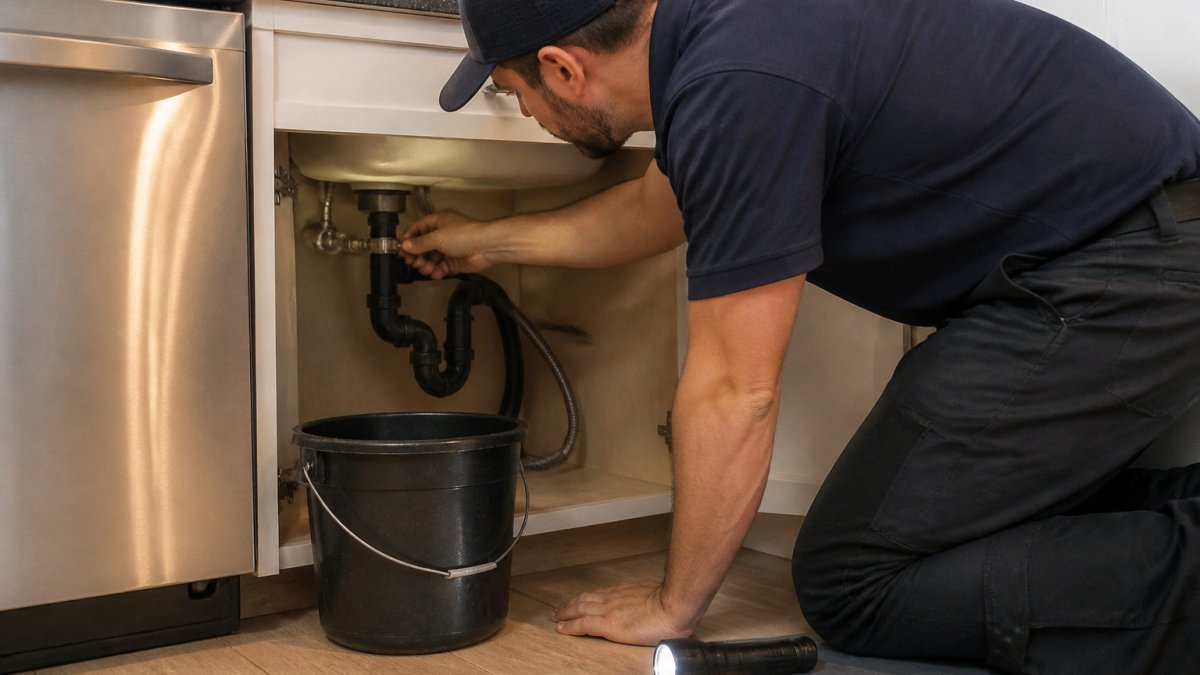
Before you start, turn off the dishwasher and unplug it or shut off its breaker. Place a bucket and towels under the sink.
-
Check the dishwasher drain hose for kinks and sags. Trace the hose from the dishwasher to where it connects at the disposal or sink drain. A hose that sags traps water and air, and the pump then pushes that trapped air up through the sink. Straighten any kink and support the hose so it slopes continuously toward the drain.
-
Verify the high loop. This is the installation detail most gurgling guides skip. The dishwasher drain hose should rise to the underside of the counter, the “high loop”, before it drops to the drain connection. The high loop keeps dirty dishwasher water from siphoning back into the machine and keeps drain air from bubbling up through the sink. If the hose runs low and flat to the drain, that alone can cause the gurgle. Re-route it up under the counter and secure it with a clamp or zip tie.
-
Clear the disposal inlet. If the dishwasher drains into a garbage disposal, remove the disposal’s knockout plug if it is still in place, and clean food debris from the inlet. A partially blocked inlet restricts flow and produces the same gurgle as a clog further down.
-
Remove and clean the P-trap. Put the bucket under the trap, unscrew the slip nuts by hand, and empty the trap. Scrub out grease and food with hot water and a brush. Check that the trap is the right type, a P-trap, not an S-trap, and that it has a proper water seal.
-
Snake the branch line if the trap was clear. If the trap is clean but the gurgle persists, the restriction is past the trap. Use a hand auger or a small mechanical snake through the trap arm. This is where the choice of tool matters: a mechanical snake clears the blockage, while chemical drain cleaners can sit in the trap, damage pipes, and make a later professional visit more costly. Do not pour chemical cleaners into a gurgling sink.
-
Reassemble and test in stages. Run hot water in the sink first and watch for leaks at the slip nuts. Then run the dishwasher and listen at the sink. If the gurgle is gone, the cause was in the hose, high loop, disposal inlet, or trap. If it remains, the restriction is deeper in the drain line or in the vent, and it is time to call a professional.
Watch out: Do not overtighten plastic slip nuts when you reassemble the trap, hand-tight plus a quarter turn is enough, and overtightening cracks the nut and causes a leak you will not see until the cabinet floor is wet.
The steps below summarise the troubleshooting order the article recommends, from the simplest check to the most involved.
| Step | What to do | Time or frequency |
|---|---|---|
| Check the dishwasher drain hose | Straighten kinks and support the hose so it slopes toward the drain | Before any other step |
| Verify the high loop | Re-route the hose up under the counter and secure it with a clamp or zip tie | Once during the check |
| Clear the disposal inlet | Remove the knockout plug if present and clean food debris | Before cleaning the trap |
| Remove and clean the P-trap | Unscrew slip nuts by hand, empty the trap, scrub grease and food | Hot water and brush |
| Snake the branch line | Use a hand auger or mechanical snake through the trap arm | Only if the trap was clear |
| Reassemble and test in stages | Run hot water, check slip nuts for leaks, then run the dishwasher | Stop when the gurgle is gone |
Plumbing Vent Stack Blockage Symptoms to Check
A blocked vent stack often shows up in more than one fixture. Look for:
- Gurgling in several drains at once, such as the sink, tub and toilet
- Slow drains throughout the house
- Sewer odour in the kitchen or bathroom
- Traps losing water and drying out
A vent stack blockage can come from leaves, bird nests or ice on the roof opening. Check the vent cap from the roof or ground if you can do so safely. If you see debris, do not attempt roof work yourself. Call a licensed plumber.
When to Call a Professional and What Drain Cleaning Involves
Call a professional if:
- Gurgling continues after you have cleaned the trap and checked the hose
- More than one fixture gurgles at the same time
- You smell sewer gas
- Water backs up into the sink or dishwasher
A professional drain cleaning usually starts with an inspection to find where the blockage or venting issue sits. From there, the technician can clear the line with specialized equipment, check the vent, and confirm the fix.
For a clear picture of what to expect, see our Professional Drain Cleaning Cost Guide. If you are weighing a visit, our page on what to expect when you hire a professional drain cleaning service explains the inspection and cleaning steps.
Booking Your Drain Inspection With Indy Plumbing
If the gurgling has not cleared after your own checks, Indy Plumbing can find the cause and fix it. Our licensed and insured team handles dishwasher drain issues, vent problems and full drain line clearing. Current pricing and quotes are available on the Indy Plumbing website.
For a clogged drain that needs clearing, our clogged drain repair service covers kitchen sinks and household drain systems. You can also book our drain cleaning services to clear the line and restore flow. If you are replacing or reconfiguring the sink at the same time, see our kitchen sink installation service.
Schedule your drain inspection with Indy Plumbing today, and we will help you stop the gurgle for good.
Frequently Asked Questions
Is a gurgling sink a sign of a major plumbing blockage?
Not always. A gurgle often comes from air being pulled or pushed through the drain rather than from a full blockage. Air moving through the trap or vent usually produces the sound, while a serious blockage tends to show up as slow draining, standing water, or backups in multiple fixtures. If the gurgling appears in several sinks or the water rises when another fixture drains, the cause is more likely in the main drain or vent system and should be inspected by a licensed plumber.
Can a clogged air gap cause a kitchen sink to gurgle?
Yes. The dishwasher air gap is a small fitting on the countertop that lets the dishwasher drain without siphoning water back into the machine. When its cap or internal passages clog with food debris, the dishwasher discharge can back up and force air and water through the sink drain, causing gurgling. Remove the cap, clear the debris with a small brush, and run the dishwasher again to see whether the sound stops.
Should I use chemical drain cleaners for a gurgling sink?
It is better to avoid them. Chemical drain cleaners can damage older pipes, and they rarely clear the venting or air-pressure problems behind gurgling. If the gurgle is caused by a partial clog, a mechanical drain snake or a manual cleaning of the P-trap will usually work more safely. If the sound persists after mechanical cleaning, the cause is probably in the vent system, and a plumber can inspect it with a camera.
When should I call a professional for drain cleaning services?
Call a professional if the gurgling continues after you have cleaned the air gap and P-trap, if several fixtures drain slowly at once, or if you smell sewer gas. Other warning signs include water rising in a tub when the kitchen sink drains and gurgling in a toilet or floor drain. You can request current pricing and a quote through the Indy Plumbing website.

Comments are closed