

Table of Contents
- What Affects Submersible Well Pump Replacement Cost
- Well Pump Replacement Cost Breakdown
- Well Pump Replacement Time: What to Expect
- Well Pump Repair vs Replacement: Cost and Decision
- Getting a Well Pump Replacement Estimate
- Shallow Well vs Deep Well Pump Costs
- Warranty, Lifespan, and Lifecycle Cost
- Frequently Asked Questions
Last Updated: October 17, 2026
What Affects Submersible Well Pump Replacement Cost
The cost to replace a submersible well pump depends on several interconnected factors that determine both the equipment price and the labor required. Understanding these variables helps you anticipate expenses and make informed decisions about your well system.
Well depth and pump setting depth are the primary cost drivers. A shallow well pump installed at a shallower depth costs significantly less than a deep-well submersible unit set at a greater depth. The deeper the pump sits, the longer the drop pipe, electrical cable, and control wiring required; each meter of depth adds material and labor expense.
Well depth and pump setting depth
The submersible well pump replacement cost rises proportionally with how far down your pump must be placed. Most residential wells range from approximately 7.6 to 122 meters deep, and the pump must be submerged below the static water level to function properly.
Shallow wells (under 15 meters) typically require smaller-capacity pumps and shorter runs of electrical cable and drop pipe. Deep wells (over 45 meters) demand heavier-gauge wiring, longer sections of pipe, and often higher-horsepower motors to push water that distance. The cost difference between a 15-meter installation and a 91-meter installation can easily exceed several hundred dollars in materials alone, before labor is considered.
Pump horsepower and capacity
Horsepower directly correlates with both pump price and energy consumption. A 0.5 HP pump costs less upfront than a 2 HP unit, but a household with high water demand or poor well recovery rates may require the larger motor to maintain adequate pressure and flow.
Capacity, measured in gallons per minute (GPM), determines how quickly the pump delivers water to your pressure tank. Most residential systems need 5-15 GPM, though larger homes or those with irrigation systems may require 20+ GPM. Higher-capacity pumps carry higher price tags and draw more electricity during operation.
System components and compatibility
Your existing pressure tank, control box, pressure switch, and electrical infrastructure all affect replacement cost. If your pressure tank is undersized or failing, you may need to replace it alongside the pump. An incompatible control system might require upgrades to the electrical panel or installation of a new pressure switch. These secondary components can add substantial expense to what seems like a straightforward pump replacement.
Before accepting a replacement quote, ask your contractor to verify compatibility between the new pump and your existing tank, pressure switch, and electrical setup. Incompatibility often emerges mid-project and drives costs up unexpectedly.
Well Pump Replacement Cost Breakdown
A transparent cost estimate includes three main categories: the pump unit itself, labor and installation, and regional variables that affect both.
Pump unit and parts pricing
The submersible well pump replacement cost for equipment includes the pump motor, impeller assembly, drop pipe, electrical cable, and control components. A basic residential submersible pump unit ranges across a broad spectrum depending on horsepower and depth rating. Drop pipe and electrical cable add cost proportional to well depth; deeper wells require heavier materials and longer runs.
Many homeowners are surprised that the pump motor itself is often the smallest component of the total materials cost. The supporting infrastructure, the pipe that carries water, the cable that powers the motor, and the fittings that connect everything, frequently exceeds the pump’s own price. Quality matters here: undersized or low-grade materials often fail prematurely and lead to costly repeat replacements.
Labor and installation expenses
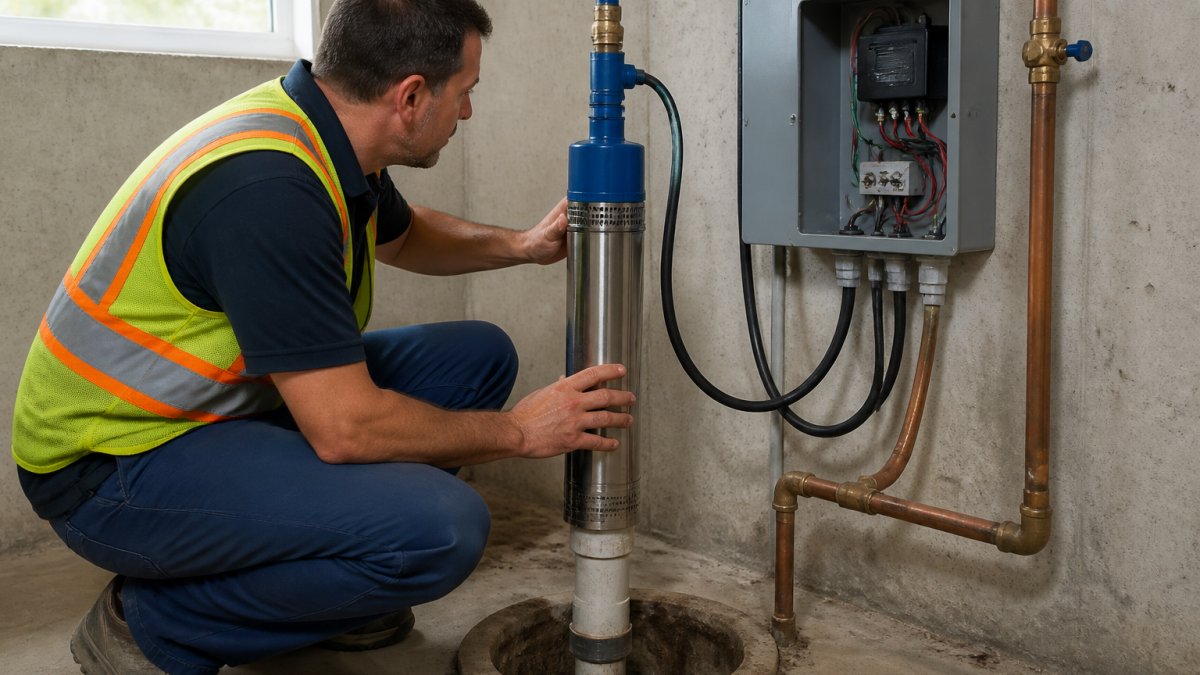
Professional installation typically involves pump removal, system diagnostics, new pump installation, pressure testing, and electrical connections. The labor portion of submersible well pump replacement cost depends on how accessible your well is, whether the old pump must be extracted first, and how much troubleshooting is required before installation begins.
Well access significantly affects labor time. A pump located in an open basement costs far less to service than one accessed through a crawlspace or buried well head. If the old pump is seized or corroded, extraction takes longer and may require specialized equipment. At Indy Plumbing, we always factor in a diagnostic phase, confirming the pump is actually the problem rather than a failed pressure switch or clogged intake, which can save you thousands by avoiding unnecessary replacement.
Regional and access-related variation
Installation costs vary by region based on local labor rates, well contractor availability, and site-specific challenges. Rural areas may see higher per-hour rates due to travel time, while urban areas might have more competitive pricing due to contractor density.
Access challenges unique to your property affect cost directly. A well located under a deck, shed, or patio requires careful excavation and site restoration. Wells in areas with high water tables or poor soil stability may demand additional bracing or protective measures during replacement.
Well Pump Replacement Time: What to Expect
A typical submersible well pump replacement takes one to three days from start to finish, depending on well depth, system complexity, and whether complications emerge during the work.
The first day usually involves diagnostic testing to confirm the pump is the problem, shutting down the system safely, and extracting the old pump.
Installation of the new pump typically occurs on day two. This phase includes positioning the pump at the correct depth, connecting the drop pipe, running electrical cable, installing the pressure switch and control components, and pressure testing the entire system.
Complications, a damaged well casing, corroded drop pipe that must be replaced, or electrical issues in the control system, can extend the timeline. This is why diagnostic checks before committing to replacement are so valuable. Discovering problems early prevents costly surprises mid-project.
Well Pump Repair vs Replacement: Cost and Decision
Deciding whether to repair or replace a failing submersible well pump depends on the pump’s age, the nature of the failure, and the cost comparison between options.
When repair makes sense
Repair is generally cost-effective if the pump is less than 10 years old and the problem is isolated to a single component. A failed pressure switch, a tripped electrical breaker, or a clogged intake screen can often be fixed for a fraction of replacement cost. If the pump still delivers adequate flow and pressure after repair, and the well system is otherwise sound, repair extends the equipment’s useful life without major expense.
However, repair only makes sense if the underlying cause is clear and fixable. A pump that has lost pressure gradually over months may indicate internal wear that repair cannot address; in that case, replacement is inevitable within months regardless.
When replacement is necessary
Replace the pump if it has failed mechanically (bearings seized, impeller damaged, motor burned out), if it is more than 15 years old, or if repair cost exceeds 50% of replacement cost. A pump that cycles on and off rapidly, delivers water inconsistently, or makes grinding noises is likely beyond repair.
Replacement also becomes necessary if the well itself is failing, low water recovery, sand in the water, or casing damage, because repairing the pump won’t solve a well problem. In these cases, pump replacement is just the first step; you may face additional well rehabilitation or testing costs.
A common mistake is treating pump failure as an isolated event. Before replacing the pump, have your contractor test the well recovery rate and water quality. A new pump won’t fix a well that’s running dry or producing contaminated water.
Getting a Well Pump Replacement Estimate
Obtaining an accurate estimate requires diagnostic testing and a clear understanding of what the contractor will and won’t do.
Diagnostic checks before committing
Before accepting a replacement quote, ask your contractor to perform basic diagnostics: verify the pump is actually failing (not a pressure switch or electrical issue), check the well’s water recovery rate, test water quality for sediment or contamination, and inspect the well casing and visible components for damage.
These checks cost a modest fee but often reveal that replacement isn’t necessary, or that additional work beyond pump replacement is required. A contractor who skips diagnostics and jumps straight to a replacement quote is cutting corners.
What to ask your contractor
Request an itemized estimate that breaks down pump cost, materials (drop pipe, cable, fittings), labor hours, and any site-specific work. Ask whether the estimate includes pressure testing, electrical inspection, and system startup. Clarify what happens if complications emerge: will labor charges increase, and by how much?
Ask about warranty on the pump and the installation work. Most quality pumps come with 2-5 year warranties; ask whether the contractor guarantees their installation labor for a similar period. Ask whether they’ll handle any required permits or inspections; some jurisdictions require well work to be inspected and documented.
Shallow Well vs Deep Well Pump Costs
Shallow-well and deep-well submersible pumps differ fundamentally in design, capacity, and cost, and the distinction directly affects submersible well pump replacement cost.
Shallow-well pumps are installed at depths under 15 meters and typically cost less because they use lighter materials and smaller motors. They’re simpler to install and access, making labor cheaper.
Deep-well submersible pumps handle depths beyond 30 meters and require heavy-duty construction, longer electrical cable rated for submersion, and more powerful motors. They cost more upfront but are necessary for deeper wells and higher-demand applications.
If your well is borderline, say, 12 to 18 meters, a contractor might recommend either type depending on water recovery and your household demand. Discuss the trade-offs: a shallow-well unit costs less but may cycle too frequently in dry seasons, increasing wear and energy use.
Warranty, Lifespan, and Lifecycle Cost
A submersible well pump typically lasts 8-15 years depending on water quality, usage patterns, and maintenance. The true cost of ownership includes not just replacement expense but also energy consumption, maintenance, and the risk of failure at an inconvenient time.
Most quality pumps come with manufacturer warranties covering defects for 2-5 years. Installation labor is usually warranted separately by the contractor for 1-2 years.
Energy consumption is an often-overlooked lifecycle cost. A higher-horsepower pump running frequently uses more electricity than a right-sized pump. Over 10 years, energy cost can exceed the pump’s purchase price, making efficiency a legitimate factor in the replacement decision.
When comparing replacement quotes, factor in the pump’s expected lifespan, warranty coverage, and estimated annual energy cost. The cheapest upfront price often becomes the most expensive option over 10 years when you account for energy and premature failure.
Replacing a submersible well pump is a significant investment, but it’s one of the most critical systems in your home. We provide upfront estimates with no hidden fees and perform comprehensive diagnostics before recommending replacement. Schedule Service with our team and get a clear, itemized estimate for your well pump replacement today.
Frequently Asked Questions
How much does it cost to replace a submersible well pump in 2026?
Submersible well pump replacement cost depends on pump horsepower, well depth, system components, and labor rates. Shallow-well systems typically cost less than deep-well installations. For an accurate estimate specific to your property, contact a licensed well contractor who can assess your well depth, pump setting depth, and existing system compatibility. Pricing varies by region and well access conditions.
How long does well pump replacement time typically take?
Standard submersible well pump replacement usually takes 4 to 8 hours, depending on well depth, pump removal difficulty, and system complexity. Deep wells or systems with corroded drop pipe or electrical cable may require additional time. Labor duration also depends on whether the contractor needs to install new pressure tanks, control boxes, or pressure switches alongside the pump.
Is well pump repair vs replacement the better choice?
Repair makes sense for minor issues like pressure switch failure or control box problems when the pump itself is still functional. Replacement is necessary when the pump has failed completely, shows low flow rate, or has reached the end of its lifespan. A diagnostic check by a qualified contractor can determine which option saves money and prevents future water pressure problems.
What should I include in a well pump replacement estimate request?
Ask contractors to assess your well depth, pump setting depth, current horsepower and capacity, and system compatibility with existing pressure tanks and controls. Request an itemized estimate covering pump unit price, labor and materials, electrical work, drop pipe and cable replacement if needed, and any permits required. Confirm warranty coverage and ask about runtime and energy consumption to understand long-term costs.
Comments are closed