

Table of Contents
- Tankless Water Heater Installation: What to Expect
- Gas vs. Electric Tankless Water Heater: Which Fits Your Home?
- Tankless Water Heater Sizing: Getting the Flow Rate Right
- Tankless Water Heater Installation Cost: What Affects Your Quote
- Tankless Water Heater Installation Checklist: Before, During, and After
- Common Installation Mistakes and How to Avoid Them
- Conclusion: Choosing the Right Tankless Water Heater Installation for Your Home
- Frequently Asked Questions
Last Updated: October 8, 2026
Tankless Water Heater Installation: What to Expect
Tankless water heater installation replaces a bulky storage tank with a wall-mounted unit that heats water only when you turn on a tap. At Indy Plumbing, we handle these installs regularly, and the process usually follows the same path: a site assessment, a decision between gas and electric, a load and gas-capacity check, then mounting, plumbing, venting, and testing.
Most homeowners want to know three things before booking: how long it takes, what it costs, and whether their home can support a tankless system at all. Here is the short version. A straightforward swap can finish in a day. A conversion that needs a new gas line, an electrical panel upgrade, or a relocated vent can stretch across two or three visits.
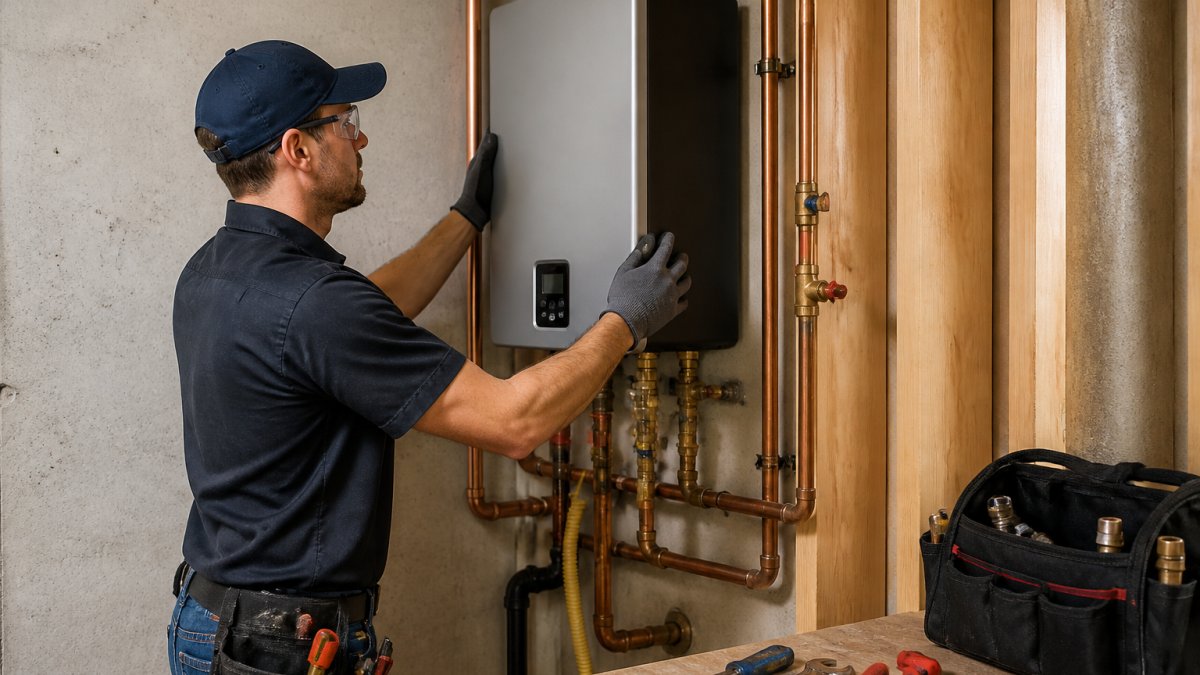
The scope of your tankless water heater installation depends on what already exists in your home. Replacing an old tank with a new tank is simple. Switching from a tank to a tankless unit is a different job, because tankless heaters demand more gas volume or more electrical capacity than most homes were built to supply.
The single biggest cost driver in tankless water heater installation is not the unit itself. It is the supporting work: gas line sizing, electrical upgrades, and venting. Budget for those before you compare heater prices.
Gas vs. Electric Tankless Water Heater: Which Fits Your Home?
The right choice comes down to what your home can supply. Gas tankless units deliver higher flow rates and suit larger households, but they need adequate gas pressure and a proper vent. Electric tankless units are simpler to install in some homes, but they draw heavy amperage and often require an electrical service upgrade.
Neither option is universally better. A gas unit that cannot get enough gas volume will underperform. An electric unit on a 100-amp panel may trip breakers the moment two showers run at once. We size the unit to the home, not the other way around.
| Factor | Gas Tankless | Electric Tankless |
|---|---|---|
| Flow rate | Higher, suits larger homes | Lower, best for single fixtures |
| Installation complexity | Higher: venting and gas sizing | Moderate: often needs panel upgrade |
| Ongoing cost | Usually lower per litre heated | Usually higher per litre heated |
| Best for | Whole-home hot water | Point-of-use or small homes |
Gas Tankless Water Heaters: Higher Output, More Complex Installation
Gas tankless water heaters win on output. They can serve multiple fixtures at once, which matters in a home with two or three bathrooms in use at the same time. The trade-off is complexity. A gas tankless water heater installation typically requires a larger gas line than your existing tank heater used, plus stainless steel venting that meets current code.
If your home already runs natural gas, the conversion is usually manageable. If it does not, the project grows quickly. Running a new gas line and confirming supply capacity is a licensed gas fitter’s job, and it should be part of your quote from the start.
Electric Tankless Water Heaters: Simpler Setup, Higher Power Demand
Electric tankless water heaters avoid gas lines and venting entirely, which simplifies the physical install. The catch is power. These units pull significant amperage, and many older homes simply cannot supply it without an electrical service upgrade.
For point-of-use applications, like a single remote bathroom or a cottage, an electric unit is often the practical answer. For a whole home with heavy simultaneous demand, gas usually wins. We tell homeowners to check panel capacity before falling in love with a specific model.
Tankless Water Heater Sizing: Getting the Flow Rate Right
Tankless water heater sizing is the step most homeowners skip, and it is the one that causes the most disappointment. Sizing means matching the unit’s flow rate, measured in litres per minute, to the number of fixtures you expect to run at once, adjusted for your incoming water temperature.
Cold incoming water in winter demands more heating capacity than the same flow in summer. A unit that feels generous in July can struggle in January. We calculate the temperature rise your home actually sees, then size the heater to cover peak demand rather than average use.
Here is how we approach it:
- Count the fixtures likely to run together, such as two showers plus a kitchen tap
- Add their combined flow in litres per minute
- Measure incoming water temperature in the coldest month
- Match the unit’s capacity to that temperature rise and total flow
- Add a small margin, but avoid oversizing, which wastes money
Sizing by bathroom count alone is the most common mistake we see. Two bathrooms do not equal two showers running at once. If your household showers back to back rather than simultaneously, you may need a smaller unit than you think, and you will save money on both the heater and the install.
Tankless Water Heater Installation Cost: What Affects Your Quote
Tankless water heater installation cost varies far more than most homeowners expect, because the unit is only part of the bill. Labour, gas or electrical upgrades, venting, and permit requirements all move the number. Two homes on the same street can get very different quotes for the same heater.
Rather than quote a single figure, we break every estimate into the parts that change it. That way you can see exactly where your money goes and which upgrades are optional versus required by code.
What drives the price:
- Unit type and capacity: larger gas units cost more than small point-of-use electric models
- Gas line work: upsizing an existing line or running a new one adds labour and materials
- Electrical work: a panel or service upgrade is often the largest single line item
- Venting: stainless steel venting for gas units, and its routing, affects both cost and time
- Permits and inspection: required work must be permitted and inspected
- Location: a unit mounted near existing services costs less to install than one across the house
Because these factors vary so much home to home, we give transparent, upfront pricing after a site assessment rather than guessing over the phone. You can see how we structure quotes on our website.
Tankless Water Heater Installation Checklist: Before, During, and After
A tankless water heater installation checklist keeps the project on track and prevents the surprises that turn a one-day job into a week-long one. Use this before you book, while the work happens, and after the unit is running.
Before installation:
- Confirm whether your home uses natural gas or only electricity
- Check your electrical panel’s available capacity if considering electric
- Locate the existing water heater and note nearby gas, power, and venting
- List your fixtures and how many run at once
- Ask whether a permit is required and who pulls it
- Request a written, itemized quote
During installation:
- Confirm the unit’s flow rate matches your sizing calculation
- Verify gas line or electrical work is done by a licensed trade
- Check that venting meets code and routes safely
- Ensure the installer protects floors and work areas
After installation:
- Test hot water at every fixture, one at a time and together
- Confirm the temperature setting is safe and consistent
- Ask about the warranty and any registration required
- Get the permit inspection signed off if one was needed
Common Installation Mistakes and How to Avoid Them
Most tankless water heater installation problems trace back to skipped steps, not faulty equipment. The same handful of mistakes show up again and again, and each one is avoidable with a proper assessment before anyone picks up a wrench.
The most expensive mistake is undersizing the gas line or electrical supply. A unit that cannot get enough gas or power will never perform as advertised, no matter how good the heater is. The second is ignoring incoming water temperature, which leaves homeowners with a unit that works fine in summer and disappoints in winter.
A third mistake is skipping the permit. Unpermitted gas and electrical work can void insurance coverage and create problems at resale. We pull permits where required and have the work inspected, because shortcuts here cost far more later.
Ask any installer for the unit’s flow rate at your actual incoming water temperature, not the marketing figure on the box. Manufacturers quote performance at warmer incoming water than most homes see in the coldest months. If the installer cannot show you that number, keep asking questions.
Conclusion: Choosing the Right Tankless Water Heater Installation for Your Home
The hardest part of going tankless is not choosing a heater. It is matching the unit to your home’s gas, electrical, and venting reality, and that is where most projects succeed or fail. Get the sizing and the supporting work right, and a tankless system delivers hot water on demand for years.
At Indy Plumbing, we approach every job the same way: a proper assessment, transparent upfront pricing with no hidden fees, and licensed, insured workmanship that leaves your home clean. We size the unit to your household, handle the gas and electrical coordination, and pull the permits so nothing gets missed.
Schedule service with Indy Plumbing and get a tankless water heater installation built around your home, not a generic quote.
Frequently Asked Questions
How much does tankless water heater installation cost?
Tankless water heater installation cost varies based on the unit type, home layout, venting requirements, and whether electrical or gas upgrades are needed. Gas models often need stainless steel venting and a dedicated gas line, while electric models may require a panel upgrade or new circuits. Because every home is different, Indy Plumbing provides transparent, upfront pricing after assessing your space. Visit the Indy Plumbing pricing page or schedule a service call for a quote tailored to your property.
Can I install a tankless water heater myself?
Tankless water heater installation involves gas line connections, electrical work, venting, and building code compliance, which are not safe or legal for most homeowners to handle without a licence. In Ontario, gas work must be done by a licensed gas technician, and electrical work requires an licensed electrician. Improper installation can void warranties, create carbon monoxide risks, and fail inspection. Hiring a licensed plumber ensures the job is done safely and to code.
How long does tankless water heater installation take?
A straightforward replacement of an existing tankless unit can take 2 to 4 hours. Switching from a tank to a tankless system often takes a full day or more because it may involve running new gas lines, installing venting, upgrading electrical service, or modifying plumbing. Heritage homes or properties with older infrastructure can add time. Indy Plumbing provides a clear timeline before starting work, so you know what to expect.
Is a gas or electric tankless water heater better?
The better choice depends on your household’s hot water demand and your home’s existing infrastructure. Gas tankless units deliver higher flow rates and can handle multiple showers at once, making them ideal for larger families, but they require gas lines and venting. Electric units are simpler to install in homes without gas service but may need a significant electrical panel upgrade. A licensed plumber can assess your home and recommend the right fit.
What size tankless water heater do I need?
Sizing a tankless water heater depends on the flow rate (in litres per minute) and temperature rise needed for your climate. In Canada, incoming groundwater is colder, so you need a higher temperature rise, which lowers the effective flow rate. Add up the flow rates of fixtures you might run at once (shower, dishwasher, laundry) and choose a unit that meets that peak demand. A plumber can calculate the exact size for your home.
Comments are closed