

Table of Contents
- What Your Water Heater Warranty Actually Covers
- Manufacturer Warranty vs. Home Warranty Plan: Key Differences
- What Voids a Water Heater Warranty
- How to Check Water Heater Warranty Status
- Water Heater Maintenance Requirements for Warranty
- How to File a Water Heater Warranty Claim
- Frequently Asked Questions
Last Updated: September 16, 2026
What Your Water Heater Warranty Actually Covers
Water heater warranty coverage explained in plain terms comes down to one distinction: the manufacturer replaces the tank or parts, and you pay for the labour to swap them. That gap surprises most homeowners, and it’s the single biggest source of warranty disputes.
Every conventional tank, tankless water heater, and hybrid unit sold in Ontario ships with a manufacturer’s warranty.
Parts vs. Labor: What Most Homeowners Miss
A parts-only warranty means the manufacturer ships a replacement component while you cover the service call fee, labour, and any diagnostic charges. A parts-and-labour warranty covers both, but it’s rarer and usually tied to professional installation through an authorized technician. In practice, labour is often the larger number on the invoice, which is why the parts-only structure catches people off guard.
Skipping annual maintenance is one of the fastest ways to void coverage. Manufacturers can deny a claim if sediment buildup or a neglected anode rod caused the failure, and they will ask for service records.
Manufacturer Warranty vs. Home Warranty Plan: Key Differences
A manufacturer warranty is included with your water heater and covers defects in the unit itself. A home warranty plan is a separate service contract you buy, and it typically covers repair or replacement of systems that fail from normal wear and tear, often with a deductible or service call fee attached.
Warranty vs. Insurance vs. Service Contract
These three get used interchangeably, but they are not the same product:
| Coverage Type | What It Covers | Typical Cost Model | Best For |
|---|---|---|---|
| Manufacturer warranty | Defects in parts and tank | Included with purchase | New installations under 6 years old |
| Home warranty plan | System failure from wear and tear | Annual premium plus service fee | Older homes with aging systems |
| Homeowner insurance | Sudden accidental damage, e.g. burst tank flooding | Policy premium plus deductible | Water damage and liability events |
What Voids a Water Heater Warranty
Improper installation is the most common reason a claim gets denied. Manufacturers require installation by a licensed plumber following local code, and an unpermitted DIY install gives them grounds to reject coverage outright. Other frequent triggers include:
- Missing warranty registration within the required window after purchase
- No proof of purchase or lost serial number
- Failure to perform recommended preventative maintenance, such as flushing sediment or replacing the anode rod
- Water quality issues that accelerate corrosion inside the tank
- Unauthorized repairs or replacement parts that aren’t manufacturer-approved
- Physical damage, relocation of the unit, or use outside the rated specification
Keep every receipt, the original installation invoice, and your maintenance log in one folder, digital or paper. When a claim is filed, the first thing a manufacturer asks for is documentation. Homeowners who can produce it on the spot get approved faster.
How to Check Water Heater Warranty Status
Checking your water heater warranty status starts with the serial number on the unit’s rating plate. That number encodes the manufacture date, and manufacturers use it to confirm whether your unit is still inside its coverage window.
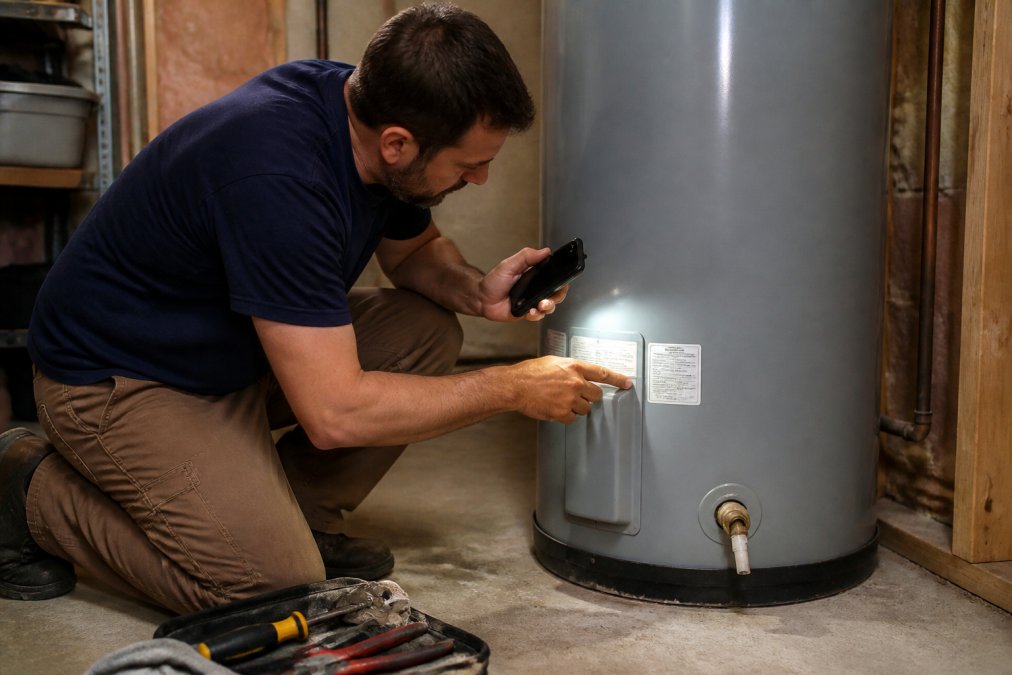
Here’s the process:
- Locate the rating plate, usually on the side or front of the tank, behind the access panel on tankless models
- Photograph the serial number, model number, and manufacture date
- Find your original proof of purchase, or check your email for the installation invoice
- Visit the manufacturer’s warranty lookup page and enter the serial number
- Note the coverage end date and whether the warranty is parts-only or parts-and-labour
- Save a screenshot of the result for your records
Does the Warranty Transfer If You Sell the House?
This is the question most homeowners don’t think to ask until they’re selling, or buying. The short answer: it depends on the manufacturer and the warranty type, and the default is often no.
- Original-purchaser warranties are the most common structure. Coverage is tied to the person who bought and registered the unit, and it ends when the home changes hands. The new owner inherits a water heater with no manufacturer coverage.
- Transferable warranties allow the remaining coverage to follow the unit to a new owner, usually within a set window after the sale and often for a fee or a formal transfer request. Some manufacturers require the transfer to be registered within 30 to 60 days of the closing date.
- Non-transferable by default is the safe assumption. If the paperwork doesn’t explicitly say the warranty transfers, treat it as ending at sale.
A warranty that transfers by default is rare. If you’re buying a home with a relatively new water heater, confirm transferability in writing with the manufacturer before you rely on it. A serial-number lookup tells you the coverage window, not who it belongs to.
Documentation Checklist for a Claim
Whether you’re the original owner or a transferee, a claim moves faster when you can produce these on request:
- Original purchase receipt or installation invoice with the date
- Model and serial number (photographed from the rating plate)
- Warranty registration confirmation, if one was filed
- Installation invoice showing a licensed plumber performed the work
- Maintenance log with dates and service provider details
- Water test results, if you’re on a well system
- For transferees: the transfer confirmation or the seller’s original documentation
Water Heater Maintenance Requirements for Warranty
Most manufacturers make annual maintenance a condition of coverage, even when they don’t advertise it prominently. The technical guidance from Natural Resources Canada on residential water heating confirms that sediment accumulation and anode rod depletion are the leading causes of premature tank failure, and both are preventable.
Typical Warranty Duration by Component
Coverage windows are not uniform across the unit. A common pattern in manufacturer documentation looks like this:
| Component | Typical Coverage Window | Notes |
|---|---|---|
| Tank (leaks, internal corrosion) | 6 to 12 years, often pro-rated | Longest coverage; the headline number on the box |
| Heating elements | 1 to 3 years | Frequently parts-only |
| Thermostat and controls | 1 to 3 years | Parts-only on most residential units |
| Anode rod | 1 year, sometimes excluded | Treated as a wear item |
| Labour | 0 to 1 year, or not covered | Rarely included beyond the first year |
| Tankless heat exchanger | 5 to 15 years, varies by brand | Often the longest single component |
The Maintenance That Actually Protects Your Warranty
- Flush the tank annually to clear sediment buildup
- Inspect and replace the anode rod every two to three years, sooner with aggressive water
- Test the pressure relief valve and thermal expansion tank yearly
- Check the thermostat and heating element for consistent performance
- Have a licensed plumber inspect the unit and document the visit
Anode rod maintenance is the item homeowners skip most often, and it’s the one that matters most. The rod sacrifices itself to protect the tank lining. Once it’s consumed, corrosion moves to the tank itself, and a manufacturer can reasonably argue the failure was neglect rather than defect.
How Water Quality Fits In
Water quality deserves a closer look than most guides give it. High mineral content or aggressive water chemistry can corrode a tank from the inside long before its rated product lifespan, and manufacturers treat that as an environmental condition rather than a defect. If you’re on a well system, testing your water and documenting the results protects you if a claim ever comes up.
Warranty coverage is conditional, not automatic. Annual flushing, anode rod replacement, and a documented service record are what keep a claim approvable years down the line, and knowing which component carries which coverage window tells you when a repair is worth claiming versus replacing.
How to File a Water Heater Warranty Claim
Filing a claim follows a predictable sequence, and doing it in order prevents most rejections. Start by confirming your coverage is active and gathering your documentation.
- Verify coverage. Check the serial number against the manufacturer’s records and confirm you’re inside the warranty window.
- Document the failure. Photograph the leaking tank, failed heating element, or thermostat, and note when the problem started.
- Contact the manufacturer. Most have a claims line or online portal. Have your model, serial number, and proof of purchase ready.
- Get a diagnosis from a licensed plumber. Manufacturers often require a professional assessment before approving a replacement part.
- Submit the claim. Provide the diagnosis, photos, and documentation. Ask for the claim reference number.
- Arrange the repair. Once approved, the replacement part ships. Labour is booked separately, and this is where a trusted local plumber matters most.
Frequently Asked Questions
How does a warranty work on a hot water heater?
A manufacturer warranty covers defects in materials or workmanship for a set period, typically 6 to 12 years on the tank and 1 to 6 years on parts. It does not cover labor, which is billed separately. You must register the unit, keep proof of purchase, and arrange professional installation by a licensed technician. If a covered component fails, the manufacturer ships a replacement part, and you pay for the service call and installation.
Does a standard manufacturer warranty cover labor costs?
Most manufacturer warranties cover replacement parts only, not labor. That means if your heating element or thermostat fails within the coverage window, you receive a new part but pay the authorized technician’s labor rate and service call fee. Some premium models include limited labor coverage for the first year. Review your warranty document carefully, because labor terms vary significantly between brands and models.
What common actions void a water heater warranty?
Improper installation by an unlicensed technician, failure to perform required preventative maintenance such as flushing sediment and checking the anode rod, and water quality issues that cause corrosion can all void coverage. Using non-approved replacement parts, missing warranty registration deadlines, and neglecting annual service also lead to claim denials. Keep records of every service visit to protect your coverage.
Is it worth getting an extended warranty on a water heater?
It depends on your unit’s age and the cost of the plan. Extended warranties typically cost a few hundred dollars and cover parts after the manufacturer warranty expires, but they rarely cover labor or service call fees. If your water heater is over 8 years old and repairs are becoming frequent, the money may be better spent toward a replacement. Compare the plan’s deductibles and coverage limits against expected repair costs before deciding.
Comments are closed