

Table of Contents
- Why Water Treatment Systems Matter for Well Water
- Start with Well Water Testing to Identify Your Contaminants
- Common Well Water Problems and Treatment Options
- Choosing a Well Water Iron Removal System
- Understanding Whole House Water Filtration System Options
- Well Water Treatment System Cost and Sizing Considerations
- Installation and Ongoing Maintenance of Your Water Treatment System
- Frequently Asked Questions
Last Updated: October 20, 2026
Why Water Treatment Systems Matter for Well Water
Water treatment systems for wells aren’t optional luxuries, they’re essential infrastructure for anyone relying on a private well.
The stakes are real. Contaminated well water can cause serious health issues, from bacterial infections to long-term exposure to harmful minerals. Beyond health, untreated well water damages appliances, stains fixtures, and creates unpleasant odors or tastes.
The good news: most well water problems are manageable once you identify what you’re dealing with. The key is testing first, then selecting the right treatment approach, from initial testing through system selection and maintenance.
Start with Well Water Testing to Identify Your Contaminants
Testing is where everything begins. You cannot treat what you don’t know is there, and guessing wrong wastes money on systems that don’t address your actual problems.
What to Test For
A certified water test checks for the contaminants most common in private wells: bacteria (including E. coli and coliform), pH, hardness, iron, manganese, nitrates, sulfates, and total dissolved solids.
Order your test through a certified laboratory; many regional health units provide guidance on accredited labs. The lab sends a sterile collection bottle with specific instructions.
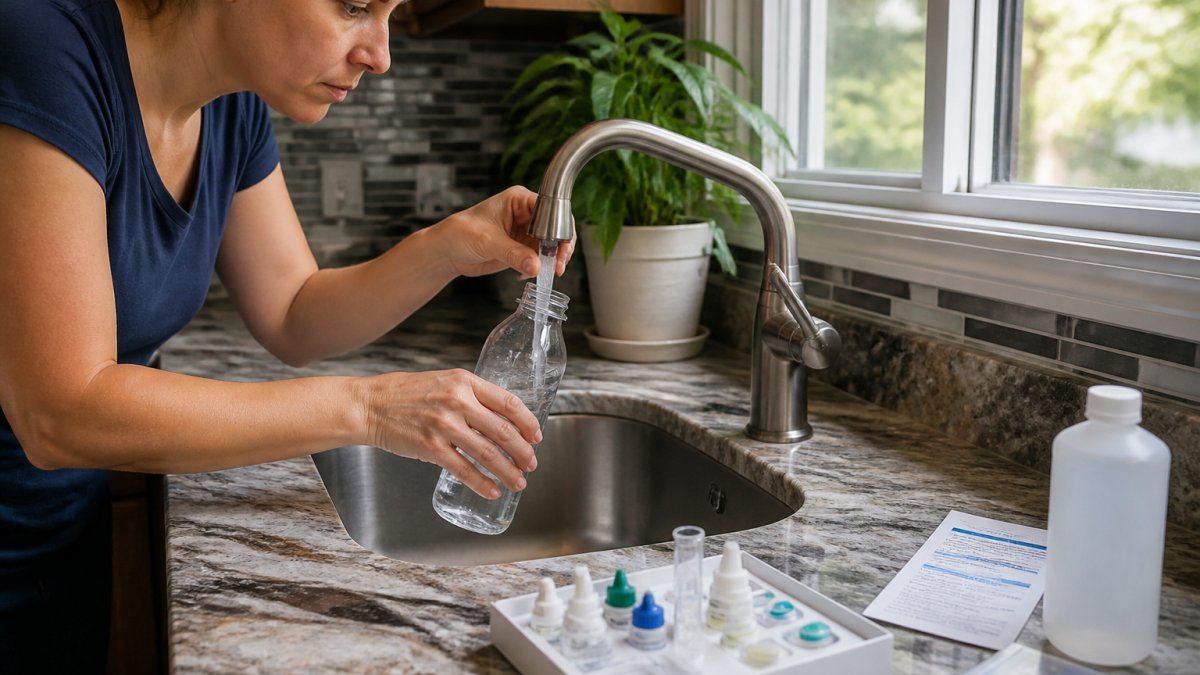
This is one of the best investments you can make before buying any treatment equipment.
Reading Your Lab Results
Lab results come back with measurements and safe limits. Understanding what you’re reading prevents panic and guides your next steps.
Results list each contaminant with a numerical value and a guideline.
For chemical contaminants, results show parts per million (ppm) or micrograms per liter (µg/L). The lab report includes the safe limit for each.
Write down the specific values. You’ll need them when sizing and selecting treatment systems, and knowing your exact contaminant levels prevents oversizing (wasting money) or undersizing (failing to fix the problem).
Common Well Water Problems and Treatment Options
Most well water issues fall into predictable categories. Here’s what to look for and how each is typically addressed.
Sediment and Turbidity
Sediment, fine particles of sand, silt, or clay, makes water cloudy and damages pipes and appliances. High sediment loads clog filters quickly and reduce water pressure throughout the house.
Sediment filtration uses mechanical barriers to remove particles. A whole-house sediment filter sits where water enters the home, catching particles before they reach fixtures.
The trade-off: finer filtration slows water flow. If sediment is your only issue, 20-micron filtration usually balances performance and flow. With other contaminants, you may need a multi-stage system that handles sediment first, then addresses other problems downstream.
Iron and Manganese
Iron and manganese create orange, brown, or black staining on fixtures and in water. They also affect taste and can promote bacterial growth in pipes.
Oxidizing filters use air or chemical oxidants to convert iron into a form that settles out. Greensand filters are traditional media that work well for moderate iron levels (up to 10 ppm).
The challenge: iron removal systems require regular backwashing to clean the filter media and maintain flow. Neglecting maintenance leads to pressure loss and poor performance. Plan for quarterly or semi-annual backwashing, depending on your iron level and water usage.
Bacteria and Pathogens
Coliform bacteria and E. coli indicate contamination from surface water or septic systems. These require immediate action, bacteria cannot be removed by filtration alone because they’re too small and can multiply in pipes.
UV disinfection uses ultraviolet light to damage bacterial DNA, rendering organisms unable to reproduce. UV systems are point-of-use (at the tap) or point-of-entry (whole supply).
Chlorination adds a disinfectant that kills bacteria and continues protecting water as it travels through pipes. Chlorine injection systems require chemical storage and regular maintenance, but they work even in turbid water. Many homeowners combine chlorination with sediment and iron removal for comprehensive treatment.
Water Hardness
Hard water, high in calcium and magnesium, causes scale buildup in pipes, reduces soap effectiveness, and shortens appliance life. A water softener exchanges calcium and magnesium ions for sodium, reducing hardness.
Softeners require regular salt replenishment and periodic resin regeneration, and they increase sodium in the water, which concerns some people. Point-of-use systems can treat drinking and cooking water separately, while whole-house softening is more convenient but more costly to operate.
Odor and Taste Issues
Sulfur smell (“rotten eggs”), metallic taste, or chlorine-like odor usually point to specific problems. Sulfur odor often indicates hydrogen sulfide gas, more common in wells with low oxygen. Activated carbon filters remove many odors and tastes, though not all; hydrogen sulfide requires aeration (exposing water to air to release gas) or oxidation (using chlorine or potassium permanganate).
Taste issues from high mineral content may require reverse osmosis at the kitchen tap, which removes most dissolved solids but produces wastewater.
Choosing a Well Water Iron Removal System
Iron removal is one of the most common well water treatment needs. The right system depends on your iron level, water usage, and whether other contaminants are present.
For iron levels below 2 ppm, a Birm filter often suffices. It’s relatively low-maintenance and effective for mild iron problems.
Consider your household’s peak water demand. A well water iron removal system must handle your highest-use periods, morning showers, laundry, irrigation, without pressure loss. Undersized systems create bottlenecks.
Maintenance frequency also matters. Birm and greensand filters need backwashing every few months, depending on iron concentration, and chemical injection systems require more frequent attention.
Understanding Whole House Water Filtration System Options
A whole house water filtration system treats all water entering your home. This differs from point-of-use systems, which treat water at a single tap.
Point-of-Entry vs. Point-of-Use Treatment
Point-of-entry systems sit where the main water line enters the house and treat everything: showers, toilets, washing machines, and taps. This prevents scale buildup throughout the plumbing, protects appliances, and eliminates contaminants before they spread.
Point-of-use systems treat water at a specific location, usually the kitchen sink. They’re cheaper to install and maintain, and let you target high-priority water (drinking and cooking) without treating less critical uses.
For most well water situations, point-of-entry treatment makes sense if your contaminants affect the whole house (sediment, iron, hardness, bacteria). If only taste or odor bothers you, point-of-use is often sufficient and more economical.
Multi-Stage Filtration Systems
Multi-stage filtration stacks different filter types to address multiple problems sequentially. A typical arrangement: sediment filter first (removing particles), then iron removal (oxidation or greensand), then softening (if needed), then activated carbon (removing odor and taste).
Each stage handles one problem, allowing the next stage to work more efficiently. A sediment filter prevents iron filters from clogging prematurely. Carbon filters last longer when they don’t have to work through sediment first.
The cost and complexity increase with each stage, but so does water quality. For wells with multiple contaminants, multi-stage systems deliver better results than single-purpose filters.
Well Water Treatment System Cost and Sizing Considerations
Treatment system costs vary widely based on complexity and capacity. Understanding the components helps you budget realistically.
Flow Rate and Peak Household Demand
Flow rate, measured in gallons per minute (GPM) or liters per minute (L/min), determines whether a system keeps up with your water use. Peak demand occurs when multiple fixtures run simultaneously: shower, laundry, dishwasher, outdoor hose.
Most homes need 10-15 GPM sustained flow. Undersized systems create pressure loss during peak use. Oversized systems are more expensive and may not regenerate or backwash properly if water flow is too low.
Calculate your peak demand by adding the flow rates of fixtures you use simultaneously. A shower typically uses 2-2.5 GPM, washing machine 3-4 GPM, dishwasher 1.5-2 GPM.
Installation and Operating Costs
Installation costs depend on system complexity and your plumbing layout. A simple sediment filter costs less to install than a multi-stage system with softening and UV disinfection. Professional installation ensures proper sizing and integration with your existing plumbing. Indy Plumbing can assess your specific situation and provide accurate pricing based on your home’s configuration. Visit our website for current pricing.
Operating costs include filter replacements, salt for softeners, and electricity for UV or injection systems. Budget for filter changes every 3-6 months for sediment filters, semi-annually for iron filters, and annually for carbon filters.
Maintenance Schedules and Filter Replacement
Different filter types have different maintenance needs. Sediment filters need replacement when pressure drops or every 3-6 months. Iron removal filters require backwashing monthly or quarterly. Carbon filters last 6-12 months. Softener resin lasts 10-15 years but requires salt replenishment every 4-8 weeks.
Neglecting maintenance reduces system effectiveness and can damage components. Many homeowners find that setting calendar reminders for filter changes prevents problems and extends system life.
Installation and Ongoing Maintenance of Your Water Treatment System
Proper installation and maintenance are critical to system performance and longevity.
System Installation Basics
Installation begins with identifying the optimal location. The system should be as close as possible to where water enters the house, minimizing untreated water exposure in pipes. It also needs access for filter changes and backwashing.
Bypass valves allow water to flow around the system during maintenance. Pressure gauges show when filters need cleaning or replacement. Check valves prevent backflow.
Indy Plumbing handles the technical details: proper valve installation, pressure regulation, and integration with your existing plumbing. Mistakes during installation create leaks, pressure loss, or system failure, problems that cost far more to fix later than getting it right initially.
Verifying Performance After Installation
After installation, test your water again to confirm the system is working. Results should show significant improvement in the contaminants it’s designed to treat. If iron levels dropped from 5 ppm to under 0.3 ppm, the iron filter is performing.
If results don’t improve as expected, the system may be undersized, poorly configured, or installed incorrectly. This is why working with experienced professionals matters, they catch problems early and adjust settings or components to achieve the results you need.
| Treatment Type | Best For | Maintenance Frequency | Expected Lifespan |
|---|---|---|---|
| Sediment filter | Particles, turbidity | Every 3-6 months | 1-2 years per cartridge |
| Iron removal (greensand) | Iron up to 10 ppm | Quarterly backwashing | 5-10 years |
| Water softener | Hard water | Salt refill monthly | 10-15 years (resin) |
| UV disinfection | Bacteria, pathogens | Lamp replacement annually | 5-10 years |
| Activated carbon | Odor, taste, chlorine | Every 6-12 months | 1-2 years per cartridge |
Well water treatment systems for wells aren’t one-size-fits-all solutions. Your specific contaminants, household size, and water usage determine the right approach.
Frequently Asked Questions
How do I know which water treatment system my well water needs?
Start with a certified lab test of your well water. The results will show which contaminants are present and at what levels. Common issues include sediment, iron, manganese, hardness, bacteria, and odor. Once you have your test results, match each contaminant to the appropriate treatment: sediment filters for turbidity, iron filters for iron and manganese, UV disinfection or chlorination for bacteria, water softeners for hardness, and activated carbon for taste and odor. A professional can help you choose the right combination based on your specific test results.
What does a well water treatment system cost?
Costs vary widely depending on the contaminants you need to treat and the system type. Installation labor, filter replacement schedules, and ongoing maintenance also add to lifecycle costs. For a detailed quote tailored to your well water test results and household size, contact a licensed plumber or water treatment specialist in your area. Visit our website for current pricing.
How often should a well water treatment system be serviced?
Maintenance schedules depend on the system type and your water quality. Sediment filters typically need replacement every 3 to 6 months, iron filters every 1 to 2 years, and water softener resin every 10 to 15 years. UV lamps require annual replacement. Regular testing of treated water ensures the system is working effectively. Your installer should provide a maintenance schedule specific to your system and local water conditions.
Can you put a filtration system on a well?
Yes. You can install either point-of-entry (whole-house) systems that treat all water entering your home, or point-of-use systems that treat water at specific taps. Most homeowners choose whole-house systems for comprehensive protection of appliances and plumbing. Installation requires connecting the system to your well line, which a licensed plumber can handle. The system must be sized to match your household water demand and peak usage times to ensure adequate flow rate and pressure.
Comments are closed