

Table of Contents
- Well Pump Repair: What You Need to Know
- Common Well Pump Problems and Troubleshooting
- When to Choose Well Pump Replacement Over Repair
- Well Pump Repair Cost Factors and Transparency
- Well Pump Maintenance to Prevent Future Breakdowns
- Emergency Well Pump Service and Response Times
- Why Licensed Technicians Matter for Well System Repairs
- Frequently Asked Questions
Last Updated: October 19, 2026
Well Pump Repair: What You Need to Know
When your well pump fails, you don’t have days to figure out your options. At Indy Plumbing, we’ve spent over 13 years responding to plumbing emergencies.
Well pump repair is one of those services where knowing the difference between a quick fix and a full replacement can save you hundreds of dollars. This guide covers the most common problems, what triggers them, and whether repair or replacement makes sense.
Common Well Pump Problems and Troubleshooting
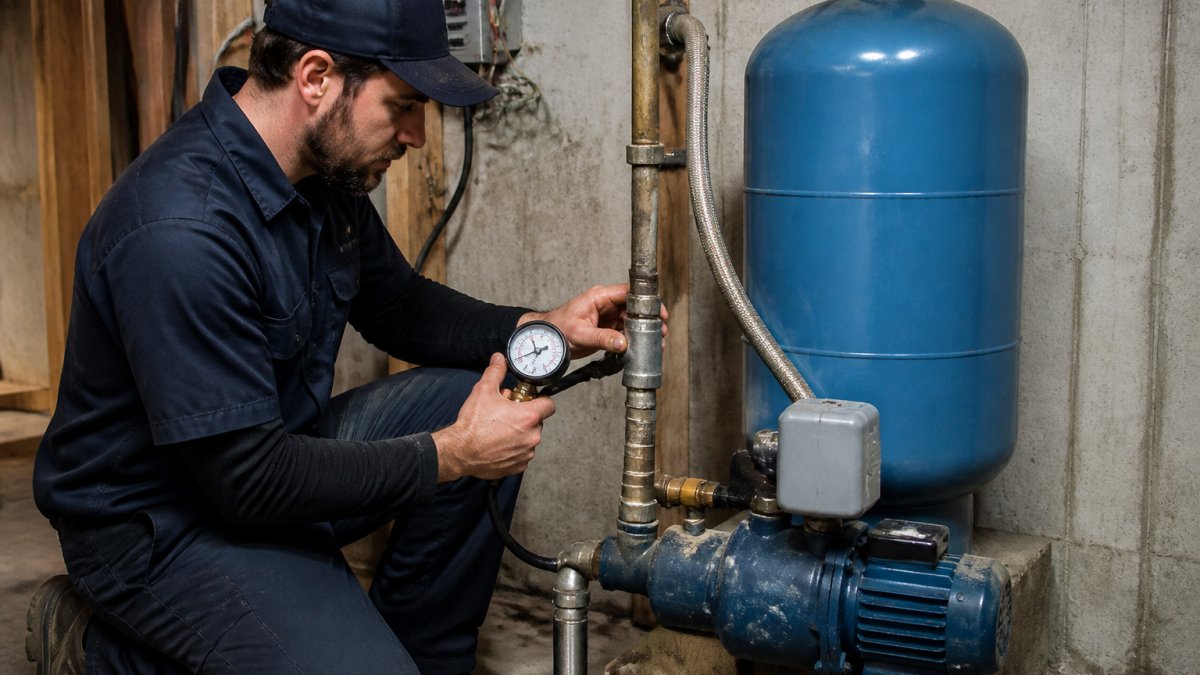
Most well pump issues fall into a handful of recognizable patterns. Identifying them helps you explain the problem clearly before calling for service.
No water or low water pressure
This is the most common complaint we hear. No water means the pump isn’t delivering anything; low pressure means it’s delivering something, but not enough.
Start by checking whether the problem is everywhere in the house or just at one fixture.
Check your pressure tank gauge if you can access it safely. Most residential systems should read between 40 and 60 PSI (pounds per square inch) when the pump is off.
Listen for whether the pump is running at all.
Pump cycling on and off repeatedly
A pump that kicks on and off every few minutes, even when you’re not using water, wastes energy and wears itself out faster. Rapid cycling usually means the pressure tank can’t hold its air charge, or a leak is bleeding pressure away.
Check for visible leaks around the pump, pressure tank, and main water line from the well, since even a small drip can cause cycling.
Strange noises or vibration
A well pump shouldn’t make loud grinding, squealing, or rattling sounds, which usually signal something mechanical failing.
Grinding or squealing typically means internal bearings are wearing out or the pump is running dry. Rattling might indicate loose bolts, a failing pressure tank, or air in the lines.
These noises are early warning signs, and ignoring them usually leads to complete pump failure within weeks or months.
When to Choose Well Pump Replacement Over Repair
The decision between repair and replacement comes down to age, cost, and how often the pump has already failed.
If your pump is over 15 years old and failing, replacement usually makes more sense than repair.
If your pump has failed twice in the last three years, replacement is worth considering even if it’s not ancient.
New pumps typically last 10-15 years with proper maintenance. When you replace, you’re buying predictability, not just a working pump.
Well Pump Repair Cost Factors and Transparency
Most well pump repair pages say costs “vary” and leave it there, which isn’t useful when a technician is asking for a decision. Here’s what actually drives the bill and how to run the repair-versus-replacement math.
What a service call and diagnosis should include
A reputable well pump service call includes travel, a visual inspection of the pressure tank, pressure switch, control box, wiring, and pump, and readings (pressure gauge behavior, amp draw, and tank air charge where accessible).
Be wary of any quote given before the technician has measured anything. A pressure switch replacement and a submersible pump replacement can present with the same symptom (no water), and the cost difference is substantial.
The main cost drivers
- Component being replaced. A pressure switch or check valve is a relatively small part-and-labor job. A pressure tank replacement sits in the middle. Pulling and replacing a submersible pump is the largest common job because it involves the wellhead, drop pipe, wiring, and torque arrestor, plus the equipment to lift the pump string safely.
- Pump depth and access. A pump set at a shallower depth is faster to pull than one at a greater depth, and one in an accessible basement is easier to service than one under a sealed well cap.
- Well condition. Heavy sediment, a stuck pump, or a deteriorated drop pipe can turn a straightforward pull into a multi-hour job. A stuck pump may require a fishing operation before replacement is possible.
- Electrical work. A failed control box, damaged wiring, or a breaker that won’t reset adds diagnostic and repair time. Electrical faults are also a safety issue and can’t be skipped.
- Parts availability. Common pressure switches and standard submersible pumps are usually stocked. A specialty pump (constant-pressure, variable-frequency, or specific horsepower) may need to be ordered, adding lead time rather than labor cost.
- Time of service. After-hours, weekend, and holiday calls carry a premium because a technician is being dispatched outside the normal schedule. If the situation can safely wait until a weekday, a scheduled call is almost always cheaper.
Diagnostic fees and estimates in context
Diagnostic fees exist because the visit has real cost: travel, technician time, and equipment. The fee is usually modest compared with the repair, and the more important question is whether it’s credited. Ask for the estimate in writing with parts and labor separated, and ask what the warranty covers and for how long.
Ask three questions before approving any repair: Is the diagnostic fee credited toward the work? Is the estimate itemized by part and labor? What is the warranty on the part and on the labor separately?
Running the repair-versus-replacement math
A practical rule many technicians use: if the repair cost approaches half the cost of a new pump installation, and the pump is past roughly two-thirds of its expected service life, replacement is usually the better long-term spend.
The other factor is failure frequency. One repair on a 12-year-old pump is reasonable; two within a few years is a pattern, and the next failure tends to arrive at the least convenient moment.
What to watch for in a quote
- A price with no diagnosis behind it.
- Pressure to decide immediately, especially on a large replacement.
- No written warranty terms.
- A quote that doesn’t distinguish between repairing the existing pump and replacing it.
- No mention of permits or code requirements where they apply.
A transparent quote explains what failed, why it failed, what the repair involves, and what the alternative costs. If you don’t get that, ask for it before you sign anything.
Well Pump Maintenance to Prevent Future Breakdowns
Most well pump content treats maintenance as a vague suggestion. A practical schedule with specific intervals and warning thresholds is more useful, and it’s the part competitors skip. The goal isn’t to turn you into a technician, it’s to catch small, cheap problems before they become pump replacements.
A practical maintenance schedule
Monthly (homeowner, 5 minutes):
- Read the pressure gauge when no water is running. On a typical residential system the pump should cut in around 30-40 PSI and cut out around 50-60 PSI. A gauge that reads zero with the pump off, or that climbs higher than it used to, is worth a service call.
- Listen to the pump. It should run smoothly and shut off cleanly. Rapid on-off cycling when no water is being used is the classic sign of a lost tank air charge or a leak.
- Look for water pooling near the pressure tank, pump, or wellhead. Any new moisture is a leak until proven otherwise.
Every 6-12 months (homeowner or technician):
- Check the pressure tank air charge where the tank has a Schrader valve. With the pump off and a fixture open to relieve pressure, the air charge should typically be about 2 PSI below the pump cut-in pressure. A tank that won’t hold its charge has a failed bladder or diaphragm.
- Inspect visible wiring and the control box for rodent damage, corrosion, or loose connections. Don’t touch live electrical components; note the condition and call a technician.
- Test the water for sediment, hardness, and (where relevant) bacteria, especially if you notice a change in taste, smell, or clarity.
Annually (licensed technician):
- Full inspection of the pump, pressure switch, check valve, pressure tank, wiring, and wellhead.
- Amp draw and voltage check on the pump circuit to catch a motor working harder than it should.
- Wellhead and cap inspection for a proper seal and no surface water intrusion.
- Review of water treatment equipment if you have it, since a failing softener or filter can mask or mimic a pump problem.
Every few years:
- Pressure tank inspection and, if needed, replacement. Tanks have a service life and a failed bladder is one of the most common causes of short cycling.
- Well clean-out or rehabilitation if sediment, iron, or mineral buildup is reducing yield.
Warning signs that should trigger a call, not a wait
- Pressure that drops noticeably when more than one fixture runs.
- The pump runs longer than it used to before shutting off.
- Grit, sand, or discolored water at the taps.
- A pump that trips the breaker repeatedly.
- Any grinding, squealing, or rattling from the pump or tank area.
- Water pooling or a damp patch near the wellhead or pressure tank.
If the pump is tripping a breaker, don’t keep resetting it. A breaker that trips repeatedly is protecting the circuit from a fault, and repeated resets can damage the motor or create a shock hazard. Call a licensed technician.
Habits that shorten pump life
- Running the pump dry during plumbing work. If you drain lines, isolate the pump or follow the manufacturer’s procedure so it isn’t asked to move air.
- Ignoring a failing pressure tank. Every short cycle stresses the motor.
- Letting sediment build up. Grit wears impellers and seals.
- Skipping water testing after a repair or a change in water quality. A repair can disturb sediment, and a test confirms the water is safe before you rely on it again.
After a repair or disruption
When work is done on a well system, run outdoor taps or a bathtub until the water clears before using it for drinking or cooking. If the work involved opening the system, disinfection and a follow-up water test may be appropriate.
A short monthly check and an annual inspection are the two habits that matter most. They cost little and they catch the failures that turn a small repair into an emergency replacement.
Emergency Well Pump Service and Response Times
When your pump fails on a Saturday night or during a holiday, you need someone who actually answers the phone and shows up.
Emergency calls get prioritized, because no water is a crisis, not an inconvenience. Our team is equipped to diagnose and repair most pump problems the same day or night you call.
Response times depend on how busy we are and how far you are from our base, but we’re committed to getting to urgent calls quickly.
Why Licensed Technicians Matter for Well System Repairs
Licensing and insurance matter. A licensed technician carries liability insurance that protects you if something goes wrong, and is required to follow building codes and safety standards.
At Indy Plumbing, our team is licensed and insured. We’ve handled many well pump repairs.
When your well pump fails, the right response depends on understanding what’s actually wrong and what your options are.
Indy Plumbing provides expert well pump repair and maintenance.
Frequently Asked Questions
What are the signs that a well pump needs repair?
Watch for no water or reduced water pressure, the pump turning on and off constantly, unusual noises like grinding or squealing, or water that appears discolored or cloudy. If you notice any of these, contact a licensed technician for diagnostic testing. Ignoring these warning signs can lead to complete pump failure and loss of water supply.
Can I troubleshoot a well pump myself, or do I need a professional?
Basic checks like verifying the pump is switched on or resetting a tripped breaker are safe. However, well pump systems involve electrical components, pressure tanks, and water safety concerns that require professional expertise. A licensed technician can perform diagnostic testing safely and identify whether repair or replacement is needed without risking your water supply or personal safety.
How much does well pump repair typically cost?
Well pump repair costs depend on the problem, pump type, parts required, and system complexity. Minor repairs may cost less than major component replacements. Transparent pricing from a licensed service provider should include an upfront quote before work begins. Contact Indy Plumbing for a detailed estimate specific to your system.
How often should I have my well pump serviced for maintenance?
Annual well pump maintenance is recommended to catch problems early and extend system life. During maintenance, technicians inspect pressure systems, check water quality, test flow rates, and identify worn parts before failure occurs. Regular maintenance prevents emergency breakdowns and helps maintain consistent water pressure and supply reliability.
Comments are closed