

Table of Contents
- Your First 10 Minutes: The Critical Response Checklist
- How to Shut Off Water Supply in a Plumbing Emergency
- How to Temporarily Stop a Water Pipe Leak
- What to Do When a Pipe Bursts
- Preventing and Managing Water Damage While Waiting
- When to Call an Emergency Plumber
- Special Considerations for Renters and Apartment Dwellers
- After the Emergency: What Comes Next
- Frequently Asked Questions
Last Updated: October 6, 2026
Your First 10 Minutes: The Critical Response Checklist
A plumbing emergency demands immediate action. The first ten minutes determine whether you prevent catastrophic water damage or watch it spread. Here’s what to do right now:
- Locate and shut off the main water supply. Most homes have a shutoff valve near the street or in the basement.
- Turn off the fixture-level valve if the problem is isolated. A leaking sink or toilet doesn’t require shutting off the whole house.
- Open faucets and flush toilets to drain remaining water from the pipes, reducing pressure and stopping the leak faster.
- Move valuables and furniture away from the affected area.
- Place towels, buckets, or a wet vacuum under the leak.
- Turn off the water heater if the main line is compromised.
- Document the damage with photos for insurance.
- Call an emergency plumber. Water damage accelerates quickly.
- If there’s a gas smell, evacuate immediately and call your gas provider from outside.
- Keep the area clear until help arrives.
How to Shut Off Water Supply in a Plumbing Emergency
Shutting off your water supply is the most effective way to stop a plumbing emergency. You have two options: the main shutoff valve or fixture-level valves.
Finding the Main Water Shutoff Valve
Your main water shutoff valve controls all water entering your home. It’s usually located:
- In the basement or crawl space, near the foundation or where the water line enters
- Under the kitchen sink, in a utility closet, or near the water heater
- Outside, in a meter or valve box near the street (a curb stop)
Follow the pipe entering your home to a brass or steel valve handle, then mark its location so you find it instantly in an emergency.
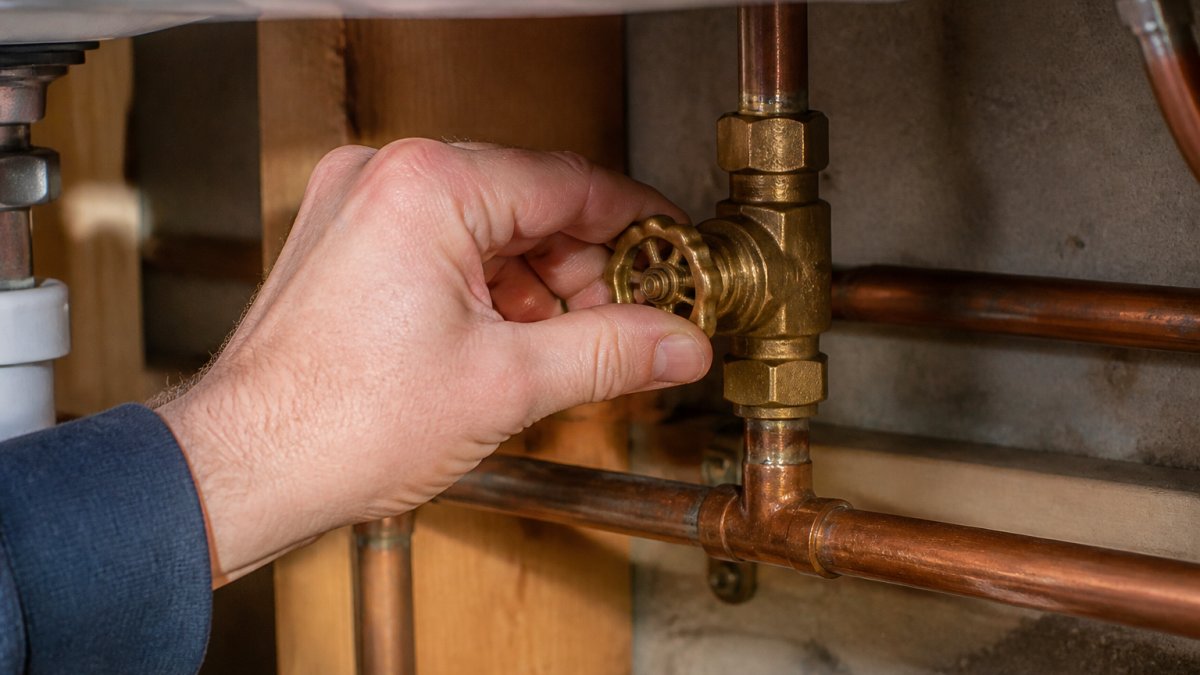
Turning Off Fixture-Level Shutoff Valves
Not every leak requires shutting off the whole house.
Sink valves are under the basin (two small valves, hot and cold).
Toilet valves are behind the tank where the water line connects. Turn clockwise to close.
Shower valves are sometimes inside the wall; if you can’t find them, use the main shutoff.
Water heater shutoff is near the tank.
Fixture-level valves are faster for isolated leaks.
How to Temporarily Stop a Water Pipe Leak
Before you touch the pipe, decide what kind of emergency you have. A pinhole drip needs a different first move than a sewage backup or suspected gas leak.
Triage first: match the response to the emergency
- Active flooding (spraying or pooling fast): Go straight to the main shutoff. Do not stop to wrap the pipe.
- Sewage backup or foul-smelling water: Do not wade in or touch the water; sewage carries bacteria, viruses, and parasites. Shut off water to affected fixtures from a dry spot, keep children and pets out, and call a plumber.
- Suspected gas smell: Do not flip switches, use a phone indoors, or light anything. Leave the building, then call your gas utility’s emergency line from outside.
Electrical safety before you start
Water and electricity are the real hazard in most plumbing emergencies, not the water itself.
- Never stand in standing water to reach a shutoff valve or pipe. If the floor is wet near outlets, appliances, or a panel, stay out.
- Shut off power only from a dry location. If the breaker panel is dry and reachable, switch off the circuit serving the wet room. If the panel is wet or you must cross water to reach it, leave it and call an electrician or the utility.
- Unplug nothing while standing in water, and treat any downed or submerged cord as live until power is confirmed off.
If you smell gas, see sparks, or hear buzzing near water, evacuate and call 911 or your utility from outside. Do not re-enter until cleared.
Temporary fixes by leak type
These are stopgaps, not repairs. They buy time until a licensed plumber arrives.
Pinhole leaks or small cracks:
Wrap the damaged section tightly with self-fusing silicone tape or plumber’s tape, overlapping each layer by half.
Leaking hose connections:
Tighten the connection nut with a wrench.
Burst section:
Isolation is your only option until a professional arrives. Do not attempt to repair a burst pipe yourself.
What to do while you wait for the plumber
- Contain the water. Use towels, buckets, or a wet vacuum on dry, safe flooring. Do not use a wet vacuum if any outlet or cord is in the area.
- Protect belongings. Move furniture, electronics, documents, and rugs to a dry room, lifting items off the floor.
- Increase airflow. Open windows and run fans in dry areas to slow mold growth.
Temporary fixes are emergency stopgaps only. Schedule a professional repair immediately. A tape or clamp fix can fail without warning, and a failed stopgap often causes more damage than the original leak.
What to Do When a Pipe Bursts
A burst pipe is one of the most damaging plumbing emergency scenarios. Freezing temperatures, corrosion, high water pressure, or physical damage can split pipes open.
Immediate actions:
- Shut off the main water supply right away.
- Turn off the water heater to prevent tank damage.
- Open all faucets and flush toilets to drain the lines.
- Move everything away from the burst location.
- Place buckets or towels under the leak.
- Locate the burst section. Look for water spraying, pooling, or dripping from walls, ceilings, or under floors.
- Call an emergency plumber immediately. Burst pipes require professional replacement, not temporary fixes.
Water can soak into drywall, insulation, and flooring within minutes, and mold grows in damp spaces within 24-48 hours.
Prevention tips:
Insulate exposed pipes in unheated areas (attics, crawl spaces, garages), let faucets drip during freezing nights, and have old pipes inspected.
Preventing and Managing Water Damage While Waiting
Water damage spreads in minutes, and what you do while waiting for the plumber often matters more than the repair.
Immediate damage control
- Stop the source first. Confirm the main or fixture shutoff is fully closed before mopping.
- Remove standing water with a wet vacuum or towels, only on dry, safe flooring. Do not use a wet vacuum if any cord or outlet is near the water.
- Open windows and doors to increase air circulation; dry air slows mold growth.
Contamination safety
Not all water is the same. Clean supply-line water is one thing; sewage backup or floodwater is another.
- Sewage backup: Treat as a health hazard. Do not wade in, use a wet vacuum, or touch contaminated items with bare hands. Keep children and pets away, and wash thoroughly afterward.
- Suspected gas smell: Do not flip switches or use a phone indoors. Leave the building and call your gas utility’s emergency line from outside.
- Standing water near outlets or appliances: Do not enter. Shut off power from a dry location if safe, otherwise wait for help.
If the water is dark, smells like sewage, or came from a drain or toilet backup, do not attempt to clean it yourself. Call a plumber and, if needed, a remediation specialist.
If you rent: your duties and your landlord’s
Renters have different responsibilities, and the top results rarely spell them out.
Your immediate duties:
- Shut off water to your unit if you can. Most apartments have a shutoff valve inside the unit, usually under the kitchen sink or in a utility closet.
- If there is no unit-level shutoff, contact the building manager or superintendent immediately. They have access to the building’s main shutoff.
- Move your belongings to safety.
- Document the damage with photos and video for your renter’s insurance claim.
- Notify your landlord in writing (email or text) within hours, keeping a record of the date and time.
What your landlord must do:
Your landlord is responsible for repairs to the building’s plumbing system and must arrange emergency repairs at their expense.
Your insurance:
Renter’s insurance covers your personal belongings damaged by water, but not the building itself.
Common disputes:
If your landlord delays or refuses repairs, document everything and contact your local tenant rights office if repairs are not made within a reasonable time.
Document everything
Take photos and videos of all damage, and write down when the emergency started and what you have done. This record supports your insurance claim and, for renters, establishes responsibility.
Preparing for the plumber’s call and the bill
When you call, have these details ready:
- Your address and unit number
- The type of emergency (burst pipe, sewage backup, overflowing toilet, no water)
- Whether water is still flowing and whether you have shut off the main
Cost expectations:
Emergency plumbers charge premium rates for nights, weekends, and holidays, often double the daytime rate. Ask for the after-hours call-out fee, the hourly rate, and whether the estimate is binding before you authorize work, and get the estimate in writing if possible.
After the plumber leaves
- Continue drying. Run dehumidifiers and fans for 48-72 hours.
- Monitor for mold. Mold appears as black, green, or white spots on surfaces.
- Check for soft spots in drywall or flooring, which indicate trapped moisture.
While you wait, your job is to contain water, protect people and belongings, document the damage, and prepare for the call. The plumber’s job is the repair. Doing your part well reduces both the damage and the bill.
When to Call an Emergency Plumber
Not every plumbing issue requires emergency service. But some situations demand immediate professional help.
Call an emergency plumber for:
- Burst pipes or major leaks that spray water
- Overflowing toilets that won’t stop
- Sewage backup into your home (health hazard)
You can wait for regular business hours if:
- A single fixture drips slowly
- One toilet runs constantly
- A drain is slow but not blocked
Emergency plumbers charge premium rates for nights, weekends, and holidays, but delaying a true emergency costs far more in water damage.
An emergency plumber can arrive quickly, diagnose the problem, and fix it right the first time. Licensed professionals handle burst pipes, overflowing toilets, and catastrophic leaks with transparent pricing, no surprise charges when the work is done.
Special Considerations for Renters and Apartment Dwellers
If you rent, your responsibilities during a plumbing emergency differ slightly from homeowners.
Your immediate duties:
- Shut off water to your unit if you can. Most apartments have a shutoff valve inside the unit, usually under the kitchen sink or in a utility closet.
- If there’s no unit-level shutoff, contact the building manager or superintendent immediately. They have access to the main shutoff for the building.
- Move your belongings to safety. Protect furniture, electronics, and personal items.
- Document the damage with photos for your renter’s insurance claim.
- Notify your landlord in writing (email or text) within hours. Keep a record of this notification.
What your landlord must do:
Your landlord is responsible for repairs to the building’s plumbing system. They must arrange emergency repairs at their expense.
Your insurance:
Renter’s insurance covers your personal belongings damaged by water, but not the building itself. Check your policy.
Common disputes:
If your landlord delays repairs or refuses to fix the problem, document everything.
After the Emergency: What Comes Next
Once the immediate crisis is over, follow-up actions protect your home and prevent future emergencies.
Within 24 hours:
- File a claim with your homeowner’s or renter’s insurance.
- Get a written estimate from the plumber for repairs.
- Start drying with fans and dehumidifiers.
Within one week:
- Have a professional inspector assess water damage to walls, flooring, and insulation.
- Replace damaged drywall, insulation, or flooring.
- Schedule follow-up plumbing work if the initial repair was temporary.
Within one month:
- Monitor for mold growth. If mold appears, hire a mold remediation specialist.
- Have your entire plumbing system inspected. A burst pipe often signals corrosion elsewhere.
- Upgrade old pipes if the inspection reveals widespread deterioration.
Prevention going forward:
- Insulate pipes in unheated spaces.
- Have your water pressure tested. High pressure (above 80 PSI) stresses pipes.
- Drain your water heater annually to remove sediment.
A plumbing emergency is stressful, but swift action and professional help minimize damage. Indy Plumbing arrives fast, fixes the problem correctly, and explains what happened so you can prevent it next time.
Water damage spreads in minutes, but you now know exactly what to do in the first critical moments. The steps in this guide, shutting off water, limiting damage, and calling a professional, have saved homeowners thousands in repair costs. When a plumbing emergency strikes, don’t panic, follow this guide and contact Indy Plumbing for immediate emergency repair.
Frequently Asked Questions
What should I do first during a plumbing emergency?
Stop the water immediately. Locate and turn off the main water shutoff valve, or if the problem is isolated to one fixture, turn off that fixture’s shutoff valve. Then move people and valuables away from the affected area, turn off electricity to the affected room if water is near outlets, and call an emergency plumber. The faster you cut off the water supply, the less damage occurs.
How do I shut off the water in a plumbing emergency?
The main shutoff valve is typically located where the water supply enters your home, often in the basement, crawlspace, or under the kitchen sink. Turn the valve clockwise until it stops. If you cannot locate the main shutoff, look for the curb stop (water meter box) outside your property and contact your municipality for guidance. For single-fixture problems like a leaking toilet, turn the shutoff valve behind or below that fixture clockwise instead.
How can I temporarily stop a water pipe leak?
After shutting off the main water supply, you can wrap the leak with waterproof tape, apply epoxy putty, or clamp a rubber patch over the hole using a C-clamp and piece of wood. These are temporary measures only. For burst pipes, do not attempt to repair them yourself; shut off water and call an emergency plumber immediately. Temporary fixes buy time while you wait for professional help.
When should I call an emergency plumber?
Call immediately for burst pipes, major leaks that won’t stop, overflowing toilets or sewage backups, gas line problems, water heater failures, or any situation where water is flooding your home or business. Do not wait for business hours if water damage is active. An emergency plumber can arrive quickly, stop the water supply, and prevent costly structural damage. Have your address, description of the problem, and photos ready when you call.
Comments are closed